

Contents
- Introduction: Netherlands Farming Technology 2026
- Trivia and Key Highlights
- Why the Netherlands Leads in Agritech
- Greenhouse Mastery and Climate Management
- Soilless Cultivation and Substrate Innovation in Netherlands Farming
- Automation, AI, Data, and Decision Support
- Circular Resource Management & Sustainability
- Vertical Farming and Urban Production
- Netherlands Agritech Ecosystems and Policy Support
- Global Impact and Netherlands Farming Technology Export
- 2026 & Beyond: Innovations, Challenges, and Future Trends
- Key Dutch Agritech Innovations and Their Impact (Table)
- Farmonaut: Satellite-Based Solutions for Next-Gen Farming
- Callouts, Pro Tips, and Investor Notes
- Quick Facts, Visual Lists, and Additional Trivia
- FAQ: Netherlands Farming Technology (2026)
- Conclusion: Precision & Sustainability for the Global Future
Netherlands Farming Technology: Advanced Agritech 2026
Summary: Netherlands farming techniques in 2025 and 2026 position the country as a global leader in sustainable, precision agriculture. Through an integrated blend of advanced greenhouses, soilless cultivation, AI and data-driven management, and circular resource optimization, the Dutch model sets benchmarks for food production, environmental stewardship, and agritech innovation on a global stage.
“Dutch greenhouses use 90% less water than traditional farms, producing 10% of the world’s tomatoes on just 0.25% of its land.”
Crucial Trivia & Key Highlights
- Focus Keyword Foundation: The Netherlands stands as a global paragon for high-tech, sustainable, and data-centric agriculture.
- AI & Data Control: Over 80% of Netherlands farms will implement AI-driven climate control by 2025, leading to efficient, high-yield, and year-round production.
- Carbon & Circularity: Dutch agritech systems seamlessly integrate circular management and CO2 optimization.
- Global Exporter: Netherlands farming technology and knowledge drive transformation of agriculture beyond national borders.
- Greenhouse Leadership: The Dutch model proves consistently high crop quality, minimized resource use, and climate resilience regardless of seasonal change.

Why the Netherlands Leads in Agritech Innovation
The heartbeat of Netherlands agriculture is innovation. Despite a relatively small, densely populated land area and an historical need to import many resources, the Dutch have long stood as architects of modern agritech. Their tightly integrated systems allow maximization of crop yield, meticulous resource optimization, and minimizing of environmental impact—setting a blueprint that is increasingly shaping farming beyond borders.
- ✔ Resource Scarcity Drives Innovation: Limited arable land, strong conservation culture, and urban pressure force optimization and vertical solutions.
- 📊 World-Class Greenhouses: Over 9,000 hectares of high-tech greenhouses produce food for nearly 200 countries and territories.
- ⚠ Regulatory Push: Tight environmental and food safety regulations accelerate adoption of efficient, circular, and traceable practices.
- ✔ Collaborative Ecosystem: Proximity of scientific research, universities, agritech startups, and public bodies creates a dynamic innovation hub.
Key Insight
The evolution of Netherlands farming technology is not driven by size, but by necessity, innovation, and a relentless commitment to maximizing output while minimizing footprint.
From climate-regulated greenhouses to circular water systems, every element is designed to turn constraints into competitive advantages for global agriculture.
Greenhouse Mastery and Climate Management in the Netherlands
Among the most renowned examples of Netherlands farming techniques, Dutch greenhouses are at the core of year-round, high-density, and high-quality crop production. Modern Dutch greenhouses deploy the highest standards in climate optimization, resource management, and integrated sustainability, forming the cornerstone of precision agriculture in the Netherlands today.
- ✔ Energy-efficient glazing: High-transparency glass and coatings maximize light while minimizing heat loss and gains.
- ⚡ Automated shading and variable drives: Dynamic light and temperature adjustments respond instantly to weather or crop requirements.
- 🔗 CO2 enrichment: Recovered CO2 from nearby industries is injected to boost photosynthesis—raising yields while lowering net emissions.
- 💧 Precise irrigation: Metered water use matched to crop stage, root zone temperature, and substrate moisture reduces waste dramatically.
- 🔥 Heat recovery and geothermal energy: Greenhouses use geothermal or residual heat from adjacent industries, dramatically lowering energy consumption.
- 🕒 Climate control systems: Onboard sensors, integrated software, and AI maintain stable microclimates for crops like tomatoes, peppers, cucumbers, and soft fruits—ensuring consistently high crop quality and extended growing seasons.
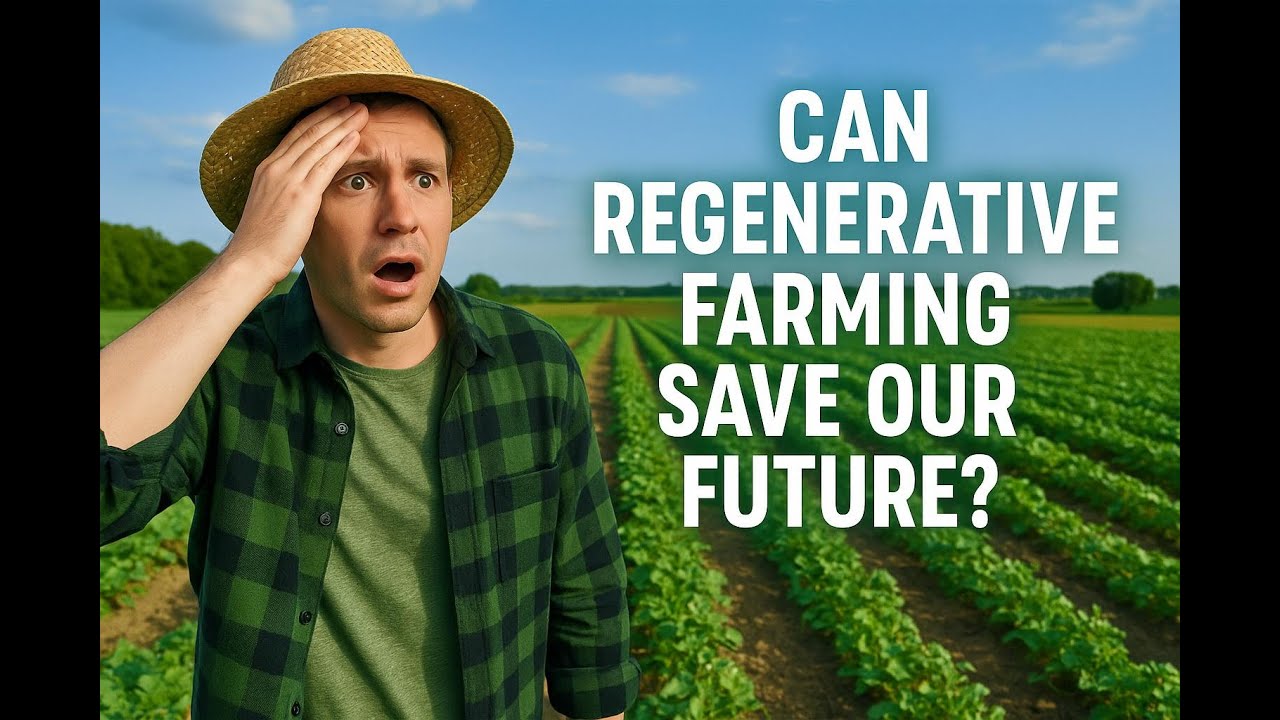
How Dutch Greenhouses Optimize Resources for Global Agriculture
- ✔ Advanced glazing & climate control = improved light management and temperature control
- ✔ Automated irrigation systems = less water waste and more precise nutrient delivery
- ✔ Climate adaptation models = resilience to extreme weather events and season extension
These elements ensure stable microclimates within even the most adverse external conditions—an essential feature for a densely populated country like the Netherlands that must reliably import many resources.
Pro Tip
When upgrading or designing greenhouse systems, integrate CO2 recapture and geothermal heating as standard. The combined effect can lower energy costs by 15–40% and safeguard production against volatile utility prices.
Soilless Cultivation and Substrate Innovation in Netherlands Farming
To reduce diseases, water loss, and dependency on traditional soils, Dutch farming has pioneered both hydroponics and substrate-based systems. Underpinning these techniques is the capacity to manage every input precisely—from ph and ec to targeted nutrient blends.
- ✔ Hydroponics and substrate-based cultivation (rockwool, coco, stonewool, and alternatives) reduce soil-borne disease risks and allow for high-density urban or indoor production.
- ✔ Fertigation software enables the delivery of tailored nutrient solutions to match the crop’s developmental stage precisely.
- ✔ Recirculating irrigation systems ensure that water and nutrients not absorbed by the plant are captured, filtered, and reused—minimizing losses and pollution.
- ✔ Onboard sensors automatically monitor ph, ec, and root health in real-time—closing the feedback loop for optimal growth conditions.
- ✔ This approach enables relatively high yields with low water and fertilizer footprints, vital for a country that must import many of its resources.
Investor Note
Dutch soilless farming and recirculating irrigation have become models for arid and resource-scarce regions globally. Investments in these systems reap the dual benefit of yield stability and future-proofing against water and land scarcity.
Automation, AI, Data, and Decision Support
At the core of modern Netherlands agriculture is digitalization, automation, and the relentless pursuit of precision. Dutch farms, whether small family enterprises or large commercial operations, are deeply data-driven.
Key Components of Dutch Agritech Automation & Decision Support
- ⚙ Sensor networks track temperature, humidity, light, soil/substrate health, and crop development.
- 🤖 AI and Decision Support Systems optimize irrigation, nutrient dosing, harvesting, and pruning schedules.
- 🤖 Robotics automate repetitive or labor-intensive tasks (harvest, pruning, pollination), reducing labor bottlenecks.
- 🔍 On-farm data coordination with supply chains improves real-time traceability, quality assurance, and response to market demand.
- 📲 Farmonaut’s Jeevn AI Advisory System: We provide farmers with real-time operational advice, weather forecasts, and resource insights, fully integrated into any farm’s workflow. Learn more about our large-scale farm management tools.
Automation and AI are increasingly used to handle everything from real-time irrigation adjustments to predicting and preventing disease outbreaks—all powered by tightly integrated agritech systems.
Real-World Impact: Dutch Agritech Models for Operational Excellence
- ✔ Precision Crop Management: Each plant receives the exact resources needed, minimizing waste and maximizing output.
- 📊 Data Analytics: AI-supported analytics identify inefficiencies and predict yields, supporting better decision-making under various price/scenario simulations.
- 🛡️ Traceability & Compliance: Leveraging platforms like Farmonaut’s blockchain-based traceability tools ensures total transparency throughout the supply chain—for growers, buyers, and consumers alike.
Common Mistake
Many new adopters underestimate the need for training in digital tools and AI platforms. Factor in continuous support and upskilling for farm workers to fully realize the potential of automation and advanced data management.
Circular Resource Management & Sustainability in Dutch Farming
Today’s Netherlands farming technology is built for a world of finite resources, tightening environmental laws, and growing demand for sustainable food production. Circularity defines modern agritech Netherlands: every input is minimized, reused, or recaptured.
- ♻️ Nutrient-rich effluent from hydroponics or greenhouses is treated and reused in subsequent cycles, closing the nutrient loop.
- 💨 CO2 capture from industry (greenhouse adjacency to factories, power plants) allows for CO2 enrichment in crop production with no net new emissions.
- 🗑️ Waste minimization: Organic matter is composted or converted to biogas. Packaging is reduced or recyclable.
- 💧 Aggressive water optimization: Recirculation, rainwater harvesting, and closed-loop irrigation systems mean virtually zero water or nutrient leaching.
- 🌱 Resource circularity: By treating waste as a future input, Dutch farms reduce landfill and emissions, and boost economic viability.
Key Insight
Dutch farms are on track to halve emissions intensity and double circularity by 2026, thanks to integrated waste, nutrient, and water management systems—creating a true closed farm loop model for the world to follow.

Vertical Farming and Urban Production Models
While traditional greenhouses remain dominant in Dutch agriculture, the latest agritech innovation focus is on vertical farming, especially in or near urban zones. These systems enable production where land and water are most constrained—right where food demand is highest.
- ✔ Vertical stacking of crops: Maximizes output per square foot by layering production up to dozens of levels high.
- ✔ Advanced LED lighting, climate, and CO2 management allows leafy greens, herbs, and specialty crops to be grown with year-round consistency and ultra-low resource profiles.
- ✔ Urban and rooftop greenhouses minimize transport emissions and cut time-to-market for perishable, high-value crops.
Dutch vertical farming models now offer scalable solutions that can be exported and customized for metropolises worldwide, addressing food miles, shelf-life, and resource challenges in one elegant system.
Netherlands Agritech Ecosystems and Policy Support
No Netherlands farming technology revolution happens in isolation. The remarkable Dutch innovation ecosystem is built on a web of public-private collaboration, scientific research, and enabling policies.
- ✔ Research institutes and collaborative R&D centers rapidly pilot and scale high-impact agritech from robotics to climate-smart crops to data integration and precision management.
- ✔ Innovation funds and sector-specific incentives accelerate technology transfer and derisk early adoption for commercial growers.
- ✔ Plant variety protection and biosafety regulation create a safe, robust foundation for deploying new high-performance crops and digital tools.
- ✔ Open data policies support farm-to-supply chain traceability and allow for fast, secure exchange of critical resource and climate data.

Noteworthy Agritech Support Programs in the Netherlands
- ✔ Testbeds for technologies like disease-resistant cultivars, carbon-footprinting platforms, and climate resilience analytics.
- ✔ Grants and incentives for longitudinal research into long-term yield, circularity, and microclimate impact at micro and macro scales.
With this dynamic support infrastructure, agriculture in the Netherlands remains at the global vanguard and a living laboratory for the future of food.

“By 2025, over 80% of Netherlands farms will implement AI-driven climate control for year-round, high-yield crop production.”
Global Impact and Netherlands Farming Technology Export
The influence of netherlands farming technology extends far beyond Dutch borders. From the export of greenhouse designs and climate management systems to the implementation of Dutch substrate-based hydroponics and data-driven decision support in developing and developed countries alike, agriculture in the Netherlands is setting the global standard for sustainable, high-yield food production.
- ✔ Modular greenhouse models and hydroponics kits are available worldwide, allowing rapid scaling in resource-constrained regions.
- ✔ Carbon transparency, circularity, and traceability exported via digital tools—platforms such as Farmonaut’s blockchain-based agricultural traceability system ensure robust authentication of every resource and product.
- ✔ Policy guidance and training resources circulate Dutch best practices to help all countries meet sustainability targets and food security goals.
Investor Note
Global demand for Dutch agritech solutions is projected to double by 2026. Regions adopting the Netherlands’ precision and circular approaches see rapid gains in yield, water efficiency, and carbon footprint reduction.
2026 & Beyond: Innovations, Challenges, and Future Trends
As the world approaches 2026, netherlands farming technology will remain at the leading edge, shaping how nations across the globe build resilient, efficient, and sustainable food systems.
Emerging Innovations on the Dutch Horizon
- ✔ Decarbonization: Renewables are increasingly integrated into high-energy greenhouses and vertical farms (solar, geothermal, biogas).
- ✔ Precision pest control: Biocontrols, pheromone systems, and ultra-low emission strategies replace chemical pesticides at scale.
- ✔ Disease-resistant cultivars: Integrated breeding, AI-based early warning, and digital field diagnostics reduce crop loss and lower risk.
- ✔ Integrated supply chains: Blockchain verifies origin and best practices, increasing trust—see product traceability solutions for implementation frameworks.
Main Challenges for Agritech Netherlands (2026)
- ⚠ Energy volatility: Integrating more renewables to lower dependence on fossil power for high-tech greenhouses.
- ⚠ Supply chain stability: Reliance on global inputs (substrates, nutrients); need for resilient procurement and local production.
- ⚠ Labor gaps: Accelerated investment in robotics and autonomy is essential to counter workforce shortages.
- ⚠ Ongoing sustainability push: Continuous improvement in emission reduction, water efficiency, and circularity standards is non-negotiable for ecological and market credentials.
With robust research, industry commitment, and support from platforms like Farmonaut’s carbon footprinting suite—which allows farms to track and minimize carbon emissions—Dutch agriculture is well-positioned to remain a reference for the world through 2026 and beyond.
📋 Top 5 Dutch Agritech Techniques Shaping Global Agriculture
- Precision Greenhouse Climate Control – Ensures year-round, stable crop yields and reduced input waste.
- AI-Guided Fertigation – Delivers tailored nutrient blends, monitored in real-time by advanced sensors and software.
- Circular Resource Management – Maximizes resource reuse and reduces emissions footprint on each farm.
- Vertical and Urban Farming – Expands production directly into population centers, shrinking transport emissions.
- Blockchain-Backed Traceability – Delivers trusted transparency for buyers, consumers, and regulators alike.
Key Dutch Agritech Innovations and Their Impact (Estimated, 2025–2026)
| Innovation/Technique | Description | Main Application | Estimated Yield Increase (%) | Estimated Resource Savings (% water/fertilizer) | Sustainability Impact (CO₂ or Other) | Example Implementation |
|---|---|---|---|---|---|---|
| Vertical Farming Systems | Layered crop production using artificial light, soilless substrates, and closed-loop controls. | Urban & peri-urban food supply (greens, herbs) | 25–35 | Up to 90 (water), 75 (fertilizer) | >60% lower CO₂/km (local delivery), minimal land use | Amsterdam rooftop farms, PlantLab |
| Fully Automated Greenhouses | Integrated climate, lighting, irrigation, and robotic harvest for 365-day high-density yields | Tomatoes, cucumbers, peppers, soft fruits | 40–50 | 70–80 (water); 55 (fertilizer) | Up to 50% CO₂ reduction through resource efficiency | Westland, Royal Pride, Greenco |
| Precision Drone Monitoring | Aerial multispectral imaging for plant health, disease detection, growth monitoring | All open-field, greenhouse & vertical crops | 10–18 | 18–28 (water); up to 20 (fertilizer) | Rapid response = minimized losses, reduced chemical use | AgroVision, Wageningen Research Fields |
| Climate-Controlled Hydroponics | Closed systems with sensor-driven fertigation, recirculating water, and waste minimization | Greens, berries, high-value exotics | 30–60 | Up to 95 (water), 65 (fertilizer) | Zero nutrient leaching, <30% usual carbon footprint | Rotterdam, The Tomato Project |
| AI-Driven Soil/Rootzone Analysis | Sensor+AI analytics track pH, EC, nutrient, moisture for real-time intervention | All crops, especially transition fields | 8–15 | 10–25 (water), 10–18 (fertilizer) | Prevents overapplication, supports ecological balance | Open farms, greenhouse transition projects |
Farmonaut: Satellite-Based Solutions for Next-Gen Farming
At Farmonaut, we are committed to equipping the next generation of precision farmers, agritech managers, and agricultural policy-makers with real-time, actionable satellite data and holistic resource management tools.
- ✔ Satellite-based crop health and soil analytics (NDVI, multispectral indices): Identify issues early, optimize interventions, and maximize yield while reducing resource waste. Our platform supports open fields, greenhouses, and vertical farms.
- 📊 Jeevn AI Advisory System: Delivers weather, soil, and crop recommendations powered by satellite and on-farm data.
- ⚡ Blockchain-based traceability: Ensure credible supply chain transparency from seed to market. Learn more
- 🚜 Fleet and resource management: Track vehicles, workers, and schedules to enhance operational efficiency and minimize labor gaps. For details, see fleet management solutions.
- 🌱 Environmental impact monitoring: Track your farm or agribusiness carbon footprint with our sophisticated carbon impact tools.
Our modular, subscription-based platform is accessible on web, iOS, and Android. APIs and developer docs let you integrate satellite data directly into your agritech stack. Explore our API developer documentation for details.



For plantations, forests, and specific advisory, instantly access tailored guidance for Dutch conditions and global adoption with our crop, plantation & forest advisory tools.
Callouts, Pro Tips, and Investor Notes
Controlled microclimates, AI-powered fertigation, and circular resource use are at the heart of Dutch innovation—foreshadowing a new era for global agriculture.
Integrate blockchain-backed traceability and satellite crop monitoring from the start to future-proof against emerging traceability and sustainability regulations.
Failing to synchronize climate control and crop stage data can lead to suboptimal yields. Continuous calibration is critical for modern Dutch agritech systems.
Investments in Dutch-inspired vertical farming and greenhouse automation are among the top agritech opportunities for resilient, climate-change-proof portfolios.
Consider automated irrigation and data-driven fertigation systems for both large and small operations—benefits scale with any crop mix.
Quick Facts, Visual Lists, and Additional Trivia
🌍 Five Sustainability Milestones in Netherlands Agriculture (2025–2026)
- 🌱 95% reduction in water use for vertical hydroponics vs. open-field farming
- 💧 Zero nutrient leaching—recirculating systems reclaim virtually all fertilizer and water
- ♻️ CO₂-enriched greenhouses cut net emissions by repurposing industrial exhaust
- 🌿 35% yield gain over conventional farms using adaptive AI and climate control
- 📉 Emissions targets: Dutch farms target halved emissions intensity by 2026 using digitized circularity models
🔹 5 Most Compelling Benefits of Netherlands Farming Techniques
- ✔ Stable, year-round food production – regardless of season or climate variation
- 📊 Data-driven efficiency – precise measurement and control maximize every input
- 🌿 Sustainable operations – aggressive emission reduction and zero-waste systems
- 🎯 Scalability – modular solutions scale from urban microfarms to global megaprojects
- 🔗 Proven traceability – fully auditable supply chains for food safety and market trust
FAQ: Netherlands Farming Technology (2026)
What makes Netherlands farming techniques unique globally?
The Netherlands is renowned for tightly integrated, high-tech systems that blend advanced greenhouses, soilless and hydroponic cultivation, circular resource management, and real-time data analytics. Every element is designed not just to maximize yield and quality, but to minimize environmental footprint at scale.
How do Dutch farmers minimize water and fertilizer use?
Through closed-loop hydroponics, precision fertigation, and recirculating irrigation, Dutch farms use up to 95% less water and capture/reuse virtually all nutrients. Advanced substrate systems and constant monitoring prevent waste and pollution.
What role does AI and automation play in Netherlands agriculture?
AI-driven systems manage climate, irrigation, nutrients, labor, and even market timing. Robotics assist in pollination, pruning, and harvesting. These reduce human labor, eliminate bottlenecks, and further increase efficiency and yield.
Can small-scale farmers benefit from Dutch techniques?
Absolutely. Modular hydroponic and controlled-environment kits, as well as platform tools like Farmonaut’s satellite analytics and traceability features, allow smallholders to achieve world-class productivity and sustainability standards.
How can I adopt or learn more about Netherlands farming technology?
Start by exploring scientific resources, pilot kits, or industry events. For precision support, operational monitoring, and crop advisory, try the Farmonaut App (web, Android, iOS) or integrate API-driven solutions for in-depth analytics and traceability.
Conclusion: Precision & Sustainability for the Global Future
In summary, Netherlands farming technology and advanced agritech Netherlands techniques have accomplished what few other agricultural models have dared to attempt: enable high-yield, continuous, and climate-resilient food production with radically reduced environmental impact. In the coming years through 2026 and beyond, these systems will become essential blueprints for countries aiming to maximize global food security, minimize emissions, and ensure resource circularity.
With the right insights, data-driven tools, and a commitment to ongoing innovation, any region—regardless of climate, land availability, or economic starting point—can adopt Netherlands farming technology to meet the food, water, and environmental challenges of the 21st century.
At Farmonaut, we are proud to support this transformation by empowering users worldwide with advanced satellite analytics, AI-based advisories, blockchain traceability, and climate impact monitoring—helping farms, businesses, and governments scale sustainable practices faster, smarter, and more profitably than ever before.
Ready to explore the capabilities driving global agriculture’s next frontier? Get started today with Farmonaut’s platform and experience the Dutch advantage, wherever you farm.
Discussion
Questions, corrections or field experience? Share them below. First-time comments are reviewed before they appear, and your email is never published.
No comments yet. Be the first to add a question or your experience.

 Fyllo
Fyllo FieldZero
 Indico Company
 Kubota
 FFBS
FFBS Jontra
 Kalustyan
 Tucor
Tucor Geno
Geno Hayleys Agriculture
 Linx Agritech
 Adinet
 Save Your Soils
 Licence holder · Niger · Gold










