

Niobium Mining, Niobium Mining Companies: 2025 Trends
“Global niobium demand is projected to reach 120,000 metric tons by 2025, driven by infrastructure and defense sector growth.”
Niobium Mining: Strategic Importance and Industry Outlook in 2025
In the rapidly evolving world of critical minerals, niobium mining and the performance of niobium mining companies are attracting renewed attention globally. As we approach 2025, niobium’s unique properties and irreplaceable applications in infrastructure, defence, and high-tech sectors underpin its strategic importance.
This comprehensive article explores the current state, leading companies, industry trends, supply challenges, sustainability imperatives, and emerging opportunities shaping the future of niobium mining.



Explore Farmonaut’s satellite-driven mining and resource management solutions to keep pace with 2025 mining innovation:
Farmonaut API for Mining |
API Developer Docs
What is Niobium?
Niobium is a rare, valuable metal with the chemical symbol Nb. Renowned for its unique properties such as high strength, corrosion resistance, and superconductivity, niobium plays a critical role in modern industry. Most commonly, it is used as an alloying element in the production of high-strength steels for major infrastructure and defence projects.
Discovered in 1801 and finally isolated in 1864, niobium’s application in steel manufacturing has made it indispensable in today’s global economy. When added in small quantities, niobium significantly enhances the strength, durability, and corrosion resistance of steel — making it critical for bridges, pipelines, skyscrapers, and advanced military equipment.

The Role of Niobium Mining in 2025: Growth, Demand & Strategic Relevance
In 2025, niobium mining continues to gain strategic importance due to:
- Robust demand growth in infrastructure and defence sectors
- Infrastructure modernization around the globe, resulting in increased usage of high-strength steel and alloys
- Geopolitical focus on securing critical mineral supply chains
- Push for sustainable, responsible mining and adherence to ESG principles
The global niobium market is expected to remain tight supply-wise in 2025. As industrialization grows in Asia, Africa, and North America, and global defence spending rises, newly constructed bridges, pipelines, and skyscrapers increasingly require niobium alloys to meet modern safety and durability standards.
Given the limited number of significant producers and deposits (over 85% from Brazil), supply chain resilience and sustainability have become essential concerns for nations and companies alike.

Major Niobium Mining Companies & Producers in 2025
The niobium mining industry is highly concentrated. Brazil dominates the market, chiefly through a few major organizations. Let’s explore the top companies driving global supply:
-
CBMM (Companhia Brasileira de Metalurgia e Mineração)
- Operates the Araxá mine in Minas Gerais.
- World’s largest and most influential niobium mining company.
- Advanced in beneficiation technology, vertically integrated supply chain, and ESG compliance.
- Supplies over 80% of total global niobium output.
-
Anglo American (Catalão Mine)
- Another significant producer in Brazil, albeit much smaller in scale than CBMM.
- Maintains a modern mining and processing operation focused on high-quality niobium products.
-
Niobec (Canada)
- Located in Quebec, Niobec is the largest niobium producer outside Brazil.
- Important for North American supply diversification; produces ferro-niobium for local and export markets.
-
Other Notable Producers
- Development and exploration projects in Australia, Africa (notably Nigeria and Democratic Republic of the Congo), and other parts of Canada may gain prominence by 2025.
- China, Russia, and select African countries also invest in new niobium deposits.

Trivia: “Over 85% of the world’s niobium supply in 2025 is expected to come from Brazil, highlighting supply concentration risks.”
Niobium Mining, Niobium Mining Companies: 2025 Trends & Industry Outlook
Multiple forces are shaping the 2025 outlook for niobium mining and the associated companies:
1. Supply Chain Concentration & Strategic Security
- With Brazil providing the overwhelming bulk of global supply (mainly via CBMM in Araxá, Minas Gerais), concentration risk is high. Disruptions in Brazil—whether from political, climate, or operational factors—would instantly ripple through the global industrial and defence markets.
- Nations are therefore investing in exploration and development of alternative deposits in Canada, Africa, and Australia to ensure a resilient supply chain.
2. Demand Growth in Infrastructure, Defence, and Advanced Technologies
- Infrastructure upgrading (bridges, pipelines, public transit, and tall buildings) in Asia, Africa, Europe, and North America is driving steady niobium demand.
- Continued increased defence spending across NATO, China, India, and MENA regions is directly linked to robust niobium mining and alloys utilization for armored vehicles, aerospace, and missile components.
- The global shift from basic to high-performance steels incorporates more niobium even in small quantities, amplifying its importance.
- Superconductors for clean energy grids and research in fusion energy drive incremental growth.

3. Technological Advancements in Mining, Processing & Traceability
- Advanced beneficiation technology and ore concentration methods increase yield and efficiency for market leaders like CBMM.
- AI and satellite-based monitoring (as offered by Farmonaut) bring real-time insights into deposit characteristics, resource management, and sustainability analysis.
Tools such as crop, plantation & forest advisory are now becoming relevant to reclamation and site management in mining: Explore Carbon Footprinting in Mining with Farmonaut - Blockchain-based traceability platforms provide supply chain integrity for strategic minerals:
Product Traceability Benefits for Niobium and Critical Minerals

4. ESG, Environmental Responsibility & Community Engagement
- Niobium mining companies are integrating ESG (Environmental, Social, Governance) principles to address investor and regulatory pressure.
- Investing in carbon emissions reduction, responsible waste management, biodiversity protection, and community development has become standard practice in major mining operations.
- Companies leverage technology to monitor environmental impact and adapt to new sustainability standards. Farmonaut enables real-time environmental impact analytics for mining operations, helping with compliance and stakeholder reporting.

5. Digitization & Remote Monitoring
- Fleet and resource management for niobium mining companies is rapidly moving to digital platforms through apps, APIs, and satellite solutions for visibility and efficiency. Farmonaut’s Fleet Management tools optimize mining equipment operation, reduce costs, and increase safety.
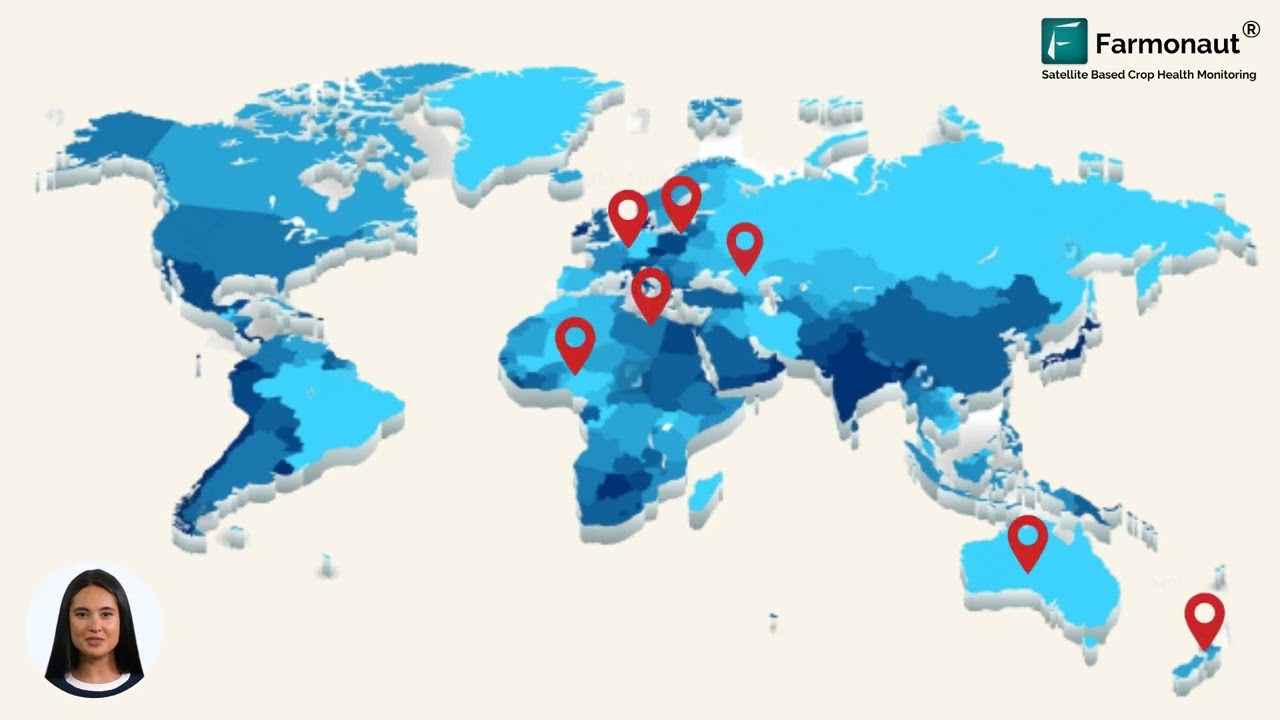
Global Supply Challenges in Niobium Mining
Despite steady global demand and expanding market opportunities, notable challenges persist for niobium mining companies:
- Supply Concentration: Over-reliance on Brazil (Araxá, Minas Gerais) controlled by CBMM. Disruptions could result in massive industrial and strategic bottlenecks.
- Scarcity of new high-grade deposits: Worldwide exploration projects outside Brazil are costly and technologically demanding.
- Complexity in Extraction: Niobium is often associated with other minerals; beneficiation and refining for commercial purity needs advanced technology.
- Geopolitical Dynamics: Securing critical material chains—with niobium ranked as a “defence and technology-critical mineral” by the US and EU—remains a top priority.
- Environmental & Social Considerations: Meeting evolving ESG standards is operationally demanding, requiring continuous investment and stakeholder engagement.
- Rising Costs: Input costs (energy, labor, regulatory compliance) are on the rise for mining companies worldwide.
Blockchain-based traceability can help reduce fraud and improve supply resilience. Discover the benefits of secure resource management: Traceability with Farmonaut
Critical Role of Niobium in Infrastructure & Defence Sectors
The strategic role of niobium and the output of niobium mining companies is best seen in their primary end-use sectors:
- Infrastructure: Niobium-alloyed high-strength steel is indispensable for:
- Skyscrapers: improving strength while reducing weight
- Bridges and pipelines: for durability, flexibility, and corrosion resistance
- Railways and transit infrastructure: superior safety standards, increased design lifespans
- Defence: Applications in military and aerospace include:
- Armored vehicles and missile components for performance in extreme conditions
- Jet engines and high-temperature alloys in aerospace programmes
- Clean Energy: Niobium-titanium alloys in superconducting magnets (nuclear fusion, MRI scanners, renewable energy grids)
- Advanced Manufacturing: Use in additive manufacturing (3D printing) and electronics for specialized alloys
The unique properties of niobium: high melting point, outstanding strength-to-weight ratio, corrosion resistance, and superconductivity make it irreplaceable and highly strategic for countries investing in future-ready infrastructure and defence capabilities.
ESG, Sustainability & Responsible Resource Development in Niobium Mining
As ESG (Environmental, Social, Governance) standards evolve, so too must the operational strategies of niobium mining companies.
Key ESG practices in 2025 include:
- Carbon footprint monitoring and reduction initiatives across mining operations and logistics. Farmonaut provides satellite-driven carbon footprinting solutions to support compliance and reporting.
- Water use optimization and waste management improvement via digital resource management tools.
- Reclamation projects: Post-mining restoration of natural habitats using satellite imagery for progress tracking.
- Community consultation and support as a core tenet of responsible operations.
Visit Farmonaut’s Large Scale Farm Management page for tools adaptable to reclamation and biodiversity projects in the mining domain.
“Over 85% of the world’s niobium supply in 2025 is expected to come from Brazil, highlighting supply concentration risks.”
The Role of Satellite Technology in Niobium Mining & Resource Management
Satellite technology, AI, and blockchain are redefining how companies approach niobium mining, resource development, and sustainability in 2025:
- Satellite Monitoring: Enables real-time tracking of mine development, land use change, environmental impact, and restoration activities.
- AI-Powered Advisory: Decision-makers gain tailored strategies to optimize production, reduce risk, and forecast equipment maintenance.
- Blockchain-Enabled Traceability: Creates auditable, secure supply chains from mine to manufacturing, aiding compliance, sustainability, and authenticity verification.
- Fleet & Resource Management: Increases operational efficiency while ensuring regulatory compliance and sustainable practices.
- Environmental Impact Tracking: Tools such as Farmonaut’s carbon footprint monitoring help mining operations track and manage emissions for sustainability reporting.
Farmonaut’s API and web/mobile applications are used by businesses and governments for resource management, environmental compliance, and satellite-based verification for loan and insurance approval—all critical to modern mining and infrastructure projects.
Start using Farmonaut’s scalable solutions for mining today: Web, Android/iOS & API
2025 Niobium Mining Industry Overview Table
Below, we present a comparative overview of the leading niobium mining companies in 2025, highlighting estimated global production, geography, supply challenges, sustainability efforts, and principal end-use sectors:
| Company Name | Estimated 2025 Production (tonnes) | Country/Region | Supply Challenges (Yes/No) | Sustainability Initiatives | Primary End-Use Sector |
|---|---|---|---|---|---|
| CBMM (Companhia Brasileira de Metalurgia e Mineração) | 90,000+ | Brazil (Araxá, Minas Gerais) | Yes (concentration risk) | Strong ESG programs, carbon monitoring, community engagement | Infrastructure/Defence |
| Anglo American (Catalão) | 7,000–10,000 | Brazil | Yes (geopolitical/local) | ESG alignment, reclamation focus | Infrastructure/Other |
| Niobec | 7,000+ | Canada (Quebec) | Yes (limited reserves) | Water/waste management, local community engagement | Infrastructure/Defence |
| Taseko Mines (proposed projects) | Up to 2,000 | Canada (proposed) | Yes (project status, scale) | Early-stage ESG, environmental study ongoing | Infrastructure |
| Others (Africa, Australia exploratory) | Variable (sub-2,000) | Nigeria, DRC, Australia | Yes (early stage, political risk, funding) | Environmental, social consulting | Infrastructure/Other |
Frequently Asked Questions on Niobium Mining, Niobium Mining Companies & 2025 Trends
What is niobium and why is it considered a critical mineral in 2025?
Niobium is a rare, valuable metal with unique properties—high strength, corrosion resistance, and superconductivity—that make it essential in strategic sectors. Its primary use is as an alloying element in high-strength steel for infrastructure and defence projects. In 2025, global demand for niobium is rising due to modernization, clean tech growth, and increased military investment.
Who are the leading niobium mining companies in the global market?
The most influential niobium mining company is CBMM (Companhia Brasileira de Metalurgia e Mineração) in Brazil, especially at the Araxá mine, Minas Gerais. Anglo American and Niobec (Canada) are notable but smaller producers. New projects are underway in Africa and Australia to diversify supply.
What are the main challenges facing niobium mining companies in 2025?
Key challenges include heavy supply concentration in Brazil, difficulty discovering new high-grade deposits, complex extraction and processing, rising ESG requirements, geopolitical risks, and increasing costs of operation and compliance.
Why is niobium important for infrastructure and defence sectors?
Niobium-alloyed steel enables the construction of durable bridges, pipelines, and skyscrapers while reducing material weights and improving corrosion resistance. In defence, niobium alloys are vital in armored vehicles, missile casings, jet engines, and high-tech military equipment.
How is sustainability being addressed in niobium mining?
Sustainability is addressed through carbon footprint reduction, responsible waste and water management, post-mining land reclamation, and stakeholder engagement. Advanced technology, like Farmonaut’s satellite solutions, further supports environmental monitoring and sustainability reporting in mining operations.
Conclusion: The Future of Niobium Mining—Strategic, Sustainable, and Critical
As niobium mining companies navigate the landscape of 2025 and beyond, several clear trends define the sector:
- Niobium’s role as a strategic resource in infrastructure, defence, and advanced manufacturing is only set to grow.
- Supply concentration risks underscore the need for diversification via exploration and development in Canada, Africa, and Australia.
- ESG and sustainability have become non-negotiable, pushing companies to invest in advanced technology and responsible practices.
- Satellite-driven solutions, AI advisory, blockchain traceability, and real-time analytics are revolutionizing resource management for mining, helping companies and governments improve operational efficiency, comply with regulations, and foster transparency and trust.
Niobium mining, niobium mining companies, and their global supply chains stand at the intersection of industrial growth, national security, and sustainability. The decade ahead will be defined by technological advancement, responsible stewardship, and collaborative innovation—ensuring the secure supply of this rare and valuable metal for critical projects worldwide.
Ready to leverage advanced satellite technology in mining and resource management?
Start with Farmonaut—the leading satellite solutions platform for mining, monitoring, ESG, and traceability.
Read more: Satellite-based verification for mining loans & insurance
Flexible, Scalable Farmonaut Subscriptions for Businesses & Governments
Discussion
Questions, corrections or field experience? Share them below. First-time comments are reviewed before they appear, and your email is never published.
No comments yet. Be the first to add a question or your experience.

 Lithspo Minerals Limited
 Tintina Mining Group
 Dalgety Minerals Pty Ltd
 Vortex Minerals Pty Ltd
 Faith At Work (Pty) Ltd
 Geotech Mining Solutions plc
 Vulcan International Limited
 Kidepo Associates
 GKY Mining
 Alkimy SARL
 Double A Trading
 GemSprout Metals Limited
 Qader Group
 Ileys General Trading
 SG Gold Mining LLC
 VRV Global Pte Ltd
 Omsri International FZE
 G.I.T.T.
 Jaunita Erss Ltd
 Almosi SARL
 SRK Consulting
 Berks Gold Limited
 Mwerezi Minerals Company Limited
