

Industrial minerals · Comparison
Quartz and Mica: Differences, Uses and Prices Compared
Quartz is hard (Mohs 7) and fractures; mica is soft (about 2 to 3) and splits into sheets. They often share the same rock, yet U.S. values in 2025 ranged from about US$36 per tonne for industrial sand to US$12,000 for top high-purity quartz (USGS, 2026).
Key takeaways
- Quartz rates 7 on the Mohs scale; commercial micas rate about 2 to 3 (Geology.com).
- About 81% of U.S. industrial sand went to frac and well uses in 2025 (USGS, 2026).
- World scrap and flake mica output was about 350,000 tonnes in 2025, led by China (USGS, 2026).
- Ground high-purity quartz ranged from US$500 to US$12,000 per tonne in 2025 (USGS, 2026).
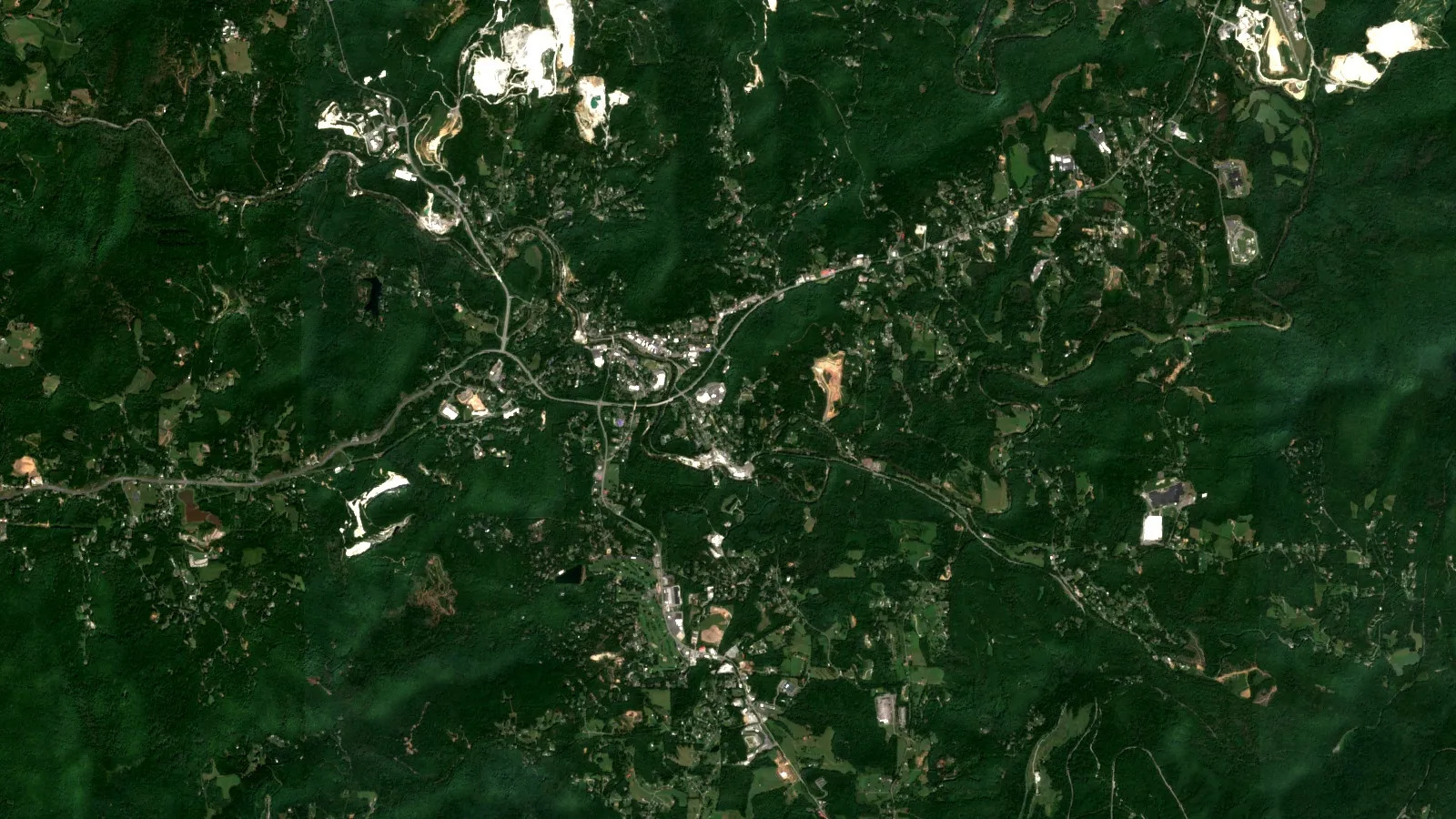
- Spruce Pine pegmatite is mined for quartz, feldspar and mica together (USGS, 2026).
In this article
- Mica vs quartz: the main differences
- What is quartz?
- Economic uses of quartz: 7 main markets
- What is mica?
- Uses of mica: 7 main markets
- Quartz and mica rock: where the two occur together
- Who produces quartz and mica
- Quartz and mica prices compared
- What to check before you value a quartz-mica deposit
- Frequently asked questions
Quartz and mica are both silicate minerals, but they behave in opposite ways: quartz is hard, at 7 on the Mohs scale, and breaks along curved surfaces, while mica is soft, at about 2 to 3, and peels into thin flexible sheets. They are often found together in the same granite, schist and pegmatite. Their markets differ widely as well. In the United States, average 2025 values for bulk products ran from about US$36 per tonne for industrial sand to US$350 per tonne for wet-ground mica, according to the U.S. Geological Survey (USGS, 2026).
This guide compares the two minerals side by side, lists seven main uses of each, and shows who produces them and what they sell for. It also explains why a claim or licence holder should look at the two together, since one pegmatite can yield quartz, mica and feldspar from the same pit.
Mica vs quartz: the main differences
Three simple tests separate these minerals in the field. Scratch the grain with a steel knife, try to lift a flake with a fingernail or pin, and look at how the broken surface catches the light. Quartz resists the knife and shows a glassy, curved fracture. Mica scratches easily and lifts away in flakes with a pearly shine.
| Property | Quartz | Mica (muscovite, biotite, phlogopite) |
|---|---|---|
| Mineral type | Silicate, one mineral | Sheet silicate, a group of minerals |
| Chemistry | SiO2 (silicon dioxide) | Muscovite KAl2(Si3AlO10)(OH)2; phlogopite KMg3(AlSi3O10)(F,OH)2 |
| Mohs hardness | 7 | Muscovite and biotite 2.5 to 3; phlogopite 2 to 2.5 |
| Specific gravity | 2.6 to 2.7 | Muscovite 2.8 to 2.9; biotite 2.7 to 3.4 |
| Crystal system | Trigonal | Monoclinic |
| How it breaks | No cleavage; curved (conchoidal) fracture | Perfect cleavage into thin sheets |
| Luster | Glassy | Pearly to glassy |
| Weathering | Highly resistant; survives into sand | Biotite is not very resistant |
| Main value driver | Purity, measured in parts per million of impurities | Sheet size and particle size after grinding |
Figures come from the Geology.com quartz, muscovite, biotite and phlogopite mineral pages. Cleavage is the tendency of a mineral to split along flat planes. Specific gravity compares a mineral’s density with that of water. Mohs hardness is a 1 to 10 scratch scale, on which a higher number scratches a lower one.
What is quartz?
Quartz is a mineral made only of silicon and oxygen. Geology.com describes it as the most abundant and widely distributed mineral at Earth’s surface. It occurs in igneous, metamorphic and sedimentary rocks. Because it resists both mechanical and chemical weathering, it remains after other minerals break down, which is why it dominates most beach, river and desert sand.
Industry treats quartz as several separate products. The price gap between them is very large, so the name alone tells a buyer little:
- Industrial silica sand: a bulk product sold by the truck or rail car for fracturing, glass, foundry and filter uses.
- High-purity quartz (HPQ): natural quartz with less than 100 parts per million of total impurities, equal to 99.99% purity, as the USGS defines it. Ultra-high-purity grades carry under 10 parts per million.
- Lascas: natural quartz used as feed for growing quartz crystal. USGS says most of it was mined in Brazil and Madagascar.
- Cultured quartz crystal: electronic-grade crystal that is manufactured, not mined.
- Quartzite: a quartz-rich rock. USGS notes that U.S. ferrosilicon was sourced mainly from domestic quartzite.
- Gem quartz: colored and clear varieties such as amethyst and rock crystal, valued as individual stones.
Economic uses of quartz: 7 main markets
The list below runs from the largest bulk use to the smaller, more specialised ones where U.S. tonnage data allow it. USGS reports that the United States sold or used an estimated 120 million tonnes of industrial sand and gravel in 2025, valued at US$4.5 billion, and that about 81% went to frac and well sand. HPQ, crystal and gem uses are not part of that tonnage and are listed by type rather than rank.
Chart
How U.S. industrial sand and gravel was used
Share of tonnage, 2025 estimate
- Hydraulic fracturing and well sand. Quartz sand props open cracks in oil and gas wells so that fluids can flow. This is the largest U.S. use by weight.
- Glassmaking. Glassmaking took 7% of U.S. industrial sand tonnage in 2025. Geology.com lists container, flat plate, specialty glass and fiberglass among the products.
- Fillers, foundry and filtration. Together with recreational sand, these took 7% of U.S. tonnage. Foundry sand forms molds for casting metal, and filter beds use graded sand and gravel.
- Abrasives. Because quartz is harder than most natural materials, it serves in sand blasting, scouring cleansers and grinding media.
- Silicon, ferrosilicon and solar or chip wafers. Quartz feeds silicon metal production. HPQ also makes the fused quartz crucibles used to produce silicon ingots for photovoltaic and semiconductor wafers.
- Electronics and optics. HPQ goes into fiber-optic cables, high-temperature lamp tubing and specialty glass. Cultured quartz crystal is used in electronic circuits as a frequency-control part, although USGS says silicon increasingly replaces it there.
- Gemstones and ornamental stone. Amethyst, rock crystal and aventurine are cut for jewelry and decorative pieces.
What is mica?
Mica is a group of sheet silicate minerals, not one mineral. Their atoms form stacked layers with weak bonds between them, so a crystal peels apart much like the pages of a book. Muscovite is the most common member of the family. Biotite is a field name for the group of black micas. Phlogopite is the brown, magnesium-rich type.
Only muscovite and phlogopite are used commercially, according to Geology.com. Phlogopite is used less often because it is less available and its brown color does not suit some products. Biotite is common in rocks but it is not a commercial product in the same way.
Mica is sold as three very different products, and USGS gives each its own price:
- Scrap and flake mica: a low-priced bulk feed. It is recovered mainly from mica and sericite schist, and as a byproduct of feldspar, kaolin and industrial sand processing.
- Ground mica: scrap and flake that has been wet or dry ground to a small particle size, which more than doubles the U.S. average value per tonne.
- Sheet mica: larger pieces cut into parts for electrical and electronic equipment. USGS says domestic sheet resources are subeconomic because hand labor to mine and process them from pegmatites costs too much.
For more on the mineral group by itself, see our mica mineral guide.
Uses of mica: 7 main markets
USGS names joint compound, oil-well drilling additives, paint, roofing and rubber products as the primary U.S. uses of ground mica. It says most sheet mica becomes electrical and electronic parts. The other uses below come from Geology.com’s mineral pages. USGS does not publish a tonnage for each use, so this list is not ranked.
- Joint compound. Fine mica is a filler in the paste used to finish plasterboard seams.
- Oil-well drilling additives. Mica is added to drilling mud. USGS linked a fall in the U.S. oil and gas rig count during 2025 to likely lower mica use in well drilling.
- Paint and surface coatings. Muscovite acts as a filler and extender. Phlogopite in industrial coatings helps resist heat, chemicals and ultraviolet rays.
- Roofing. This is another of the primary USGS uses for ground mica.
- Rubber and plastics. Phlogopite stiffens plastic car body parts and reduces distortion when the temperature changes.
- Electrical and electronic parts. Sheet muscovite is an excellent insulator. Pegmatite sheet goes into circuit boards, optical filters and detector windows, among other parts.
- Cosmetics, glazes and brake parts. Muscovite’s pearly luster adds glitter to cosmetics, paints and ceramic glazes. Ground phlogopite also replaces asbestos in brake linings and clutch plates.
Substitutes limit pricing power at the low end. USGS lists diatomite, perlite and vermiculite as possible fillers in place of ground mica. Plastics, fiberglass and mica paper made from scrap can replace sheet mica in many electrical uses.
Quartz and mica rock: where the two occur together
Searchers often ask which rock contains both minerals. No single rock has that name, but four common types hold them together. The ratio and the grain size decide which one you have, and whether anything can be mined.
| Rock | Type | Quartz and mica content | How to spot it |
|---|---|---|---|
| Granite | Coarse igneous | Mainly feldspar and quartz, with minor mica | Interlocking pink, white, gray and dark grains |
| Pegmatite | Very coarse igneous | Usually abundant quartz, feldspar and mica | Unusually large crystals; mica can occur in books |
| Mica schist | Metamorphic | Platy mica in parallel layers, with other minerals such as quartz | Splits along a shiny grain; often sparkles |
| Gneiss | Metamorphic | Light bands of feldspar and quartz, dark bands with platy minerals | Clear light and dark banding |
Sources: Geology.com pages on granite, pegmatite, schist and gneiss.
The link between the rock types is heat and pressure. As shale is buried, its clay minerals turn into platy mica, and those grains grow and line up to form schist. With more metamorphism, the micas start to recrystallise into granular minerals, which marks the change to gneiss. Pegmatites form differently, as very coarse igneous bodies, and that is why they can hold mica sheets large enough to cut. Our pegmatite deposits guide covers these bodies in more detail, and our types of ore deposits overview shows how they compare with other deposit classes.
Mica in quartz
Mica can also appear as inclusions inside quartz crystals. Aventurine is the best-known example: this ornamental quartz variety gets its sparkle from shiny inclusions such as mica or hematite. For a processor the same feature is a problem, because trace elements are what limit HPQ grades. USGS notes that specific element limits depend on the end use.
Quartz and mica as exploration clues
Both minerals can also signal alteration around metal deposits. In porphyry copper systems, USGS describes quartz, pyrite and sericite (a fine-grained muscovite) occurring with the copper minerals, and it maps alteration zones from ASTER satellite images. Neither mineral proves ore. Many quartz veins are barren, as our guide on how to tell if quartz has gold in it explains, and oxidized quartz-gold ore needs assays before anyone can value it. Farmonaut’s satellite screening can help consultants rank such ground for follow-up before sampling or drilling starts; it produces exploration targets, not a resource estimate.
▶ Remote sensing for mining explained in plain terms · 2:01
Who produces quartz and mica
World scrap and flake mica output was about 350,000 tonnes in 2025, down from 376,000 tonnes in 2024, according to USGS (2026). China led at an estimated 85,000 tonnes, ahead of Madagascar at 70,000 and Finland at 57,000. Madagascar’s estimate fell from 90,000 tonnes in 2024, when it ranked first. USGS rates reserves as large worldwide and says resources are more than adequate for expected demand. It adds that reliable sheet mica production data are unavailable for several major producers.
Chart
U.S. mica output has fallen since 2021
Thousand tonnes; 2025 is an estimate
Chart
Largest scrap and flake mica producers
Thousand tonnes, 2025 estimate; seven largest
Data for quartz are split. USGS publishes no world production table for HPQ. It estimates that the United States leads HPQ output and names Australia, Brazil, Canada, China and Russia among the other sources. In 2025 two companies produced HPQ in the United States, both around Spruce Pine, North Carolina, and U.S. output was estimated at about 100,000 tonnes. That concentration matters to buyers: USGS says global HPQ reserves are limited to a few locations and that no economic substitute exists for most uses.
Spruce Pine shows how the three minerals connect. The HPQ there comes from pegmatite that is mined at the same time for feldspar and mica. Feldspar is a sizeable product too: the USGS feldspar chapter records about 440,000 tonnes of U.S. production in 2025, valued at US$49 million, with four of the eight mines and plants in North Carolina.
▶ How spectral signatures help tell minerals apart · 1:49
Quartz and mica prices compared
There is no exchange price for either mineral. Deals are private and depend on the specification, so the USGS averages below are guides to scale, not offers. All are estimates for 2025 in the United States.
Chart
U.S. average value of bulk products
US$ per tonne, 2025 estimates
| Product | USGS 2025 value | What drives it |
|---|---|---|
| Industrial sand and gravel | About US$36 per tonne (average) | Frac demand, freight distance |
| Feldspar, marketable | About US$110 per tonne (average) | Glass and ceramic demand |
| Scrap and flake mica | About US$130 per tonne (average) | Grinder demand, purity |
| Dry-ground mica | About US$320 per tonne (average) | Particle size |
| Wet-ground mica | About US$350 per tonne (average) | Particle size, luster |
| Ground high-purity quartz | US$500 to US$12,000 per tonne (range) | Impurity level and end use |
| Mica splittings | About US$1.80 per kilogram (average) | Thin sheet for fabricated parts |
| As-grown cultured quartz | About US$200 per kilogram | Manufactured crystal |
| Lumbered cultured quartz | About US$500 per kilogram | Cut, oriented crystal |
The lesson for an owner is that tonnage alone says little. A tonne of ordinary silica sand and a tonne of HPQ can differ in value by more than 300 times at the top of the USGS range. Low-value bulk products also rarely travel far before freight overtakes their value, so location often decides whether they are worth mining.
What to check before you value a quartz-mica deposit
For a claim holder, consultant or investor looking at pegmatite or schist ground, these steps come before any talk of value:
- Name the product first. Decide whether the target is silica sand, HPQ, flake mica, sheet mica or feldspar. Each has its own buyers and test work.
- Map the rock. Separate pegmatite, schist and granite on the ground, and measure the width and length of each body.
- Test beyond whole-rock grade. A quartz sample that looks clean may still fail on trace elements. HPQ work is measured in parts per million, so use a laboratory that reports at that level.
- Run a processing trial. USGS describes crushing, washing, scrubbing and sorting at Spruce Pine, plus physical, chemical and thermal steps for HPQ. Recovery after those steps sets the sellable tonnage.
- Price the freight. Obtain a delivered quote to the nearest buyer, because low-value bulk products can lose their margin in transport.
- Plan for dust. Cutting, crushing and grinding quartz-bearing rock creates respirable crystalline silica, which can cause silicosis and lung cancer. The U.S. general industry OSHA exposure limit is 50 micrograms per cubic metre as an 8-hour average. U.S. mines fall under a separate rule: the Mine Safety and Health Administration silica rule sets the same 50 microgram full-shift limit for all miners. Confirm its compliance dates, and your local rules outside the United States, with the regulator.
- Confirm your right to mine the mineral. Check that the licence or claim covers industrial minerals, as some titles treat them differently from metals. Ask the regulator rather than assuming.
Calculator
What could a mixed quartz, mica and feldspar deposit gross?
Enter your own tonnage, mineral shares, recovery and prices.
- Quartz sales (US$): $540,000
- Feldspar sales (US$): $3,300,000
- Mica sales (US$): $780,000
- Gross sales per tonne of rock (US$): 46.20
Example values only, not a benchmark or a forecast. Gross sales before all mining, processing and freight costs, so this is not profit or deposit value. Default prices are USGS 2025 U.S. averages for industrial sand, feldspar and scrap mica (Mineral Commodity Summaries 2026). Prices are inputs: use today’s price.
▶ What satellite exploration cannot do in mining due diligence · 2:08
Frequently asked questions
What is the difference between quartz and mica?
Quartz is a hard mineral made of silicon dioxide, with a Mohs hardness of 7 and no cleavage. Mica is a group of soft sheet silicates, with a hardness of about 2 to 3, that split into thin flexible layers.
Is mica harder than quartz?
No. Quartz is much harder. It will scratch mica easily, and a steel knife will scratch mica but generally not quartz.
What rock is made of quartz and mica?
Mica schist commonly contains both, and granite and pegmatite hold them along with feldspar. Gneiss has quartz in its light bands and often platy minerals in its dark bands.
Can you find mica in quartz?
Yes. Mica can occur as inclusions in quartz, as in aventurine. The two also often grow side by side in pegmatite.
What is the economic use of quartz?
By U.S. weight, the largest use of industrial silica sand is hydraulic fracturing and well sand (about 81% in 2025, USGS). Glassmaking took 7%. High-purity quartz serves smaller, higher-value markets such as crucibles for silicon wafers, fiber optics and specialty glass.
What is mica used for?
Ground mica goes into joint compound, drilling additives, paint, roofing and rubber products. Sheet mica is made into electrical and electronic parts. Muscovite also adds a pearly shine to cosmetics and glazes.
What are the components of mica?
Mica minerals are sheet silicates of potassium, aluminum or magnesium and iron, with silicon, oxygen and hydroxyl or fluorine. Muscovite is aluminum-rich, phlogopite is magnesium-rich and biotite-group minerals contain magnesium and iron.
Which is worth more, quartz or mica?
It depends on the product. In 2025 U.S. averages, ordinary industrial sand was far cheaper than flake mica, at about US$36 against US$130 per tonne. Ground high-purity quartz was much dearer than ground mica, at US$500 to US$12,000 per tonne against about US$320 to US$350 (USGS, 2026).
Where is most mica mined?
USGS estimates that China mined the most scrap and flake mica in 2025, followed by Madagascar and Finland. In the United States, mica was mined in Georgia and North Carolina.
Where does high-purity quartz come from?
USGS estimates that the United States leads production, from pegmatites around Spruce Pine, North Carolina. It names Australia, Brazil, Canada, China and Russia among other sources.
Is quartz dust dangerous?
Yes. Fine dust from cutting or crushing quartz-bearing rock contains respirable crystalline silica, which can cause silicosis and lung cancer. Use dust controls and follow the exposure rules that apply to your site.
More from Farmonaut: agro admin app, carbon footprinting, crop loan and insurance, farmonaut satellite weather api developer docs, fleet management, product traceability, traceability.
This page is for information only. It is not investment or legal advice. Confirm the rules with the regulator. Before you sample or dig, get a licence and the landowner’s permission, never use mercury, and stay off other people’s claims and protected land.
Farmonaut mining
Screen your licence area from space
Licence owners and consultants can request a quote for satellite screening that gives exploration targets ahead of a resource estimate.

Mining Pro sample view, synthetic data
Keep reading
Sources
- USGS, Mineral Commodity Summaries 2026: Mica: pubs.usgs.gov
- USGS, Mineral Commodity Summaries 2026: Quartz: pubs.usgs.gov
- USGS, Mineral Commodity Summaries 2026: Feldspar: pubs.usgs.gov
- USGS, Mineral Commodity Summaries 2026: Industrial sand and gravel: pubs.usgs.gov
- USGS, Mineral Commodity Summaries 2026: Silicon: pubs.usgs.gov
- USGS, Porphyry copper deposit model, SIR 2010-5070-B: pubs.usgs.gov
- OSHA, Crystalline silica overview: osha.gov
- OSHA, 29 CFR 1910.1053: osha.gov
- Geology.com, Quartz: geology.com
- Geology.com, Muscovite: geology.com
- Geology.com, Biotite: geology.com
- Geology.com, Phlogopite: geology.com
- Geology.com, Granite: geology.com
- Geology.com, Pegmatite: geology.com
- Geology.com, Schist: geology.com
- Geology.com, Gneiss: geology.com
- MSHA, Respirable crystalline silica rule: msha.gov
Discussion
Questions, corrections or field experience? Share them below. First-time comments are reviewed before they appear, and your email is never published.
No comments yet. Be the first to add a question or your experience.

 Ileys General Trading
 SG Gold Mining LLC
 VRV Global Pte Ltd
 Omsri International FZE
 G.I.T.T.
 Jaunita Erss Ltd
 Almosi SARL
 SRK Consulting
 Berks Gold Limited
 Mwerezi Minerals Company Limited
 Mining SARL
 SenGold Invest SAS
 Sean Mining Limited
 NTS Group (Pty) Ltd
 Mine4Africa
 Lithspo Minerals Limited
 Tintina Mining Group

 Licence holder · Nigeria · Gold + lithium










