

Precision farming · Market overview
Agricultural Spray Drones: Models, FAA Rules and Costs
US spray drones treated about 16.4 million acres in 2025 (ASDC). This overview covers the models on sale, dated dealer prices, the FAA Part 137 rules and what a hired service charges per acre.
Key takeaways
- US drone-treated acres rose from 3.7 million (2023) to about 10.3 million (2024) and 16.4 million (2025), per the ASDC 2025 Impact Survey and AAPCO.
- 1,710 FAA Part 137 drone operators were approved by September 2025; average area per operator stayed flat at about 9,584 acres.
- The average hired drone spray price fell from $21 per acre in 2024 to $13 in 2025 (ASDC survey average).
- Reported 2026 starting prices run from about $16,000 (Hylio Pegasus) to $60,000 (Hylio Atlas); a DJI T50 ready-to-fly kit was about $24,662.
- Commercial spraying needs a Part 137 certificate, an FAA exemption, drone registration, a Remote Pilot Certificate and, usually, a state applicator licence.
In this article
- Agricultural spray drones at a glance
- How the spray drone market grew
- Why buyers are changing brands
- Spray drone models farmers buy
- Spray drone prices compared
- What a hired spray drone costs per acre
- Own or hire: a cost calculator
- FAA rules for spray drones
- Label and drift rules on the farm
- Where spray drones fit with other precision tools
- How to choose a spray drone or a service
- How we checked the numbers
- FAQ
- Agricultural spray drones: the short answer
Agricultural spray drones are battery-powered aircraft that carry a tank of pesticide, fungicide or liquid fertilizer and apply it from a few feet above the crop. In the United States they treated about 16.4 million acres in 2025, up 58.7% on 2024, according to the American Spray Drone Coalition 2025 Impact Survey. Every commercial spray flight in the US needs an FAA Part 137 certificate.
This page is a short market overview: the models farmers buy, the rules, dated prices and what a hired drone costs per acre. It also has a calculator that compares owning a drone with hiring a service. For step-by-step spraying advice, read our guide to crop spraying with agro drones. For a longer price list by model, see our agricultural drone price guide.
Agricultural spray drones at a glance
The table sums up the main facts. Each row has its own section below with the source behind it.
| Topic | Key fact | Source |
|---|---|---|
| US acres treated | 16.4 million acres in 2025, from 3.7 million in 2023 | ASDC survey, January 2026 |
| Licensed operators | 1,710 FAA Part 137 drone operators by September 2025 | FAA count, cited by ASDC |
| Hired price | $13 per acre on average in 2025, down from $21 in 2024 | ASDC survey |
| Drone prices | About $16,000 to $60,000 per drone or kit, dealer asks | Dealer listings, 2026 |
| Main US rule | 14 CFR Part 137, plus Part 107 or Part 91 and an exemption | FAA |
| Label rule | Use only products approved for aerial use, at the label rate | University of Georgia Extension |
How the spray drone market grew
US drone spraying grew fast in three years. The ASDC survey reports 16.4 million acres treated in 2025, up 58.7%, which puts 2024 at about 10.3 million. An earlier count of 3.7 million acres in 2023 appears in a 2026 presentation to the Association of American Pesticide Control Officials, which notes that the 2023 acres were spread across 41 states and 50 crops.
Chart
US acres treated by spray drones
Million acres per year, approved Part 137 operators
The growth came from more operators, not from each operator doing more. The ASDC report says the number of approved Part 137 drone operators rose 58.3% to 1,710. The average area per operator stayed flat at about 9,584 acres a year. In other words, new businesses joined, but each one sprayed about the same area as before.
The survey covers approved Part 137 operators only. The ASDC also estimates that only about 14% of spray drones sold were registered, so the real fleet is larger than official counts show. Treat the acreage as a solid industry estimate, not a census.
Spray drones are now a normal service in farm country. The Ag Drone Directory statistics guide reports that Iowa State University added drone application to its 2026 Iowa custom rate survey for the first time. It also cites the Iowa Farm and Rural Life Poll: 22% of Iowa farmers used a drone or a drone service in 2024.
Why buyers are changing brands
For years one Chinese maker, DJI, sold the large majority of US spray drones. That changed in 2025, first through US Customs import restrictions on DJI and then an FCC decision. The FCC added foreign-made drones and parts to its Covered List on 22 December 2025. The rule applies to new model approvals, not to drones already in use, so existing DJI owners can keep flying.
The effect on sales was large. According to the ASDC’s comments to the US Commerce Department, as summarised by the Ag Drone Directory, Chinese-made drones were 93.5% of US spray drone sales in 2024 and 75.75% in 2025. The ASDC report says sales of new spray drones fell by about 60% in 2025, which it blames on US Customs (CBP) import restrictions on DJI under the Uyghur Forced Labor Prevention Act, not on the FCC rule, which came at the very end of the year.
For a buyer, this means three things. Check that a model can still be sold and serviced in your country. Ask how long the dealer will stock batteries and parts. And expect US-built drones to cost more than the imported drones they replace.
Spray drone models farmers buy
Here are five models and model families that appear in dealer listings in 2026. We list them in no particular order; this is not a ranking. Prices are dealer asks or reported starting prices, not transaction prices.
1. DJI Agras T50
Best for: large-acre farms and service firms that already fly DJI. The T50 has a 50-liter tank, a 40 kg spraying payload and coverage of about 22 acres per hour in good conditions, according to the GrabaRobot T50 price guide. Dealer listings show about $17,999 to $19,000 for the drone only and about $24,662 for a ready-to-fly kit with batteries and a charger. New imports are limited by the FCC rule above, so check stock and service before you buy.
2. DJI Agras T40
Best for: buyers who find clearance stock. The T40 is the older model. The same guide reports ready-to-fly listings from the mid-$20,000s to about $30,000 to $34,000, and more dealers now quote it only on request. Compare it with the T50 on the same battery and charger setup.
3. Hylio Pegasus, Ares and Atlas
Best for: farms that want a US-built drone. Hylio is based in Houston, Texas. The GrabaRobot Hylio guide lists the Pegasus with a 2.5-gallon tank, the Ares with a 13-gallon tank and up to 70 acres per hour at 2 gallons per acre, and the Atlas with a 30-gallon tank. Reported starting prices are about $16,000, $44,000 and $60,000.
4. EAVision J100 and J150
Best for: buyers who compare a second imported brand. The GrabaRobot EAVision guide found US dealer checkout prices on 5 August 2026 of $21,999 for a J100 airframe, $32,995 to $33,995 for flight-ready packages and $40,495 for a J150. It warns that the $8,000 to $15,000 figure often seen online is a factory price in China, not what a US farm pays.
5. Hired drone services
Best for: farms with a few hundred acres to treat each year, or anyone who wants to test drone spraying first. You pay per acre and the operator holds the licences, insurance and spare batteries. The next sections give the price.
Spray drone prices compared
The chart below puts the dealer prices side by side. The prices are not for the same package. Some are airframes and some are kits with batteries, so read the label on each bar.
Chart
Spray drone dealer prices
US dollars, dealer asks or reported starting prices, 2026; packages differ
Batteries and charging are a large part of the cost. The T50 guide shows a gap of about $6,000 between the drone-only price and the ready-to-fly kit. A working crew also needs a generator or fast charger, a mixing station and a truck or trailer. Ask every dealer for the full list of what is in the box.
Import tariffs also change prices. The EAVision guide notes a $1,000 tariff line on one dealer’s package. Prices can change quickly, so ask for a dated written quote.
What a hired spray drone costs per acre
The average US drone spray service charged $13 per acre in 2025, down 38% from $21 per acre in 2024, according to the ASDC survey. The ASDC links the fall to many new operators and to price cuts by operators without a Part 137 certificate. These are survey averages across crops and regions. Your local price depends on field size, distance, product and timing.
Chart
Average US drone spray price per acre
US dollars per acre, survey average of approved Part 137 operators
Before you hire a service, ask for the operator’s Part 137 certificate, the FAA exemption number, the drone registration and proof of insurance. A low price from an operator without these papers puts the risk on you, the landowner.
Own or hire: a cost calculator
This calculator compares the cost per acre of owning a drone with the price of a hired service. It spreads the purchase price over the years you expect to use the drone and adds your running cost per acre. Enter your own numbers.
Try the numbers for your own farm below.
Calculator
Is owning a spray drone cheaper than hiring one?
Enter your own kit price, years of use, acres and running costs.
- Owning cost per acre: 13.50 $/acre
- Hired cost per acre: 13.00 $/acre
- Yearly cost of owning: $13,500
- Yearly cost of hiring: $13,000
Example values only, not benchmarks or forecasts; every number is your input. The default hired price of $13 per acre is the 2025 US survey average from the ASDC 2025 Impact Survey. Running cost should include batteries, labour, fuel, insurance, repairs and licences. The calculator ignores interest, resale value and tax. Check the label, local rules and get professional advice before you spray.
FAA rules for spray drones
In the US, FAA guidance on dispensing chemicals with drones says 14 CFR Part 137 governs the use of aircraft, including drones, to dispense or spray substances. The rules depend on the drone’s weight, including the weight of the liquid in the tank.
- Under 55 pounds: the drone can fly under Part 107 but needs an exemption from section 107.36 on carrying hazardous material and from several Part 137 rules. The registration number comes from FAADroneZone.
- 55 pounds or more: the drone flies under Part 91 and Part 137 and needs exemptions from parts of Parts 61, 91 and 137. It needs an N-number through the FAA aircraft registry.
- Petition timing: the FAA asks for a petition at least 120 days before you need the exemption.
- Certificate: applicants send FAA Form 8710-3 and their exemption number to the FAA to start Part 137 certification.
The pilot also needs a Remote Pilot Certificate. The FAA page on becoming a certificated remote pilot explains the knowledge test. The basic Part 107 rules cover visual line of sight, altitude and airspace. The FAA has started checking that exemption holders follow their conditions, so read your exemption carefully.
Most states also require a pesticide applicator licence for commercial spraying, often with an aerial category. Rules differ by state and by country. In Canada, the UK, Europe, Australia and New Zealand, aviation and pesticide rules for drones are separate and can be strict. Check your national aviation authority and your state or provincial pesticide regulator before the first flight, and get professional advice if you are unsure.
Label and drift rules on the farm
A drone does not change the pesticide label. University of Georgia Extension says that if a product is approved for aerial application, it can be applied with a spray drone, following the label’s spray volume, droplet size and drift rules. It adds that the minimum aerial spray volume on most labels is 2 gallons per acre, and some labels ask for 5 or even 10.
The same guide gives practical drift advice:
- Use nozzles or atomizer settings that give medium to coarse droplets; 250 to 320 microns is a good range for most pesticides.
- Stay in the drone’s best height range; flying higher does not widen the swath past a point but raises drift.
- Do not spray in winds above 10 mph or when a temperature inversion is likely.
- Test the real swath with spray cards before the first job.
Ohio State University’s fact sheet FABE-540 shows a larger drone with a 10-gallon spray tank and notes that drones with booms can have high drift potential, depending on their set-up. Always read and follow the product label and your local rules.

▶ How AI and cameras try to spot crop pests early, before any spray decision. · 6:32
Where spray drones fit with other precision tools
Drones are one of several ways to put less product on more precisely. Ground sprayers with cameras are another. In an Iowa State University precision spraying demonstration on 415 acres of soybeans, camera-guided spot spraying cut post-emergence herbicide use by 76% on average. That study was on a ground sprayer, not a drone, but it shows why targeting matters.
Drones work best on small or wet fields, hillsides, orchards and spot treatments, where a ground rig is slow or would damage the crop. On large, dry, flat fields, a ground sprayer or a manned aircraft can still be faster per hour.
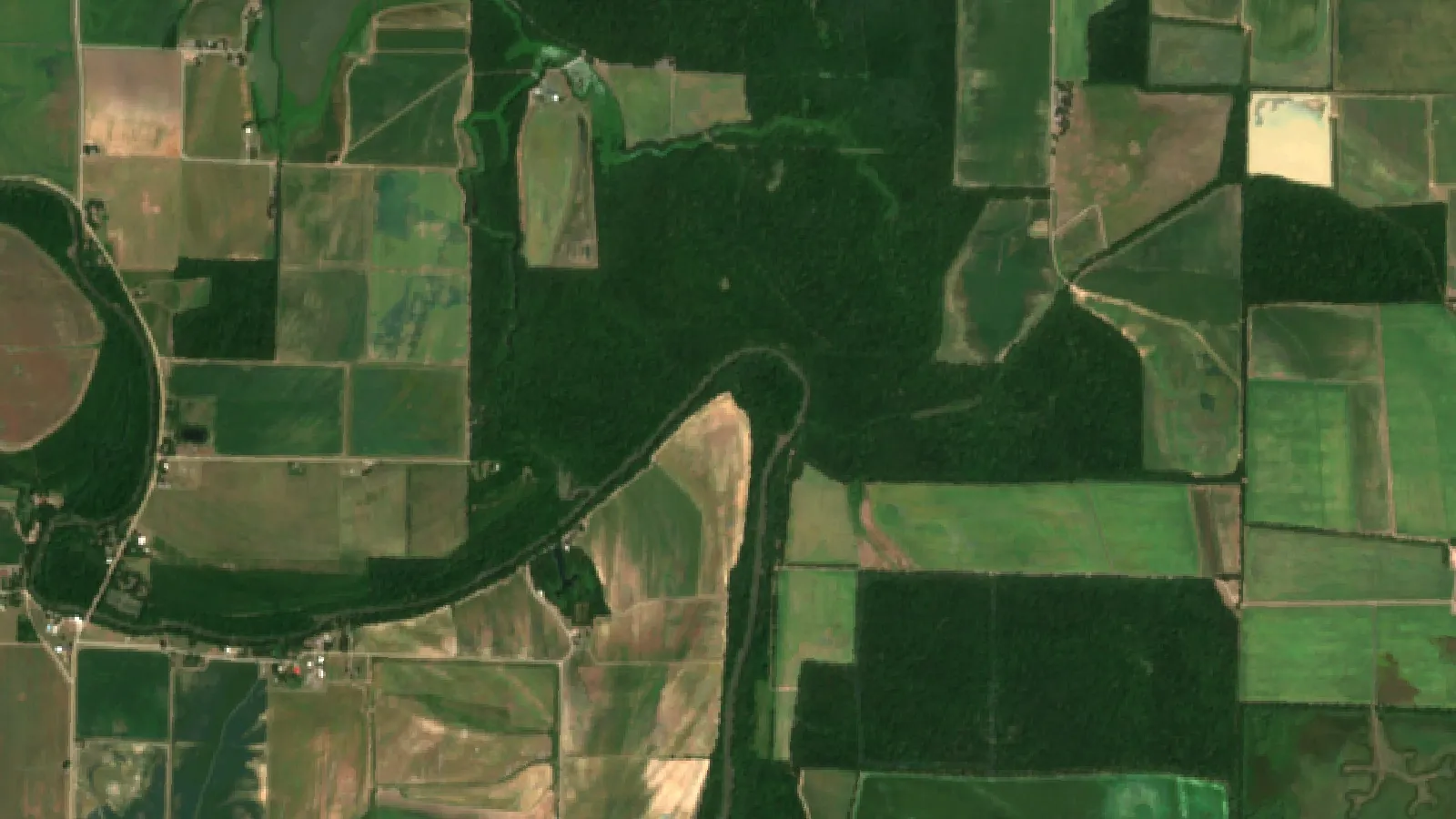
Maps help decide where to fly. Satellite crop health maps, such as those from Farmonaut, show which parts of a field are stressed, so a drone or scout can check those zones first. This is a planning aid; the label and the field check still decide the treatment.

▶ Six plain steps to start precision farming, from field maps to satellite monitoring. · 4:18
How to choose a spray drone or a service
- Count your acres. Add up the area you would treat with a drone each year, and how many passes each field needs.
- Get a hired price first. Ask two local Part 137 operators for a per-acre quote on your crops.
- Price the full kit. Ask dealers for the drone, batteries, charger, generator and spare parts in one dated quote.
- Check the rules. Plan for the FAA exemption, the Part 137 certificate, the remote pilot test and your state licence.
- Run the calculator. Compare your cost per acre with the hired price.
- Check support. Ask how long parts and batteries will be stocked, given the import rules.
▶ Seven green farming technologies that save water, fuel and fertilizer, ranked. · 2:24
How we checked the numbers
We used the ASDC 2025 Impact Survey for US acres, operator counts and per-acre prices. These cover approved Part 137 operators only. Drone prices are dealer listings and reported starting prices collected by GrabaRobot in 2026; they are asking prices, not what buyers paid, and packages differ. Rules come from FAA pages, read in October 2026. Spray advice comes from university extension services. We did not test any drone ourselves.
Related pages on our site: ag spraying advances, land classification types, large farm management app, fleet management, crop loan and insurance tools, carbon footprinting, product traceability, satellite and weather API docs and the web app.
FAQ
How much does an agricultural spray drone cost?
Reported 2026 starting prices run from about $16,000 for a small Hylio Pegasus to about $60,000 for a Hylio Atlas. A DJI Agras T50 ready-to-fly kit was listed at about $24,662. These are dealer asks, not transaction prices, and kits differ.
How much does drone spraying cost per acre?
The average US drone spray service charged $13 per acre in 2025, down from $21 in 2024, according to the ASDC survey. Local quotes vary with field size, product and distance.
Do I need a licence to spray crops with a drone?
In the US, yes. You need an FAA Part 137 certificate, an exemption, a registered drone and a Remote Pilot Certificate, and usually a state pesticide applicator licence. Other countries have their own rules.
Can I still buy a DJI spray drone in the US?
Drones already in use can keep flying. The FCC Covered List decision of December 2025 limits new model approvals, so new DJI stock is hard to find. Ask the dealer about parts and service before you buy.
Can any pesticide be sprayed by drone?
No. University of Georgia Extension says a product must be approved for aerial application, and you must follow the label’s spray volume, droplet size and drift rules.
Agricultural spray drones: the short answer
Spray drones are now a common service on US farms, with about 16.4 million acres treated in 2025. A hired service averaged $13 per acre, and a drone kit costs from about $16,000 to $60,000 at dealer prices. The FAA rules and the import rules matter as much as the hardware. Price a hired service first, run your own numbers in the calculator, and check the label and local rules before any flight.
Farmonaut crop monitoring
See your own fields from space
Draw your fields once and Farmonaut shows satellite crop health maps through the season, so you know which zones to check first.




Keep reading
Sources
- American Spray Drone Coalition, 2025 Impact Survey Results (January 2026): americanspraydronecoalition.com
- FAA, Dispensing Chemicals and Agricultural Products (Part 137) with UAS: faa.gov
- FAA, Become a Certificated Remote Pilot: faa.gov
- FAA, Small Unmanned Aircraft Systems Regulations (Part 107): faa.gov
- University of Georgia Extension, Pesticide Application Considerations with Spray Drones (2023): precisionagirrigation.extension.uga.edu
- Ohio State University, FABE-540 fact sheet on spray drones: pested.osu.edu
- Iowa State University Extension, Precision Spraying Technology (2024): crops.extension.iastate.edu
- AAPCO, Supporting Spray Drones for Crop Protection, presentation (2026): aapco.org
- Ag Drone Directory, Agricultural Drone Spraying Statistics 2026: agdronedirectory.com
- GrabaRobot, DJI Agras T50 Price Guide 2026: grabarobot.com
- GrabaRobot, Hylio Agricultural Drone Price Guide 2026: grabarobot.com
- GrabaRobot, EAVision Spray Drone Price Guide 2026: grabarobot.com
Discussion
Questions, corrections or field experience? Share them below. First-time comments are reviewed before they appear, and your email is never published.
No comments yet. Be the first to add a question or your experience.

 AgroGreen Dynamics
 Leher
 AgroRisk
 Oath Inc
 Reddane Farming
 Esri North East Africa
 Cresol
 Atur Kuliner
 MDCV UK
 Zerella Group
 Etech Consulting Madagascar
 Vestlandsforsking
 Agritein
 Delicio
 WB Dev
 Sama Premium
 Prochecker
 Tres Valles
 LACOS Geoinformation
 Magrifly
 LatConnect 60
 Blickwinkel
 Agricultural Credit Policy Council

 Exploration consultancy · South Africa · Gold
 Licence holder · Niger · Gold










