

Drones in GIS: Top 7 Agro Drones & Crop Spraying UAVs
“The global agro drone market is projected to surpass $6 billion by 2025, driven by advances in GIS technology.”
“Over 70% of new crop-spraying UAVs in 2025 feature multi-spectral imaging for precision field mapping.”
Table of Contents
- Introduction: GIS Drones in 2026 Agriculture
- The Role of Drones in GIS and Precision Agriculture
- GIS Drones for Crop Management and Field Mapping
- Crop Spraying Drones: Technology, Efficiency, and 2025-2026 Advancements
- The Evolving GIS Drone Ecosystem and Applications
- Top 7 Agro Drones & Crop Spraying UAVs [2025–2026]
- Comparative Feature Table: Top Agro & Crop-Spraying Drones
- Satellite-Powered Monitoring & Intelligence with Farmonaut
- Future Trends: AI, IoT & Drones in GIS Agriculture
- Key Insights, Pro Tips & More
- FAQs: Drones, GIS, and Precision Agro Operations
- Get Started with GIS Drones & Satellite Insights
Introduction: GIS Drones in 2026 Agriculture
Drones in GIS are at the heart of a rapidly evolving world in agriculture, representing a transformative leap for precision farming and resource management. By 2026, gis drones, often referred to as UAV GIS devices, have become indispensable for modern farmers and agricultural managers aiming to optimize crop yields, reduce input costs, and promote sustainable practices.
The synergy between drones and Geographic Information Systems (GIS)—empowering the collection, analysis, and mapping of critical farm data—has revolutionized monitoring, intervention, and decision-making at every stage of the crop life cycle. This integration is no longer a futuristic vision; it’s the present and future of modern agriculture.
- ✔ Precision crop mapping and health monitoring in real-time
- 📊 Data-driven pest, disease, and soil analysis
- ⚠ Reduced chemical and water overuse, minimizing ecological footprint
- 🛡 Enhanced yield prediction for financial planning and insurance
- 💡 Automated interventions boost productivity and resource efficiency
The Role of Drones in GIS and Precision Agriculture
Drones in GIS represent a powerful combination of advanced UAV hardware, intelligent sensors, and robust data analytics platforms. They are changing the game of field management and agricultural monitoring in several revolutionary ways:
- 🌱 Monitor and manage crop health by capturing multispectral, RGB, and thermal imagery
- 🌍 Map and analyze variations in soil, moisture, and nutrient levels for site-specific management
- 🛰 Enable precise crop spraying using GIS-integrated crop spraying drones for sale
- 🔗 Seamlessly integrate with cloud GIS platforms (e.g., Dronedeploy compatible drones) for real-time decision-making
- 💡 Facilitate comprehensive field analysis and targeted interventions for every stage of crop growth
By integrating field data layers with real-time drone imagery, farmers and agri-businesses can pinpoint variations within fields, ensuring that interventions (fertilizer, pesticides, irrigation) are localized, efficient, and cost-effective. The result? Optimized yields, reduced input use, and sustainable agricultural operations that are both environmentally and economically beneficial.
Key Applications for Drones in GIS by 2026
- ✔ High-resolution mapping and orthomosaic map generation
- 📊 NDVI, NDWI, and NDMI index analysis for crop health assessment
- 🚜 Automated, GIS-based route planning for spray UAVs
- 💧 Real-time irrigation monitoring and moisture level analysis
- 🦟 Precise detection of pest infestations and disease outbreaks

Key Insight
The integration of GIS drones and satellite platforms leads to a multi-layered, actionable intelligence system — revolutionizing decision-making in modern agriculture and resource management, especially for large-scale farm operations.
GIS Drones for Crop Management and Field Mapping
By leveraging drones in gis, today’s farmers enable comprehensive field mapping and granular crop management at the click of a button—something traditional, manual scouting methods simply can’t match.
What Makes GIS Drones Indispensable for Field Mapping?
- 📷 Multiple sensor payloads (multispectral, thermal, RGB) capture detailed imagery at various light wavelengths
- 📌 Georeferenced maps allow spatially accurate overlays of soil, vegetation, moisture, and crop data
- 🖥 Immediate upload to GIS platforms (Dronedeploy compatible drones included) for hassle-free analysis and reporting
- 🛡 Automated anomaly detection for identifying infestations, water stress, or nutrient deficiencies
This integration is especially critical for large farmland or fragmented plots, enabling precise interventions and effective use of resources. By generating detailed layer maps—from soil type to vegetation index—operators can identify variations within fields that would otherwise go unnoticed.
- Use case: Overlaying NDVI and soil moisture maps to plan targeted fertilizer or irrigation application
- Result: Reduces inefficiency and ecological footprint by avoiding uniform treatments

Pro Tip
Combine drone-captured imagery with Farmonaut’s satellite layers for an unbeatable multi-scale monitoring solution. This fusion maximizes field insights for health, soil, and irrigation conditions—essential for efficient management.
📍 GIS Drone Benefits
- Targeted interventions in pest, irrigation, nutrient, or disease management
- Real-time monitoring of growth and stress indicators
- Reduced input costs and environmental impact
- Faster response to disease and pest infestations
- Better yield prediction for financial planning
🚀 Visual Workflows
- Automated flight paths over complex terrain
- Orthomosaic rendering for accurate measurement
- Platform integration with satellite and IoT data feeds
- GIS-based anomaly alerts for managers on mobile/web
- Documentation and regulatory compliance
Crop Spraying Drones: Technology, Efficiency, and 2025–2026 Advancements
The adoption of crop spraying drones has soared, with 2025–2026 seeing major advancements in navigation, spraying precision, and flight intelligence. Today’s agro drones aren’t just flying sprayers—they are AI-powered, GIS-integrated field robots capable of executing tailored spray missions with pinpoint accuracy.
How Crop Spraying Drones Work with GIS
- 🗺 GIS field maps define spray zones, navigation routes, and obstacles
- 🧠 AI-driven flight planning tailors altitude, speed, and nozzle activity to crop type and growth stage
- 💦 Variable-rate application algorithms apply chemicals only where needed, avoiding overuse
- 📡 Real-time ground station monitoring ensures operational safety and traceability
With advanced sensors and AI-based control algorithms, these UAVs apply fertilizers, herbicides, and pesticides more evenly and precisely than manual methods. By leveraging GIS data and integrating topographic and crop growth layers, spraying drones execute complex, GPS-linked flight paths that minimize input use, chemical exposure, and labor requirements.
Crop spraying drones for sale are now equipped with ruggedized nozzles, precise flow meters, and anti-drift systems, ensuring environmentally safe operations. Most leading UAVs are Dronedeploy compatible, supporting seamless cloud-based mapping and post-spraying analysis.
Common Mistake
Avoid applying uniform chemical dosages across entire fields—use GIS drones to identify localized crop variations (hotspots) so herbicides and fertilizers are only used where necessary, helping the environment and your bottom line.
The Evolving GIS Drone Ecosystem and Applications
By 2026, GIS drones are core elements of a sophisticated agricultural technology ecosystem, extending well beyond crop monitoring and spraying. The combination of UAV GIS, satellite platforms, IoT sensors, and big data analytics enables a comprehensive approach to resource management across farming, infrastructure, forestry, and even mining.
Key Applications Across Industries
- 🌳 Forestry: GIS drones map tree density, estimate timber volumes, and help manage wildfire risks
- 🚜 Infrastructure: Monitor drainage, irrigation, and farm access networks with drone-acquired imagery
- 💧 Irrigation: Detect leaks, blockages, or erosion using overlaid multispectral and topographic maps
- ⛏ Mining: UAV-based mapping for monitoring site expansion, soil movement, and regulatory compliance
The true advantage comes from integrated operations—data from GIS drones can be overlaid with satellite insights, AI advisories, and fleet management dashboards for a holistic view of any land-based asset.

🔍 What GIS Drones Enable
- Multi-season crop health benchmarking
- Automated irrigation scheduling with IoT and GIS
- Real-time damage and anomaly alerts
- Compliance-ready reporting for audits/insurance
- Collaboration across farm, business, and government teams
🏞 GIS Drones Across Landscapes
- Cereal crop plains and fragmented farmland
- Mountainous & terraced agriculture (Asia)
- Large-scale commercial plantations
- Reforestation, afforestation, and forest management zones
- Mining sites and industrial infrastructure corridors
Investor Note
The global agro drone market continues to grow as GIS drones find new applications across agriculture, forestry, and mining. Scalable, AI-enabled solutions represent a key opportunity for future investments in the sector.
Top 7 Agro Drones & Crop Spraying UAVs [2025–2026]
Below, we present a selection of top-performing agro drones and crop spraying UAVs dominating the 2025–2026 landscape. These models exemplify advanced technology, GIS integration, and robust field management capabilities. This lineup features dronedeploy compatible drones, advanced payloads, and sustainable operation design.
- ✅ DJI Agras T50 – Leading crop spraying drone with AI flight planning
- ✅ XAG P150 – High-capacity, multispectral spraying & mapping UAV
- ✅ Yamaha FAZER R G2 – Industrial-scale, hybrid (mapping & spraying) UAV
- ✅ Parrot Bluegrass Fields – Accessible, multisensor drone for mapping
- ✅ SenseFly eBee Ag – Fixed-wing mapping drone for large farms
- ✅ Hylio AG-272 – USA-based, modular, rugged spraying UAV
- ✅ DroneDeploy Air 2025 – Optimized for cloud-based GIS & NDVI mapping
Each of these UAVs is designed for synergy with GIS systems, combining high-resolution imaging, AI-powered flight management, and robust data integration for maximum efficiency.

Comparative Feature Table: Top Agro & Crop-Spraying Drones (2025–2026)
| Model Name | Manufacturer | Intended Use Case | Flight Time (min) |
Payload Cap. (kg) |
Coverage/Flight (Ha.) |
Sensor Type | GPS/Mapping Capabilities | Price Range (USD) |
Release Year |
|---|---|---|---|---|---|---|---|---|---|
| DJI Agras T50 | DJI | Spraying, Mapping | 20–28 | 40 | 16–21 | Multispectral, RGB | RTK; DroneDeploy | $25,000–$32,000 | 2025 |
| XAG P150 | XAG | Spraying, Mapping | 20–24 | 50 | 21–30 | RGB, Multispectral | RTK GPS, GIS Platforms | $33,000–$36,000 | 2025 |
| Yamaha FAZER R G2 | Yamaha | Industrial Spraying, Mapping | 90 | 32 | 20–25 | RGB, Multispectral | Differential GPS, DroneDeploy | $180,000–$200,000 | 2025 |
| Parrot Bluegrass Fields | Parrot Drones | Mapping, Scouting | 30 | 2 | 10–15 | Multispectral, RGB | GNSS, GIS Platforms | $8,000–$9,000 | 2025 |
| SenseFly eBee Ag | AgEagle/SenseFly | Mapping, Scouting | 50–60 | 1.5 | 40–50 | Multispectral | RTK GPS, GIS Integr. | $13,500–$15,000 | 2025 |
| Hylio AG-272 | Hylio | Spraying | 22–27 | 34 | 14–18 | RGB, GIS Sensors | RTK, GIS Flight Planning | $28,000–$31,000 | 2025 |
| DroneDeploy Air 2025 | DroneDeploy | Mapping, NDVI/Health | 40 | 3 | 15–18 | Multispectral, RGB | Cloud-GIS, RTK, NDVI | $10,000–$13,000 | 2025 |
Data Insight
Drone models offering multispectral and RGB sensors, extended flight time, and seamless GIS platform compatibility are best positioned to deliver optimal results in large-scale, precision farming operations.
Satellite-Powered Monitoring & Intelligence with Farmonaut
As prominent as GIS drones have become, satellite-driven solutions are equally essential for a comprehensive, multi-scale data strategy. At Farmonaut, we deliver advanced satellite technology, AI advisory systems, blockchain-based traceability, and resource management tools tailored for agriculture, mining, infrastructure, and defense domains.
Farmonaut’s Key Technologies & Benefits
- 🛰 Satellite-Based Monitoring: Our system monitors crop health (NDVI), soil, and infrastructure using high-frequency multispectral imagery.
- 🤖 Jeevn AI Advisory System: Integrated AI delivers real-time crop, weather, and operational insights based on satellite data.
- 🔗 Blockchain Traceability: Our solutions ensure secure, transparent product tracking and fraud reduction for farming, mining, and supply chains.
- 🚚 Fleet and Resource Management: Efficiently manage field assets and logistics with Farmonaut’s fleet and resource management dashboard, minimizing costs and downtime.
- 🌱 Environmental Monitoring: Track and reduce carbon footprint for compliance and sustainability.
- 🏦 Crop Loan & Insurance: Utilize satellite-aided verification for loans and insurance—streamlining access and minimizing risk in agricultural finance.
- 🏞 Pioneer in Large-Scale Management: Our Agro Admin App empowers managers with remote, multi-field oversight and AI-guided scouting.
Our platform is accessible via Android App, iOS App, Desktop/browser, and robust APIs (Developer Docs).




Why Pair Drones with Farmonaut’s Satellite Data?
- 🥇 Higher temporal and spatial coverage: Satellite imagery fills gaps left by drone flights—ideal for cloudy, large, or remote areas
- 🖲 Integrated advisory and analytics: Combine drone and satellite data for a holistic view of crop health, pest risks, and soil dynamics
- 💰 Scalable and affordable: No need to invest in heavy drone fleets; Farmonaut subscriptions democratize access to cutting-edge technology
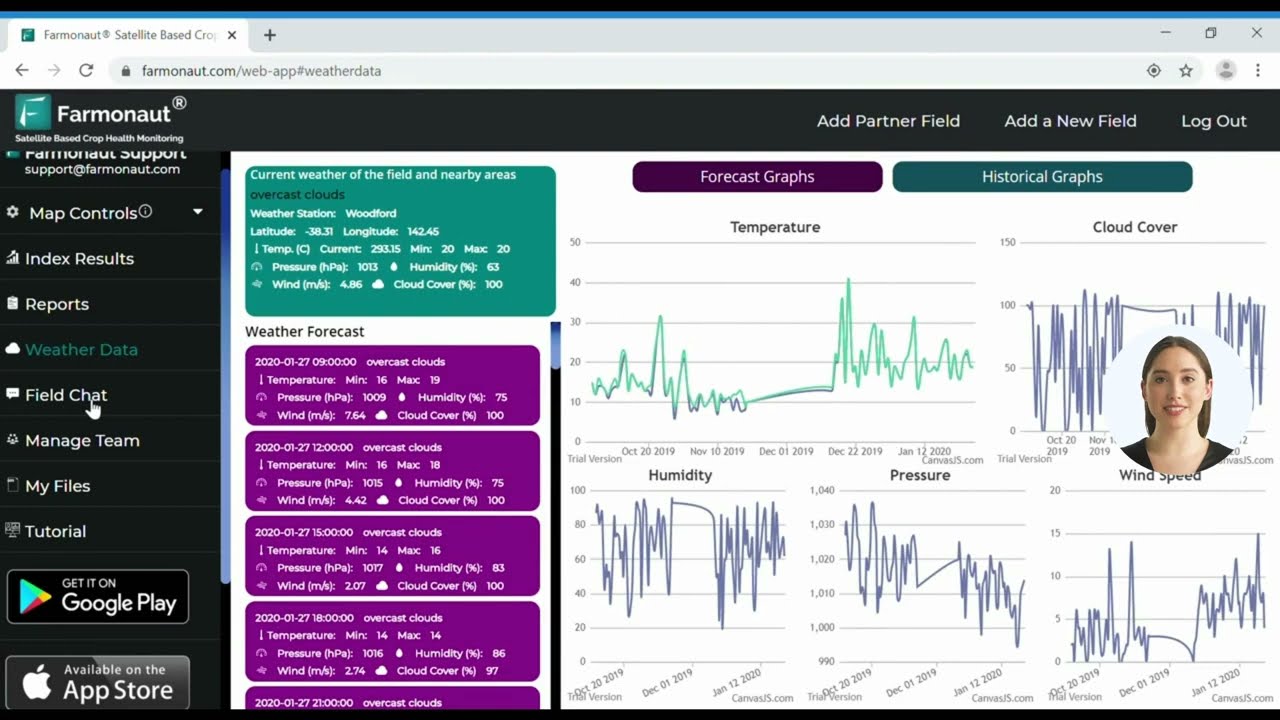
Explore Farmonaut’s scalable subscription options below:
“Over 70% of new crop-spraying UAVs in 2025 feature multi-spectral imaging for precision field mapping.”
Future Trends: AI, IoT & Drones in GIS Agriculture (2026–2030)
The convergence of drones, GIS, AI, IoT, and satellite data is set to sustain a new wave of precision farming from 2026 onwards.
What to Expect in the Next Wave of GIS Drone Integration?
- 🧠 Full AI-driven flight management: Automated path creation, mission updates in real-time, and predictive analytics for pest/disease outbreaks
- 🔗 IoT sensor integration: Pairing soil, weather, and field sensors with aerial data for a true digital twin of farmland
- 🌦 Hyperlocal weather and microclimate adaptation: Custom spraying and irrigation based on micro-plot conditions
- 🛰 On-demand, cloud-based GIS analytics: Real-time maps and health indices accessible on any device, for any field size
- 🔒 Blockchain-backed traceability: Documenting every intervention for food safety, insurance, and compliance
- 🌲 Sustainable forestry/restoration: GIS drones monitor reforestation and track sustainability KPIs
For businesses and managers, these trends mean smarter budgets, more predictable outputs, and increased resilience against climate and market volatility. Consult Farmonaut’s crop, forest, and infrastructure advisory services to blend drones, satellites, and AI seamlessly into your 2026–2030 planning.
Key Insight
By 2030, successful agricultural enterprises will harness multi-source data—drones, satellites, sensors, and AI—within their GIS platforms to maximize productivity while minimizing environmental impact and risk.
Key Insights, Pro Tips & More
- ✔ Focus on GIS-compatible drones: Models with RTK GPS and direct GIS export enhance precision and cut workflow complexity
- 📊 Map layering is essential: Overlay crop, soil, and elevation data for richer, actionable insights
- ⚠ Environment matters: Always consider microclimate, terrain, and wind patterns in UAV flight planning
- 🧩 Integrate with APIs: Use Farmonaut’s API for automated, cross-platform integration of drone and satellite data
- 🚩 Stay compliant: Leverage traceability and blockchain modules for end-to-end documentation (Farmonaut Product Traceability)
FAQs: Drones, GIS, and Precision Agro Operations
What are GIS drones and why are they important in 2026 agriculture?
GIS drones, or “drones in GIS”, are UAVs equipped with spatial recording tools, advanced sensors, and navigation algorithms, allowing for highly accurate mapping, monitoring, and management of farmland. They enable precise, sustainable practices, optimizing input and maximizing yield.
How do crop spraying drones increase efficiency compared to traditional methods?
Crop spraying drones for sale execute variable-rate, GIS-guided spraying—targeting chemicals only where needed. This reduces chemical overuse, minimizes labor needs, and offers precision year-round, even in challenging field conditions.
Can I use both drones and satellite monitoring together?
Absolutely. Integrating drones with satellite platforms (like Farmonaut’s) enables multi-scale crop health monitoring, anomaly detection, and better risk management, especially for very large or remote farms.
What kind of sensors should my GIS drone have?
Multispectral, RGB, and thermal sensors are currently the gold standard for comprehensive crop and field analysis. These sensors allow you to assess chlorophyll levels, water stress, canopy structure, and pest/disease threats.
What’s the expected ROI of integrating GIS drones and Farmonaut analytics?
By reducing wasted inputs, improving targeting, and improving decision speed, operators often see payback within 1–2 seasons. Environmental monitoring and crop loan insurance eligibility further enhance ROI and risk management.
Get Started with GIS Drones & Satellite Insights
Embracing drones in GIS and synchronizing them with satellite-powered platforms like Farmonaut is the definitive strategy for 2026 and beyond—delivering actionable intelligence, sustainable practices, and profitable results.
Key Takeaways and Next Steps:
- ✔ Choose the right drone: Prioritize flight time, payload, sensor type, and GIS compatibility
- 📊 Integrate all data: Blend drone, satellite, IoT, and farm management platforms for holistic, actionable insights
- 🔗 Leverage subscription platforms: Explore Farmonaut’s scalable offerings to bring advanced monitoring to any operation size or budget
- 🚀 Adopt best practices: Precision planning, variable-rate application, and blockchain traceability protect yields, environment, and regulatory standing
- 📱 Stay mobile and agile: Use web, Android, or iOS apps for in-field management on the go
Ready to transform your operations?
Empower your farm, business, or institution with the power of GIS drones paired with Farmonaut’s satellite technologies—for intelligent, connected, and future-proof agriculture.
“Precision farming begins with precision data—unlock your farm’s full potential today.”

 Farms Easy
 Rouge VC
 Yutz Automation
 AgroGreen Dynamics
 AgroRisk
 Oath Inc
 Reddane Farming
 Esri North East Africa
 Cresol
 Atur Kuliner
 MDCV UK
 Zerella Group
 Etech Consulting Madagascar
 Vestlandsforsking
 Delicio
 WB Dev
 Sama Premium
 Prochecker
 Tres Valles
 LACOS Geoinformation
 Magrifly
 LatConnect 60
 Blickwinkel
