

How Has Technology Changed Farming: 2025 Breakthroughs
If you’ve been asking “how has technology changed farming?” in 2025, the short answer is: profoundly. Precision systems, AI models, satellite imagery, drones, IoT sensors, robotic machinery, and interoperable digital platforms have transformed an intuitive craft into a data-driven industry. The result is higher yields with lower input intensity, reduced water use, earlier disease detection, and measurable, lower emissions.



Table of Contents
- 2025 Snapshot: From Intuitive Craft to Digital Industry
- Precision Agriculture Systems: GPS, Sensors, Drones, and Variable-Rate Control
- AI and Machine Learning: Predictive Models and Decisions
- Satellites, Hyperspectral, and Radar: Seeing Through Clouds and Stress
- IoT Telemetry, Soil Moisture, and Automated Irrigation/Fertigation
- Robotics and Autonomy: Tractors, Planters, Harvesters, and Field Robots
- Controlled Environments and Precision Livestock Farming
- Breeding, Energy, Carbon, and Environmental Sustainability
- Digital Ecosystems, Adoption, Extension, and Governance in 2025
- Comparative Impact Matrix for 2025 Farming Technologies
- FAQ: How Has Technology Changed Farming?
2025 Snapshot: From Intuitive Craft to Digital Industry
In 2025, technology change in agriculture is unmistakable. The question “how has technology changed agriculture” now spans satellites that provide frequent imagery, drones that scout and spray, AI that turns data into actionable decisions, and autonomous machines that perform repetitive tasks with centimeter accuracy. Farming was once a highly intuitive craft; it has been transformed into a digital industry that optimizes inputs—seed, fertilizer, pesticides, and water—at sub-field scale.
- Precision: GPS-guided variable-rate systems manage inputs with targeted control, boosting yields while reducing costs and environmental impacts.
- Remote sensing: Multispectral, hyperspectral, and synthetic-aperture radar satellites penetrate clouds and detect crop stress, nutrient deficiencies, and disease earlier than the eye.
- IoT telemetry: Soil moisture probes and weather stations feed platforms that implement automated irrigation and fertigation, cutting water use and nitrate leaching.
- AI models: Artificial intelligence, machine learning, and computer vision predict pest outbreaks, identify weeds and symptoms, and recommend planting dates and input rates tuned to microclimates.
- Automation: Autonomous tractors, planters, harvesters, and small field robots reduce labor shortages and perform precise tasks.
- Livestock: Wearable sensors, automated feeders, and imaging systems enable continuous monitoring, early detection, optimized feed conversion, and improved veterinary care.
- Sustainability: Electrification, on-farm renewables, and precision nutrient management deliver lower emissions per unit of production.

As a satellite technology company, we at Farmonaut focus on making these capabilities accessible. We provide satellite-based monitoring (NDVI and more), AI advisory via Jeevn AI, blockchain-based traceability, fleet and resource management, and environmental impact tracking, all delivered through Android, iOS, web apps, and APIs. Our mission is to deliver practical, affordable insights to farmers, agribusinesses, and public institutions.
Farmonaut API | API Developer Docs
5 Ways Technology Has Changed Farming
- Machines replaced most farm labour. Tractors, combines and later self-propelled machinery cut the work needed per acre. In the US, self-employed and family farm labour fell from 7.6 million in 1950 to 2.06 million in 2000, a 73% drop (USDA ERS).
- Output rose without using much more land, labour or inputs. US farm output in 2023 was nearly three times its 1948 level, while total input use grew only about 0.12% a year; productivity growth averaged 1.40% a year (USDA ERS).
- GPS put every pass on a map. Auto-steer, section control and yield monitors mean seed, fertilizer and spray can be varied across a field instead of applied at one flat rate.
- Farmers can see crops from above. Free public satellite imagery, commercial satellites and drones show crop vigour, water stress and flooding across whole farms every few days, so scouting starts where problems are.
- Data now drives decisions. Weather stations, soil moisture probes, livestock sensors and farm software turn records into irrigation schedules, spray timings and yield forecasts.
The first two changes played out over the last century; the last three are still spreading, and adoption is highest on larger commercial farms.
Precision Agriculture Systems: GPS, Sensors, Drones, and Variable-Rate Control
How has technology changed farming with precision?
The core of precision agriculture is managing variability. Using gps, soil and crop sensors, drones, and variable-rate controllers, farmers apply the right input at the right rate, time, and place. Precision tech is now common on large arable farms in many regions, improving profitability and eco-efficiency.
- Variable‑rate seeding and fertilization: Sub-field prescription maps adjust seed and fertilizer rates to match potential, boosting yields while reducing waste and nutrient losses.
- Section control and guidance: Auto-steering and section control cut overlaps and skips, lowering input intensity and fuel use with high accuracy.
- Drones and sprayers: Multirotor and fixed-wing drones gather imagery and carry out targeted spraying, reducing pesticides with precise intervention.
- Digital platforms: Cloud dashboards and mobile apps aggregate data, guiding in-season and off-season decisions.
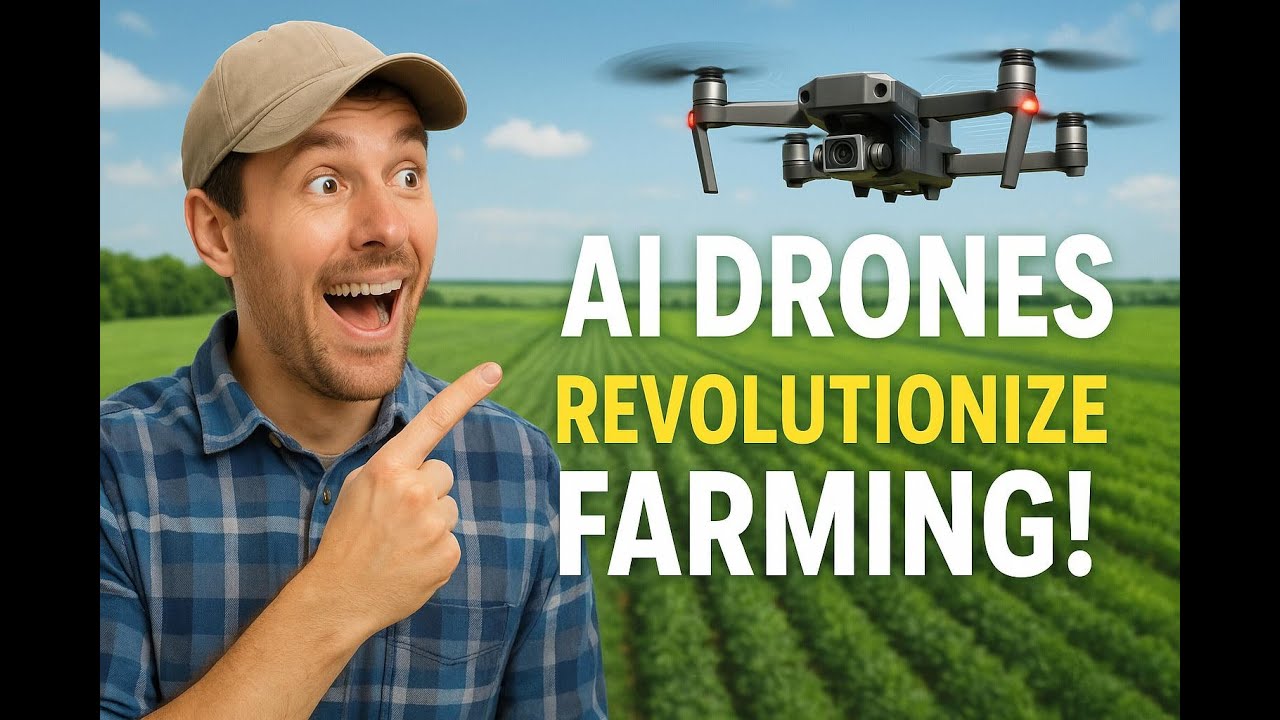
Precision benefits stack up: fewer pesticides and lower fertilizer per tonne harvested, more uniform crop quality, and better soil stewardship. These advances directly address “how has technology changed farming?”—by converting variability into value.
Farmonaut Large-Scale Farm Management: We offer scalable, satellite-first administration tools that let agribusiness teams monitor multi-farm portfolios, unify field telemetry, and benchmark performance—reducing scouting costs and improving in-season decisions.
AI and Machine Learning: Predictive Models and Decisions
Artificial intelligence (AI) and machine learning are the brains behind digital farming. These models assimilate satellite imagery, weather, soil data, and agronomic records to improve decisions across the season.
From data to action: models that deliver
- Predictive yield and risk: Season-long forecast of yield and production risk guides marketing and insurance choices.
- Pest and disease early warning: Spatial models predict pest outbreaks and disease pressure, enabling earlier, targeted intervention.
- Computer vision in the field: Cameras and drones pair with computer vision to spot weeds, nutrient deficits, and disease symptoms earlier than the eye.
- Decision support: AI systems recommend optimal planting dates, hybrids, and input rates tuned to local microclimates.

We deliver AI-driven advice through Jeevn AI, which analyzes satellite, weather, and field data to provide context-specific guidance for crop health and resource use. This system is designed to convert complex signals into clear, actionable decisions that improve income and sustainability.
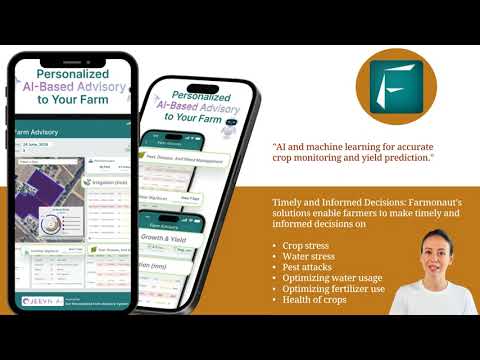
AI-enabled advisory ensures that technology change in agriculture reaches the field when it matters most, not just after-the-fact reporting. For farmers, that means fewer passes, lower input intensity, and better yields under climate variability.
Farmonaut Crop Loan & Insurance Verification: We support financial institutions with satellite-based verification to reduce fraud and simplify access to financing, enabling risk-aware lending that aligns with real field conditions and AI forecast insights.
Satellites, Hyperspectral, and Radar: Seeing Through Clouds and Stress
Satellites are the backbone of scalable field monitoring in 2025. Multispectral sensors track vegetation indices like NDVI and LAI; hyperspectral payloads refine detection of nutrient deficiencies; synthetic-aperture radar (SAR) penetrate clouds, providing reliable coverage even in monsoon or maritime climates.
- Frequent imagery: Constellations now provide frequent imagery at sub-10 meter resolution for most major cropping regions.
- Stress and disease detection: Optical and thermal signals detect water stress and early disease indicators days to weeks before visible symptoms.
- Soil and moisture mapping: Radar backscatter and microwave retrievals estimate soil moisture, aiding irrigation planning and drought response.

These capabilities solve a long-standing challenge: missing data under clouds. By combining optical and SAR time series, farms gain reliable telemetry for mid-season decisions. And because satellites scale across regions, they are crucial for benchmarking and policy.

We specialize in satellite-based monitoring solutions that track vegetation health (e.g., NDVI), soil condition indicators, and environmental risk factors. Our platform’s satellite-first approach is built to scale across individual farms, agribusinesses, and government programs.
Farmonaut Blockchain Traceability: We help digitize supply chains by encrypting origin, movement, and quality checkpoints. This enhances transparency from farm to shelf without adding expensive, proprietary hardware—ideal where trust and compliance matter.
IoT Telemetry, Soil Moisture, and Automated Irrigation/Fertigation
IoT sensors and edge devices turn fields into living laboratories. In 2025, connected stations measure weather, canopy temperature, leaf wetness, sap flow, and soil moisture at multiple depths. Integrations with platforms implement automated irrigation and fertigation that apply water and nutrient solution precisely.
- Water savings: Decision rules cut water use by aligning irrigation to crop demand, soil storage, and forecast rainfall.
- Nitrate leaching reduction: Dynamic fertigation curbs losses below the root zone, cutting nitrate leaching into groundwater.
- Operational efficiency: Alerts and automation reduce truck rolls and labor for pump controls.
These systems don’t just reduce consumption—they stabilize yields under heat waves and dry spells. When growers ask, “how has technology changed farming?”—IoT telemetry is a clear example of real-time control that protects both profits and aquifers.
Farmonaut Fleet & Resource Management: We support field operations by optimizing vehicle and machinery use across farms and agri-services, improving route planning, safety, and cost control—especially valuable during critical irrigation and harvest windows.
Robotics and Autonomy: Tractors, Planters, Harvesters, and Field Robots
Autonomous agriculture is no longer experimental. In 2025, autonomous tractors, robotic planters and harvesters, and small field robots address labor shortages, performing repetitive tasks with centimeter-level accuracy. Vision-guided implement control keeps rows clean and stands uniform.
- Camera-guided weeding: “See-and-spray” or mechanical tools manage weed pressure while reducing herbicide dependence.
- Harvest assist: Robotic grippers and conveyors stabilize throughput when seasonal labor is scarce.
- Autonomous safety and control: Lidar, radar, and geofencing improve field autonomy without compromising worker safety.
Automation changes the economics of timeliness. Hitting the ideal window for planting and spraying can add points of yield; robotics increase the odds of doing so consistently, farm after farm.
Controlled Environments and Precision Livestock Farming
Controlled-environment agriculture (CEA)
Vertical farms, greenhouses, hydroponics, and aeroponics have matured for high-value crops. LED lighting, climate control, and closed-loop nutrient delivery produce consistent quality with vastly reduced land and water footprints, often expanding urban production.

- Precision climate recipes: Crop-specific setpoints for humidity, CO₂, VPD, and light spectra deliver uniformity and reduce risk of disease.
- Resource efficiency: Recirculating systems use far less water per kilo of produce than open-field growing, because unused nutrient solution is captured and reused.
- Urban supply: Shorter supply chains preserve freshness, reduce spoilage, and improve quality.
Precision livestock farming
Wearable sensors and barn imaging enable continuous monitoring of livestock health and performance. Automated feeders and waterers, thermal cameras, and gait analysis systems improve welfare and productivity.
- Early detection: Alerts identify fever, lameness, or digestive distress earlier, allowing rapid veterinary care.
- Optimized feed conversion: Growth curves and feed intake data drive ration adjustments, lowering feed costs per kilogram of gain.
- Lower emissions: Better health and feed efficiency reduce methane and nitrous oxide per unit of product, improving the GHG profile.
Breeding, Energy, Carbon, and Environmental Sustainability
Breeding and genetics
Genomic selection and gene editing shorten breeding cycles, producing varieties with improved climate resilience, pest tolerance, and nutrient use efficiency. These advances expand local adaptation options, helping stabilize yields across diverse environments.
Energy and emissions
Electrification of machinery, solar arrays, and biogas digesters are increasingly common. Coupled with precision nutrient management, farms achieve lower greenhouse-gas emissions per tonne of product.

Farmonaut Carbon Footprinting: We provide real-time environmental impact tracking that quantifies carbon intensity at field or portfolio level. This supports participation in emerging carbon markets and insetting programs by improving measurement, reporting, and verification workflows.
Supply-chain trust and quality
End-to-end traceability—QR codes, RFID, and sensor-based cold-chain monitoring—improves food safety and transparency. Digitized certificates and geo-stamped harvest events allow buyers to validate origin and handling conditions.
Farmonaut Traceability ties farm-level data and satellite observations to immutable blockchain records, enhancing brand trust without complex new hardware. This is especially useful for exporters and premium markets that demand verifiable provenance and quality.
Digital Ecosystems, Adoption, Extension, and Governance in 2025
Looking ahead, the next wave is integration. Interoperable digital ecosystems combine satellites, edge AI, finance and insurance services, and platforms for a one-stop experience. However, adoption remains uneven. Smallholders face barriers in capital, connectivity, and digital literacy; extension services and training are critical to bridge the gap.
- Data ownership and governance: Clear rules for consent and use reduce risk and enable fair value sharing.
- Interoperability: Open standards and APIs prevent vendor lock-in and enable portable data.
- Cybersecurity: Protection of farm control systems and cloud accounts is now a production risk issue, not just IT.
Farmonaut API & Developer Docs: We offer APIs that let third parties bring satellite-derived agronomic signals into their own systems—from farm CRMs to insurance pricing engines—accelerating digital transformation across the value chain.
Farmonaut Crop, Plantation & Forest Advisory: Through our apps, we deliver satellite monitoring and AI-driven insights directly to users who need practical agronomy advice without installing expensive hardware.
Subscription options are available for individual users, businesses, and government institutions. Below is our pricing table for easy onboarding.
For logistics-heavy operations, Farmonaut Fleet Management helps reduce fuel, idle time, and unplanned maintenance by optimizing equipment use across fields and depots.
Comparative Impact Matrix for 2025 Farming Technologies
This matrix summarizes how major agri‑tech breakthroughs change farm outcomes in 2025.
FAQ: How Has Technology Changed Farming?
How has technology changed farming in 2025, in one paragraph?
It has made farming a digital, data-rich industry. Satellites and drones provide frequent imagery to detect crop stress and disease earlier; IoT sensors and telemetry implement automated irrigation/fertigation to save water; AI models turn data into actionable guidance on inputs, planting dates, and rates; and autonomous machines execute with centimeter accuracy. The result is higher yields with lower input intensity and lower emissions.
What is the biggest driver of yield gains?
Combining variable-rate input control with AI decision support and satellite monitoring. Together, they allow targeted application of seed, fertilizer, and pesticides, while avoiding over- and under-application, improving crop quality and stability.
How does radar help “see through” clouds?
Synthetic-aperture radar uses microwave wavelengths that are not blocked by clouds or darkness. It measures backscatter related to surface roughness and moisture, enabling consistent field monitoring regardless of weather or time of day.
Are small farms benefiting, or only large farms?
Both, but adoption is uneven. Low-cost digital tools and mobile apps help smallholders, while large farms deploy robotics and advanced systems. Investments in extension, services, and training are key to inclusive adoption.
What about data ownership and security?
Clear governance agreements and consent frameworks are vital. Interoperable platforms and robust cybersecurity practices protect farmer data and prevent lock-in, ensuring fair use and value sharing.
Where does Farmonaut fit into all this?
We provide satellite-based monitoring, AI advisory (Jeevn AI), blockchain traceability, fleet management, and environmental impact tracking—accessible via Android, iOS, web, and APIs. Our goal is to make satellite-driven insights affordable and practical for farmers, businesses, and governments worldwide.
Is Farmonaut a marketplace or machinery manufacturer?
No. Farmonaut is not an online marketplace, not a manufacturer/seller of farm inputs or machinery, and not a regulatory body. We are a satellite technology company delivering digital insights and management tools.
Quick Access
- Farmonaut Web & Mobile App
- API | Developer Docs
- Carbon Footprinting
- Traceability
- Fleet & Resource Management
- Large-Scale Farm Management
- Crop Loan & Insurance Verification
Closing Thoughts: Integration Is the Breakthrough
By 2025, “how has technology changed farming?” has a clear answer: it has integrated sensing, analytics, and automated execution into a coherent system that raises yields, lowers costs, and reduces environmental impacts. Yet the frontier is not any single gadget; it is the integration of satellites, AI, IoT sensors, drones, robotics, and finance into transparent, interoperable platforms. With inclusive governance, robust extension services, and practical training, these tools can work for all farmers, regardless of size or location.
To explore satellite-led insights with AI decision support, start with Farmonaut. We focus on delivering measurable value—turning data into better farming.
Discussion
Questions, corrections or field experience? Share them below. First-time comments are reviewed before they appear, and your email is never published.
No comments yet. Be the first to add a question or your experience.

 Patrick America
 Red Dog Management
 Liquify Digital
 Ascentya
 CU Foods
 BeyondTech Global
 Rouge VC
 AgroGreen Dynamics
 AgroRisk
 Oath Inc
 Reddane Farming
 Esri North East Africa
 Cresol
 MDCV UK
 Zerella Group
 Etech Consulting Madagascar
 Vestlandsforsking
 Delicio
 WB Dev
 Sama Premium
 Prochecker
 Tres Valles
