

Amazon Rainforest Deforestation Solutions & 2025 Actions
“Over 17% of the Amazon rainforest has been lost in the past 50 years, threatening global biodiversity and climate stability.”
Introduction: Why Amazon Rainforest Deforestation Matters
The Amazon rainforest, often referred to as the “lungs of the Earth,” is more than just a vast expanse of trees. It’s a vital ecosystem that plays a crucial role in global climate regulation, biodiversity conservation, and the sustenance of indigenous and local communities. Yet, as we navigate through 2025, threats like deforestation, illegal logging, agricultural expansion, and mining are accelerating the destruction of this irreplaceable rainforest.
Why is this important for everyone? The Amazon’s decline endangers global climate stability, reduces the Earth’s natural carbon sinks, disrupts important water cycles, and causes the loss of thousands of species, many of which are yet to be discovered. Tackling these interconnected challenges in the Amazon means deploying both advanced technology—like satellite observation—and grounded, community-based sustainable practices to ensure a healthier planet for us all. This article provides an in-depth look at actionable amazon rainforest deforestation solutions, showing how monitoring with satellite images, better policies, and smart technology can drive conservation forward in and beyond 2025.
Amazon Rainforest Threats in 2025: The Need for Solutions
Deforestation in the Amazon is not just a local issue—it is a global crisis. Understanding the threats driving this trend is essential for formulating effective anti-deforestation actions and developing practical solutions.
Key Drivers of Amazon Rainforest Deforestation
- Agricultural Expansion: The conversion of forest land into farmland and pastures, especially for soy cultivation and cattle ranching, is a traditional and still-dominant force pushing deforestation. Such activities exacerbate forest loss and create lasting pressures on the environment.
- Illegal Logging and Mining: Illegal logging operations and unauthorized mining not only strip away protective cover but also bring collateral environmental harm—from soil erosion and water pollution to habitat degradation for countless species.
- Infrastructure Development: New road construction and expanded infrastructure projects facilitate deeper incursions into previously inaccessible rainforest areas, accelerating deforestation rates.
- Socio-Economic Pressures: Local populations often face economic hardships that push them toward unsustainable practices, as short-term survival is often prioritized over long-term environmental health.
- Governance Challenges: Limited resources, corruption, and difficulties with on-the-ground enforcement mean that even the best national or international agreements struggle to have their intended impact.
The Scope of Amazon Rainforest Deforestation (2025)
- Deforestation rates remain alarmingly high, with certain areas losing forest cover at a pace that could render large regions unrecognizable by the next decade.
- Environmental degradation is compounded by soil erosion, polluted waterways, and the loss of biodiversity.
- The global climate regulation function of the Amazon is severely compromised as more carbon is released into the atmosphere through logging, burning, and land conversion.

Access satellite-powered monitoring to track Amazon deforestation, restore degraded lands, and integrate actionable insights directly from the Farmonaut web app.
“Satellite monitoring in 2025 is expected to cover 95% of Amazon deforestation hotspots, enhancing rapid conservation response.”
Satellite Monitoring: Revolutionizing Amazon Deforestation Detection
Advanced satellite technologies have transformed deforestation monitoring into an almost real-time science. In 2025, high-resolution satellite images, artificial intelligence (AI), and machine learning algorithms are being combined to provide unprecedented accuracy in detecting and tracking forest loss in the Amazon rainforest.
How Satellite Monitoring Works in the Amazon
- Frequent Imaging: Satellite imagery now provides updates in near real-time, enabling monitoring of even the most remote parts of the rainforest.
- Multi-spectral Observation: Different bands in the imagery can detect changes in canopy health, land cover, and even subtle signs of environmental stress or illegal activity.
- AI-Powered Analysis: Machine learning and deep learning algorithms automatically detect early signs of deforestation, helping authorities and organizations pinpoint illegal operations quickly.
- Data Integration: These technologies can be paired with on-the-ground sensors and community reports, offering a comprehensive view of the forest’s health and human impact.
- Open Access Platforms: Many initiatives now provide open-access to satellite data, empowering policymakers, indigenous organizations, and the general public to hold governments and corporations accountable.

Discover how satellite-based technology is reshaping environmental monitoring in the Amazon with real-time solutions.
Satellite Monitoring: Advantages for Amazon Rainforest Solutions
- Facilitates rapid identification of illegal logging or mining operations
- Enhances transparency and enables timely anti-deforestation actions
- Enables effective tracking of forest cover change patterns
- Improves the monitoring of the effectiveness of existing conservation measures
- Supports enforcement of environmental policies and governance mechanisms
Innovations in satellite monitoring are the front line of amazon rainforest deforestation solutions. The integration of imaging, AI algorithms, and big data means both local and global organizations can act before irreversible harm is done.
Farmonaut’s Role: Satellite Technology for Deforestation Solutions
We at Farmonaut are committed to empowering conservationists, policymakers, and industries to address Amazon rainforest threats with advanced satellite imagery and actionable data. Our technology bridges the gap between information and implementation by making real-time monitoring accessible, affordable, and actionable—directly from your smartphone, API, or web app.
How Our Satellite Solutions Enhance Amazon Conservation
- Satellite-Based Monitoring: Our carbon footprint monitoring tools leverage multi-spectral imagery and vegetation indices (like NDVI) to provide insights into forest cover, track deforestation rates, and measure environmental impact.
- AI-Driven Advisory: Our AI-powered system analyzes satellite observations and external data to detect patterns of forest degradation, illegal logging, or suspicious land use.
- Blockchain Traceability: By integrating blockchain, we enable transparent product traceability, so businesses and regulators can ensure the sustainable and legal sourcing of forest products and agricultural commodities.
- Fleet and Resource Management: Our fleet management platform supports better logistics, helping industries minimize unnecessary movement—reducing both environmental pressure and operational costs.
- Large Scale Farm & Plantation Management: Our large-scale farm management tools help agricultural enterprises use precision farming, improving yields without expanding into forested areas.
Our platform’s flexibility—across web, Android, iOS, or via API integration—means everyone from governments to individual farmers can make decisions that preserve the Amazon rainforest for future generations.


Download our app for real-time satellite monitoring of the Amazon, farming guidance, and anti-deforestation actions. Visit Google Play or App Store.
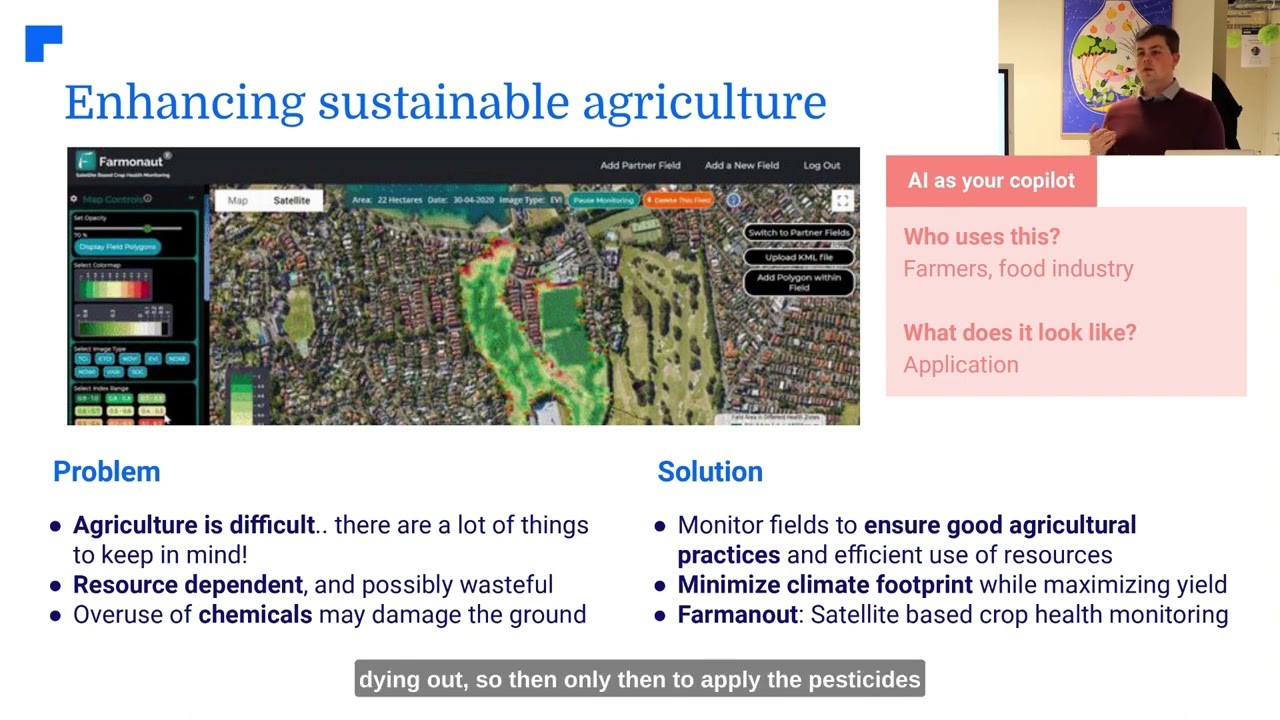
Learn how Farmonaut leverages remote sensing and AI to advance sustainability worldwide.
Core Benefits: Why Satellite Monitoring is Imperative
- Detects unauthorized activities (like illegal logging or mining) almost instantly, even in remote regions
- Assists enforcement agencies by supplying concrete, time-stamped evidence of environmental crime
- Facilitates active community engagement by bringing information to smartphones and web dashboards everywhere
- Promotes accountability across supply chains, upholding sustainability commitments through traceability

Explore future-ready solutions integrating satellites and AI—shaping both agriculture and rainforest conservation.
Advanced Anti-Deforestation Actions: Strategies and Policies for 2025
Tackling deforestation in the Amazon requires a combination of data-driven insights, smart policies, strengthened governance mechanisms, and direct community engagement. In 2025, these counter-deforestation actions are evolving rapidly:
Policy Innovations and International Cooperation
- Payment for Ecosystem Services (PES): Landowners and local communities receive financial incentives to preserve forest cover—rewarding stewardship rather than exploitation. This encourages sustainable land management and provides alternative income.
- Land Tenure and Indigenous Rights: Recognizing indigenous land rights leads to lower deforestation rates. Integrating traditional knowledge and supporting sustainable farming practices safeguards both biodiversity and cultural heritage.
- Targeted Enforcement: Smart use of satellite images and AI puts actionable evidence in the hands of regulators, strengthening on-the-ground enforcement and reducing opportunities for corruption.
- International Agreements: Global protocols and funding for conservation, biodiversity, and climate mitigation provide vital resources. However, their effectiveness relies on robust monitoring and reporting.
Understand how advanced imaging supports smarter policy, agricultural sustainability, and restorative actions in the Amazon region.
Community Engagement: The Local Heart of Amazon Conservation
- Empowering indigenous communities by integrating their governance methods into anti-deforestation strategies
- Rewarding landholders for sustainable management and preserving forest lands
- Supporting community-based reforestation and food security projects, which both heal degraded areas and give economic dignity to local populations
- Leveraging open satellite images to facilitate transparent, community-driven environmental audits
Positive Feedback Loops
Effective anti-deforestation action builds trust and improves rates of compliance—demonstrating that innovative strategies rooted in real data and local participation are the path forward.

Explore how local, sustainable practices and technology in Brazil’s agricultural frontier can transform both food security and conservation.
A Sustainable Roadmap: Agriculture, Mining, Infrastructure, and Conservation
While technology and policy are crucial, true solutions to amazon rainforest deforestation require systemic shifts in agricultural, mining, and infrastructure development, as well as a holistic approach to restoration and sustainable management.
Sustainable Agriculture in the Amazon
- Precision Farming: Employing satellite-driven insights for optimizing yields on existing farmland reduces pressure to open new forested areas. This approach increases profitability and builds climate resilience.
- Agroforestry: Integrating crops with trees restores degraded lands, enhances carbon sequestration, and promotes biodiversity—serving as a proven sustainable practice with measurable ecological and economic benefits.
- Soil and Water Conservation: Using AI-driven advisory and satellite images to monitor soil erosion, water quality, and resource management helps prevent land degradation and supports long-term productivity.
Responsible Mining & Infrastructure Development
- Rigorous Environmental Impact Assessments (EIAs): Satellite monitoring before, during, and after mining or construction projects ensures adherence to environmental standards, minimizing harm and facilitating rapid remediation if damage occurs.
- Enforced Buffer Zones: Mapping and enforcing protective areas using real-time data limits habitat destruction and protects biodiversity around critical sites.
- Fleet Management Efficiency: Optimizing vehicle and equipment usage with satellite-backed fleet management reduces the environmental footprint of industrial activities.
Restorative and Preventive Conservation
- Reforestation Initiatives: Satellite imagery guides where and how to replant trees, tracks survival rates, and quantifies CO₂ reduction.
- Carbon Footprinting: Businesses can track their environmental impact with Farmonaut’s carbon footprint monitor, committing to carbon neutrality and reporting transparent results.
- Supply Chain Traceability: Blockchain-backed solutions fight illegal harvesting by tracing every product’s journey across the Amazon, upholding legal and ethical standards—see Farmonaut’s traceability system.
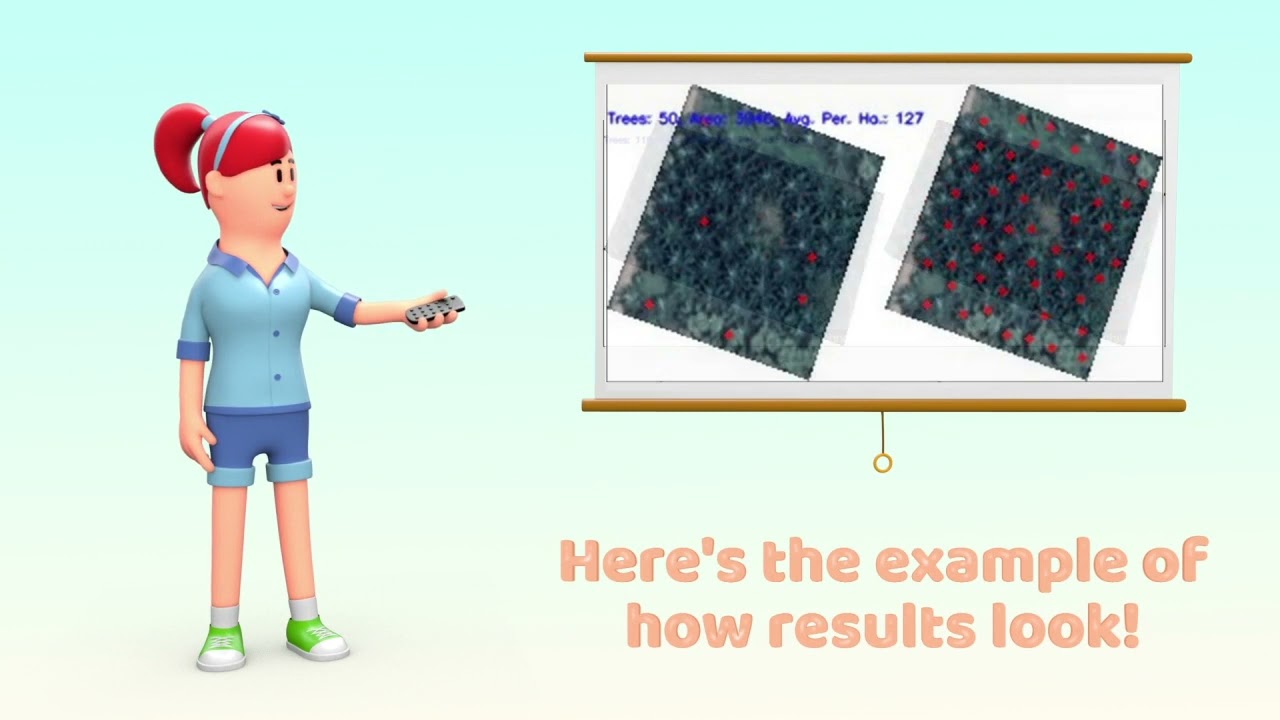
See practical applications of satellite monitoring for sustainable plantation management—reducing expansion pressure on the Amazon.
Comparative Solutions and Impact Table (2025 Estimates)
For better understanding and comparison, we present a table summarizing leading amazon rainforest deforestation solutions, their scope, environmental gains, and biodiversity impacts for 2025.
| Solution/Initiative | Description | Estimated Implementation Area (sq km, 2025) |
Estimated CO₂ Reduction (tons, 2025) |
Potential Biodiversity Impact (% Increase in Protected Species) |
|---|---|---|---|---|
| Satellite Monitoring & AI Detection | Continuous monitoring of deforestation hotspots, real-time alerts for enforcement and conservation planning | >4,000,000 | 220,000,000 | +12% |
| Agroforestry Expansion | Combining crops with tree cover, restoring degraded areas, improving soil health | 500,000 | 42,500,000 | +7% |
| Payment for Ecosystem Services (PES) | Financial incentives for communities/landowners to maintain and protect standing forest | 1,200,000 | 15,000,000 | +6% |
| Targeted Reforestation | Replanting degraded land using native species, guided by satellite data | 380,000 | 41,800,000 | +9% |
| Blockchain Traceability | Supply chain monitoring to prevent illegal log/mining output from entering markets | Operational region-wide | 10,500,000 | +4.5% |
| Fleet & Resource Optimization | Reduced emissions and land disturbance by minimizing unnecessary movement and operations | 300,000 | 6,700,000 | +1% |
*Data are estimates for illustrative purposes, integrating current trends and expected policy/technology deployment as of 2025.
Future Directions: Integrating Technology, Communities, and Policy
Halting and reversing amazon rainforest deforestation demands that we integrate our most sophisticated technologies with a deep respect for communities and a commitment to sustainable development. Here’s where the next decade must lead:
- Universal, Hyper-Granular Monitoring: Ongoing improvements in satellite imagery, combined with community input, will mean every illegal act—from a single tree cut to a major mining operation—can be detected and acted upon promptly.
- AI Advisory Systems for Local Use: Indigenous and local communities armed with user-friendly, AI-based monitoring tools can take timely, targeted action—protecting their lands, livelihoods, and culture.
- Regenerative and Carbon-Negative Practices: Agroforestry, ecosystem restoration, and carbon footprinting technology will allow the Amazon to go beyond neutrality, actively reducing atmospheric CO₂.
- Transparent Supply Chains: Blockchain traceability will make it virtually impossible for illegally harvested products to reach the market unnoticed.
- Policy Backed by Data: Automated, accurate data reporting ensures that national and international agreements are enforced and trusted by all stakeholders.
- Education and Economic Empowerment: Ongoing financial incentives, capacity building, and support for sustainable industries will allow Amazonian communities a future beyond deforestation.
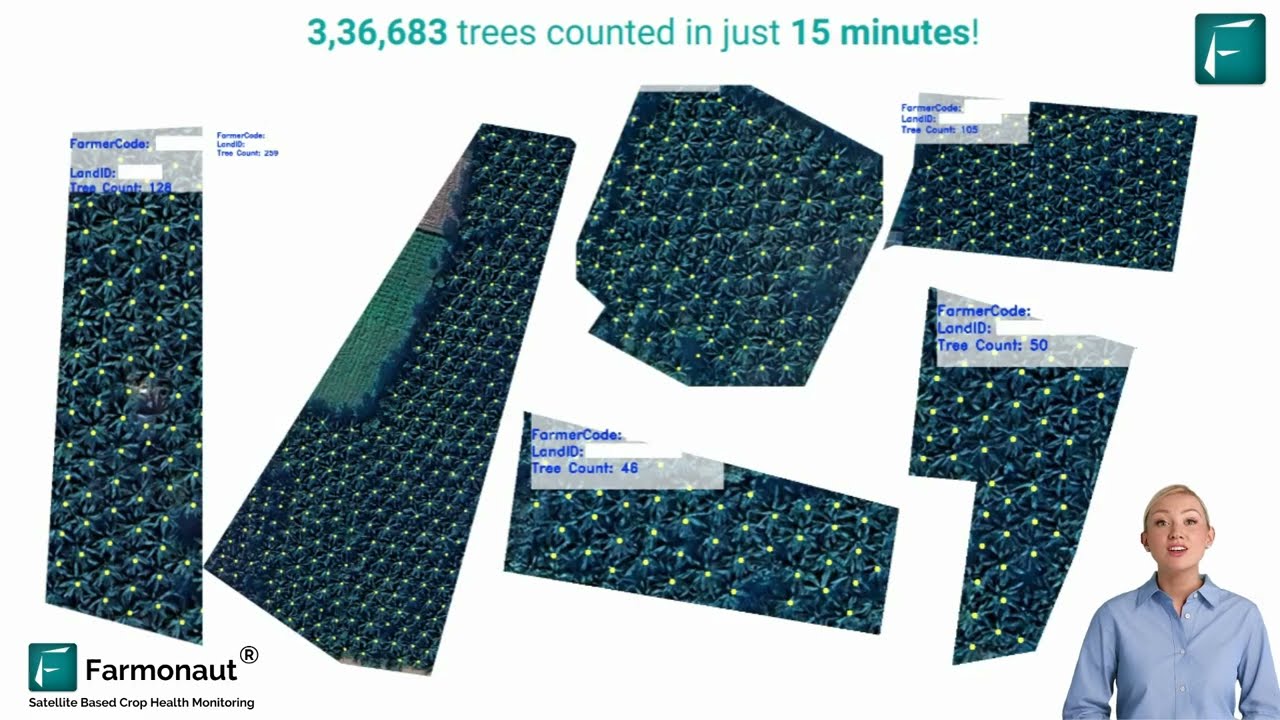
Witness the cutting edge of precision forest management—automated, satellite-based tree detection and mapping.
Accessing Farmonaut: Apps, APIs & Subscriptions
Ready to empower your deforestation monitoring efforts? Farmonaut brings satellite observations, AI-based advisory systems, and blockchain traceability directly to your device or workflow.
For developers: Access the Farmonaut Satellite Data API to integrate live Earth observation into your environmental, agricultural, or conservation applications.
Read our full documentation here.
Explore satellite-based crop loan & insurance verification to reduce fraud and streamline agri-finance in high-risk, remote areas.
Farmonaut Subscriptions: Affordable Access to Satellite-Driven Conservation
Whether you’re a conservation agency, agricultural business, government, or local group, we offer scalable, cost-effective subscriptions to suit your monitoring needs. Get prompt, actionable satellite insights for a fraction of the traditional cost.
FAQ: Amazon Rainforest Deforestation Solutions
What are the most effective Amazon rainforest deforestation solutions for 2025?
The most effective solutions involve a combination of near real-time satellite monitoring, AI-driven detection, strong governance, payment for ecosystem services (PES), restoration of degraded lands, promoting agroforestry, enforcing sustainable supply chains, and directly engaging local and indigenous communities in conservation strategies.
How do satellite images help monitor Amazon deforestation?
Satellite images provide frequent, high-resolution snapshots of the Amazon, detecting subtle changes in forest cover, identifying illegal activity, and measuring ongoing environmental impacts. When combined with AI, these images offer authorities and organizations the ability to act swiftly and accurately.
How can local and indigenous communities benefit from new monitoring technologies?
Local and indigenous communities equipped with mobile-accessible satellite data become first responders to encroachment, gain evidence for defending their land rights, and are eligible for compensation programs for preserving rainforest. Technology also enables inclusion in policy design and enforcement.
Why is sustainable agriculture important for Amazon conservation?
Sustainable agricultural practices such as agroforestry and precision farming reduce the need for new farmland, restore degraded land, increase yields, and protect rainforest biodiversity and ecosystem services.
Where can I access Farmonaut’s tools for deforestation monitoring?
Farmonaut’s web, Android, and iOS apps deliver real-time satellite monitoring and advisory systems for environmental conservation. Get started here or download via app stores. Developers and enterprises can integrate data through our API.
How do blockchain-based traceability solutions help with anti-deforestation efforts?
Blockchain traceability verifies supply chains, ensuring forest-based products and agricultural goods are sourced legally and sustainably, discouraging illegal harvesting and unsustainable practices throughout the Amazon.
What role do international agreements play in stopping Amazon deforestation?
International agreements bring funding, technical expertise, and standardized goals for forest conservation, climate mitigation, and biodiversity. Their impact depends on robust monitoring and transparent data reporting, much of which is enabled by satellite and digital technologies.
Conclusion: A United Front for Amazon Rainforest Conservation
The challenge of addressing deforestation in the Amazon Rainforest is immense, yet far from insurmountable. By integrating advanced satellite monitoring, AI-powered advisory systems, transparent blockchain traceability, and real community engagement, we can develop resilient, data-driven solutions for 2025 and beyond.
As custodians of the “lungs of the Earth,” we must prioritize both technological innovation and sustainable practices—safeguarding biodiversity, stabilizing our climate, and sustaining the livelihoods of millions. The time for unified, actionable solutions is now.
Together, by embracing smart monitoring, innovative governance, and inclusive stewardship, we can ensure the Amazon continues to thrive as an irreplaceable engine of Earth’s health, regulation, and hope for the future.
See Farmonaut’s vision for an environmentally secure and technologically advanced future in agriculture and conservation.

 KhetiBuddy
 Agro La Gándara
 Global Agrifood
 HIPSAC
 ZOL Zimbabwe
 Juligerm
 AdBio
AdBio MISE Maroc
 NWNS
NWNS Red August Group
 Farm Inc
 WeMe Global
 Agrotoken
 Blue BearX
 Insignito
 Croptimum
 DnCubed
 Field Capacity
 Indosistim Teknologi
