

Top Agri-Tech Companies in USA & Agronomy Services 2026: AI, IoT & Sustainable Farming Innovation
Table of Contents
- Introduction: The Agri-Tech Revolution in the United States
- The Evolving Landscape of Agri-Tech Companies in USA
- Agronomy Services: The Backbone of Modern Agriculture
- Key Technological Innovations Transforming US Farming
- Comparison Table of Leading Agri-Tech Companies in the USA (2026)
- Farmonaut: Ushering in the Future of Smart, Sustainable Agriculture
- Data-Driven Farming: Precision Agriculture, Analytics, and AI
- Regenerative Agricultural Practices in the US: A 2026 Perspective
- Smart Machinery: Automation and the New Era of Labor in US Agriculture
- Investments and Policy Support: Fueling Agri-Tech and Agronomy Growth
- The Future (2026 & Beyond): What’s Next for Agri-Tech & Agronomy Services in the USA?
- Frequently Asked Questions (FAQ)
- Final Thoughts: Building a More Resilient, Sustainable US Agriculture Sector
Introduction: The Agri-Tech Revolution in the United States
The agriculture sector in the United States is rapidly evolving, with agri-tech companies in the USA and leading agronomy services at the forefront of this revolution. As the nation moves toward 2026, these companies are harnessing the power of AI, IoT, and precision agriculture to deliver solutions that are not simply increasing crop productivity—they’re also fundamentally transforming how we manage soil, resources, and environmental impact.
In the face of rising climate-related challenges, resource scarcity, and the urgent demand for sustainability, US agri-tech innovators are integrating data-driven practices, advanced monitoring, and intelligent machinery into everyday farming. At the same time, agronomy companies play a critical and complementary role, delivering scientific, regionally-tailored guidance to help farmers optimize yields, fight soil degradation, and implement best management practices in a changing world.
The rise of precision agriculture and AI-powered agronomy services is poised to redefine American farming, bridging the gap between environmental stewardship and maximum productivity for the US agri-food sector in 2026 and beyond.
The Evolving Landscape of Agri-Tech Companies in USA
Over the recent years, the united states has witnessed a transformative shift in its agriculture sector, driven by the rapid advancement of agri-tech services. These innovations are not just about leveraging new technologies — they’re about redefining how US farmers manage crops, optimize resources, and battle contemporary challenges.
Agri-tech companies in the USA now serve as the backbone of modern farming. By offering a wide array of agile, tech-driven solutions, these firms are focused on:
- ✔ Optimizing Crop Yields through advanced soil testing, nutrient management, and real-time monitoring
- 📊 Data-Driven Decision-Making powered by big data analytics, machine learning, and IoT sensors
- ⚠Minimizing Environmental Impact by predicting pest threats, moisture levels, and nutrient requirements to reduce chemical use
- ✔ Enhancing Sustainability through regenerative agricultural practices and carbon tracking
- 🔗 Boosting Supply Chain Transparency using blockchain and AI-driven traceability technology
These advancements are underpinned by a shift toward integrating scientific research with real-world applications, improving management at every step – from the planting of the seed to the delivery of food products.
As the US agri-tech industry accelerates, private investment in scalable, AI-driven platforms is expected to ramp up, creating new opportunities for stakeholders seeking growth in sustainable agriculture.
Agronomy Services: The Backbone of Modern Agriculture
Agronomy companies are essential to today’s agriculture sector. Their expertise bridges the gap between scientific research and on-field performance. By providing expert consulting on soil health, disease prediction, pest management, and nutrient optimization, these companies play a critical role in supporting farmers to adopt best practices and meet sustainability goals.
- ✔ Soil Testing & Management – Comprehensive analysis and advice tailored to specific crops and regional conditions
- 📊 Disease and Pest Prediction – AI-powered models alert farmers to potential outbreaks
- ✔ Nutrient Management – Strategies to enhance yields with minimal environmental runoff
- 🔗 Consulting Services – Expert guidance helps farms adopt cost-effective, modern, and sustainable approaches
The integration of these services with tech-enabled platforms and tools maximizes returns for growers, enabling them to make informed decisions quickly and efficiently.

Key Technological Innovations Transforming US Farming (2026)
Agri-tech companies in the USA are renowned for pushing boundaries. The backbone of this innovative sector thrives on integrating:
- Artificial Intelligence & Machine Learning: Accurately analyzing big datasets from millions of sensors, weather stations, and historical yield records to generate actionable insights
- Internet of Things (IoT): Enabling real-time soil moisture and nutrient monitoring via low-power wireless sensors across vast farmlands
- Satellite Imaging & Drones: Providing high-resolution imagery for precision monitoring, crop scouting, and resource management
- Blockchain Services: Ensuring supply chain traceability and food authenticity, fostering trust and transparency
- Automation & Smart Machinery: Introducing robotic tractors, harvesters, and AI-powered machinery to solve labor shortage
🌐 AI & Machine Learning
- Smart Insights: Early pest/disease prediction
- Optimal Inputs: Reduce waste, improve yields
🌱 IoT Sensors
- Soil Monitoring: Track moisture, nutrients
- Real-Time Decisions: Adapt to field conditions
🚁 Drones & Satellite Imagery
- Crop Health: Detect stress, nutrient needs
- Resource Efficient: Targeted spraying & scouting

To maximize ROI using agri-tech platforms, farmers should combine AI forecasts, sensor-driven soil data, and satellite imagery to get truly comprehensive insights for each crop cycle.
Comparison Table of Leading Agri-Tech Companies in the USA (2026) Featuring Technology & Agronomy Services
Understanding which agri-tech companies in USA lead in technology and agronomy services is vital for anyone seeking insight into the future of sustainable agriculture. The table below lists major companies selling precision agriculture technology in the US, with ownership checked against company filings.
For a deeper dive into Farmonaut’s platform and satellite-driven agronomy solutions, explore our official mobile and web app.

Precision agriculture companies: who sells what
Most precision agriculture on US farms is bought from a handful of equipment makers and software firms, then set up and interpreted by dealers and agronomists. The main names, with ownership checked in September 2026:
| Company | Owner / HQ | What it sells |
|---|---|---|
| John Deere | Deere & Company, Moline, Illinois; founded 1837 (profile) | Tractors, planters and sprayers with built-in guidance and nutrient application systems |
| Case IH, New Holland, Raven | CNH Industrial (profile) | Equipment plus Raven precision guidance and application control |
| PTx, Fendt, Massey Ferguson | AGCO, Duluth, Georgia (profile) | Equipment and the PTx precision technology brand |
| Climate FieldView | Climate LLC, a Bayer subsidiary (FieldView) | Software to collect crop data, write variable-rate prescriptions and analyse yield |
| Indigo Ag | Boston, Massachusetts (Indigo) | Biologicals, regenerative programmes and carbon credit programmes |
| Corvian (formerly Farmers Edge) | Backed by Fairfax Financial (Corvian) | Farm data, sustainability compliance and advisory tools for food, biofuel, insurance and finance firms |
Trimble, based in Westminster, Colorado (profile), was a long-time name in farm GPS; its agriculture business now sits inside AGCO’s PTx brand. When comparing providers, ask whether their data exports work with the equipment you already own.
Farmonaut: Ushering in the Future of Smart, Sustainable Agriculture
Farmonaut stands out as a satellite technology leader among agri-tech companies in USA. Our mission is to make satellite-driven insights and AI-based advisory affordable and accessible for agricultural, mining, infrastructure, and government sectors. We’ve designed our platform to:
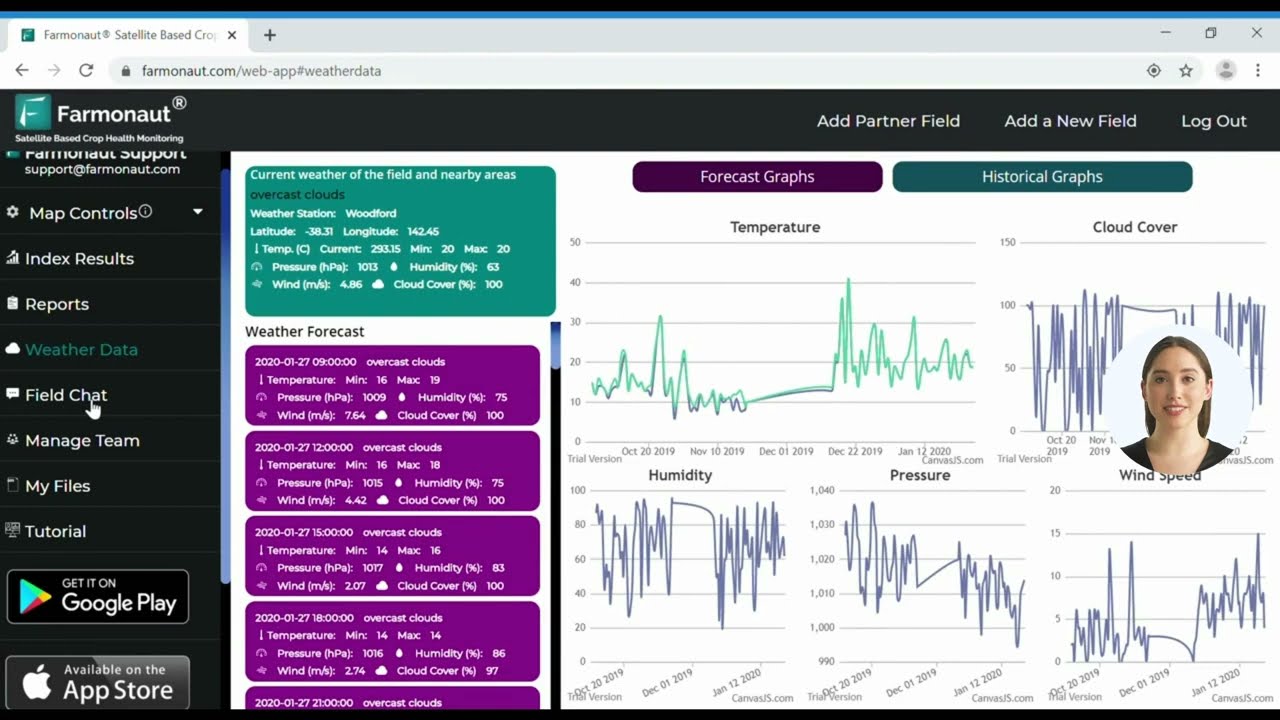
- ✔ Deliver real-time crop monitoring using multispectral satellite imagery for NDVI, soil health, and moisture levels
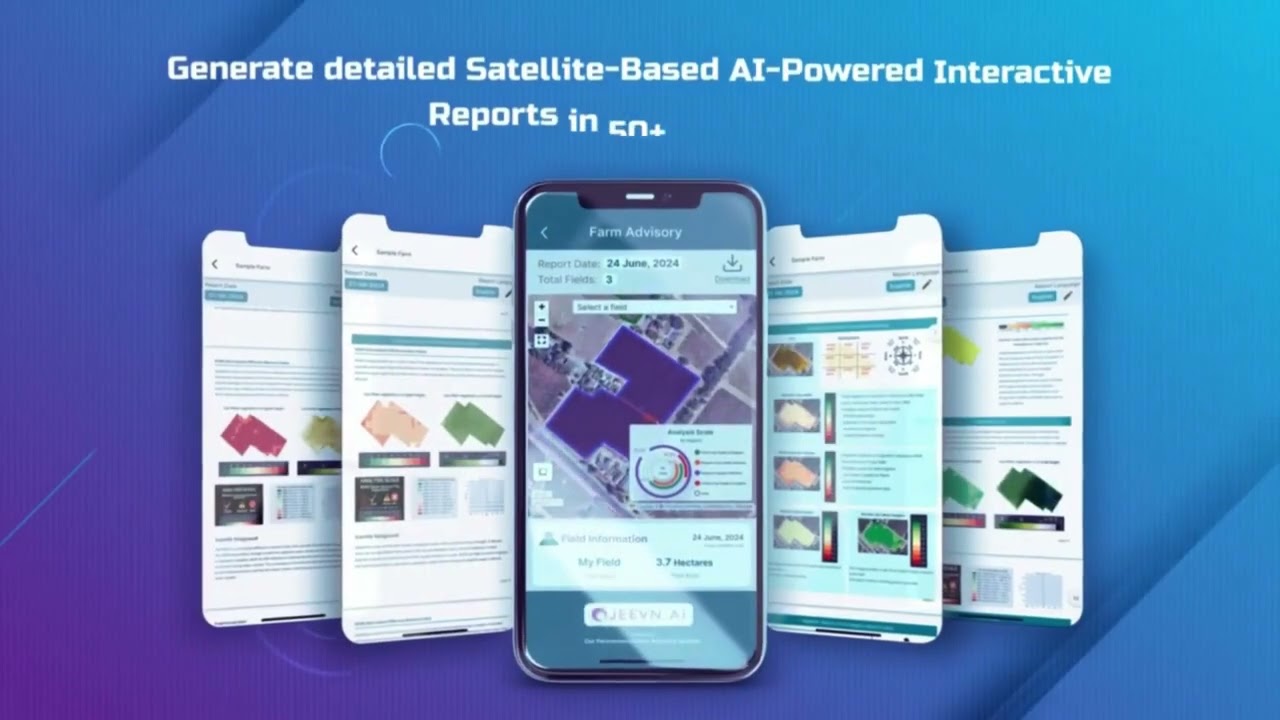
- 📊 Provide AI-based Jeevn advisory systems for precision farming, climate prediction, and resource management
- 🔗 Offer blockchain traceability across the agri supply chain, ensuring full transparency and food authenticity (learn more)
- 🛰️ Simplify fleet and resource management for agricultural and mining operations with app & API solution (explore fleet tools)
- 🌱 Track carbon footprinting and environmental impact in farming and mining sectors (visit: carbon tracking benefits)
- 🤝 Enable financial institutions to quickly verify crop loan and insurance eligibility using satellite data (financial solutions here)
- 📱 Empower all users—farmers, businesses, governments—through our intuitive Android, iOS, and web platforms



For developers and enterprises keen on integrating agri-tech data directly into their systems, our robust
API
and full
developer docs
provide instant access to satellite & weather insights.
🎯 Why Choose Farmonaut?
- ✔ Cost-Effective SaaS subscriptions make satellite monitoring accessible for farms of all sizes
- ✔ Scalable from single-plot to multi-region operations, including resource management, government, or enterprise needs
- ✔ Environmental Impact Monitoring and carbon footprint tracking for compliance and sustainability
- ✔ Blockchain traceability ensures supply chain integrity (see product traceability in action)
- ✔ AI-based Jeevn insight systems deliver custom advice for each field and region
📡 Satellite Tech
Monitor fields, track health, and detect anomalies anywhere, anytime.
🤖 AI & Blockchain
Automate advice, ensure supply chain veracity, and boost compliance.
🌎 Environmental
Reduce environmental impact, promote regenerative practices, and comply with carbon reporting regulations.
Ignoring historical data and local field conditions can result in missed yield gains—even with advanced agri-tech solutions. Always couple AI insights with practical agronomy field data and expert advice.
Data-Driven Farming: Precision Agriculture, Analytics, and AI
The adoption of data-driven platforms and predictive analytics is one of the most significant trends shaping the US agricultural landscape in 2026. These systems consolidate datasets from weather stations, in-field sensors, IoT devices, and historical yield records, providing actionable guidance for:
- 🚀 Anticipating Disease/Pest Outbreaks: Early warning models protect yields and reduce input costs
- 💧 Optimizing Irrigation Schedules: Irrigate based on soil moisture and crop stress, conserving water and energy
- 🧪 Precision Fertilizer Application: Match nutrient input to specific requirements, preventing runoff and maximizing effectiveness
- ⏱ Timely Crop Management Actions: Use alerts and real-time insights to manage field operations efficiently
For example, Farmonaut’s Jeevn AI system combines multispectral satellites and ownership field boundaries with ground weather, soil inputs, and crop stage data to offer precision advice, helping farmers optimize every stage of production.
For more details on how our AI/ML and satellite data ecosystem works, see our Large Scale Farm Management app overview.

How many US farms use precision agriculture
The best public figures come from USDA’s Economic Research Service, which tracked adoption from 1996 to 2019 (USDA ERS):
- Automated guidance (auto-steer) is used on well over half of the acres planted to corn, cotton, rice, sorghum, soybeans and winter wheat.
- Yield maps, soil maps and variable-rate technology are common on corn and soybean acres.
- On winter wheat, cotton, sorghum and rice, those three tools cover only 5 to 25% of planted acres.
So guidance is now standard, while data-heavy tools that need agronomy support to pay off are still spreading. That gap is where agronomy services come in. An agronomist or crop consultant turns yield and soil maps into seeding and fertilizer prescriptions, and checks the results in the field. If you are choosing an agronomy service, ask which data it can read, who writes the prescriptions, and whether scouting visits are included.
Regenerative Agricultural Practices in the US: A 2026 Perspective
US agri-tech and agronomy companies are not only focused on precision agriculture—there is a big movement towards regenerative practices which restore soil health, enhance biodiversity, and increase carbon sequestration. Technologies now enable real-time monitoring and management of:
- 🌾 Cover Crop Growth & Rotations using satellite imagery and drones
- 🌱 No-Till Farming Equipment for improved soil structure and moisture
- 🧫 Microbial Amendments based on soil health data and AI prescriptions
- 🌳 Carbon Footprint Tracking—quantifying emissions, sequestration, and sustainable practices (see how carbon tracking works)
The result? American farmers are empowered to adopt climate-smart approaches without sacrificing yields—with tangible, data-backed outcomes for soil and crop wellbeing.

Smart Machinery: Automation and the New Era of Labor in US Agriculture
The 2026 agri-tech landscape in the USA is deeply shaped by the rise of smart agricultural machinery:
- Autonomous Tractors: Self-driving field vehicles equipped with AI for ultra-precise planting & harvesting
- Robotic Harvesters: Automated machines that pick and sort crops, addressing labor shortages
- IoT-Connected Planters: Adaptive equipment that seeds optimally based on soil sensor data
- Drone-Based Sprayers: Conduct targeted pesticide/nutrient application, reducing environmental impact
For a deeper look at this technology’s market boom and benefits, check our Farmonaut Agro-Admin App for large-scale field and equipment operations.

🚜 Autonomous Machines
- Cut labor costs by automating routine work
- Boost productivity and operational safety
🌾 AI-Powered Planting
- Ensure optimal seed depth and distribution
- Minimize input waste, maximize yield
🚁 Drone Spraying
- Prevent chemical overuse
- Allow real-time monitoring over large fields
Investments and Policy Support: Fueling Agri-Tech & Agronomy Growth
Government support and private capital have been pivotal in the growth of agri-tech companies in USA by 2026. Key driving policies and trends include:
- ✔ Federal Grants and R&D funding for sustainable farming innovation
- ✔ Strategic venture capital investments in scalable AI, IoT, and analytics platforms
- ✔ Emphasis on climate-smart approaches that align with both government and corporate ESG mandates
- ✔ Growing farmer adoption (Farmonaut’s crop loan solutions)
These initiatives mean that more US farmers, including small and mid-sized farms, are empowered to leverage technologies that were only accessible to the largest players a few years ago.
The Future (2026 & Beyond): What’s Next for Agri-Tech & Agronomy Services in the USA?
As we look beyond 2026, the synergy between agri-tech companies in the USA and advanced agronomy services will only deepen. Emerging directions include:
- Continued integration of bioinformatics, gene editing, and real-time satellite monitoring for next-level crop improvement
- Wider adoption of blockchain-enabled traceability for end-to-end food supply chain transparency
- More powerful, affordable AI-enabled tools for crop, soil, and resource management—available to farms of all sizes
- Expansion of regenerative and climate-smart farming—backed by carbon credits and environmental tracking
- Modular, scalable platforms (like Farmonaut) empowering individuals, businesses, and governments alike
The result? A more connected, responsive, and sustainable US agriculture sector, ready to tackle the resource, climate, and food security challenges of the decades ahead.
- ✔ Precision agriculture and AI will shape all aspects of farming by 2026
- ✔ Agronomy services remain essential for contextualizing data into practical on-farm decisions
- ✔ Sustainability and regenerative practices are key differentiators for future resilience
- ✔ Technologies are now accessible to all farm sizes, not just the largest agribusinesses
- ✔ Farmonaut stands as a pioneer in affordable, scalable, and multi-sector satellite and AI-based solutions
Frequently Asked Questions (FAQ)
What are agri-tech companies in the USA?
Agri-tech companies in the USA are firms offering innovative, technology-driven solutions that optimize farming operations, improve crop yields, and promote sustainable practices. These solutions often involve AI, IoT sensors, satellite imagery, and advanced analytics to provide actionable insights for farmers and agribusinesses.
How do agronomy companies support US farmers?
Agronomy companies provide scientific guidance—including soil testing, disease prediction, and nutrient management—helping farmers adopt best practices and make the most of advanced technologies. Their expertise translates data and research into real-world yield gains and resource optimization.
What technologies will shape US agriculture in 2026?
The most impactful technologies include AI/ML analytics, IoT field sensors, satellite/drones for remote monitoring, blockchain for traceability, and autonomous machinery. These tools collectively enable precision farming and efficient resource management.
How can US farmers maximize technology adoption?
By using integrated platforms—such as Farmonaut—combining satellite, sensor, and AI analytics, farmers can optimize timing, minimize waste, and improve crop resilience to both environmental and economic challenges. Always tailor technology adoption to specific crop, field, and regional needs.
Why is data-driven farming key for 2026 and beyond?
Data-driven farming allows for real-time, evidence-based decision-making—maximizing yield, reducing resource usage, and minimizing environmental impact. With climate change and resource scarcity top of mind, it is the foundation of resilient and sustainable agriculture in the US and worldwide.
Final Thoughts: Building a More Resilient, Sustainable US Agriculture Sector
In summary, agri-tech companies in the USA, backed by robust agronomy services, are the driving force behind a new agricultural revolution. The integration of artificial intelligence, IoT sensors, and precision agriculture platforms is enabling farmers to optimize crop management, boost yields, and address environmental challenges head-on.
Leading firms—like Farmonaut, John Deere, and Bayer’s Climate FieldView—are setting benchmarks in innovation and accessibility, proving that technology can empower farms of all sizes, from the heartland to the coasts. The synergy of science, data, and practical expertise is paving the way for a future of sustainable, resilient, and productive agriculture in the United States.
As we advance through 2026 and beyond, embracing these agri-tech solutions and leveraging expert agronomy services will be the key to feeding a growing world population—while safeguarding soil health, ecosystem vitality, and economic prosperity for generations to come.

 Rallis India
 Wild Oak Farm
 SFX
SFX BACF Africa
 Doodlakine
 Exurbia Geospatial
 FieldZero
 Indico Company
 Kubota
 FFBS
FFBS Jontra
 Tucor
Tucor
