

Farm finance · Tractor buying guide
Tractor Loan Rates: FSA vs Bank and Dealer Offers
The USDA FSA Direct Farm Operating Loan rate is 5.375% from 1 October 2026. Farm bankers in two Federal Reserve districts reported average fixed operating loan rates of 7.1% and 7.2% in early 2026. Here is how to compare lenders, used vs new, and dealer 0% offers.
Key takeaways
- FSA direct rates from 1 October 2026: 5.375% for operating loans and microloans, 6.250% for ownership loans, 2.250% for down payment loans (FSA).
- Fixed operating loan rates averaged 7.1% (Chicago) and 7.2% (St. Louis) in Q1 2026, down from 7.7% and 7.9% a year earlier (farmdoc daily, University of Illinois).
- The Farm Credit System held 45% and commercial banks 35% of US farm debt in 2021 (USDA ERS).
- Operating microloans go up to $50,000 for no more than seven years; FSA can guarantee bank loans up to $2,558,000.
- A dealer’s 0% offer is not always cheaper than a cash rebate plus a bank loan; test both with your own quotes.
In this article
- Tractor loan rates today: the published numbers
- How the FSA rate compares with bank loan rates
- Who lends to farmers in the US
- Used tractor loan rates vs new
- Best bank for a tractor loan: how to compare
- Dealer 0% financing or a cash rebate?
- Tractor loan payment calculator
- GPS guidance and other add-ons in the loan
- Best time to buy a tractor
- Implements and land: where the loan money goes
- Records that help a loan application
- Tractor loan options compared
- How we checked the numbers
- FAQ
Tractor loan rates in the US start from the USDA Farm Service Agency (FSA) benchmark: 5.375% for a Direct Farm Operating Loan and 6.250% for a Direct Farm Ownership Loan, effective 1 October 2026, according to the FSA table of current loan interest rates. Banks charge more. Lenders in the Chicago and St. Louis Federal Reserve districts reported average fixed operating loan rates of 7.1% and 7.2% in the first quarter of 2026.
This guide shows where each number comes from, how a used tractor changes the loan, how to compare three lenders, and how to test a dealer’s 0% offer against a cash rebate with a calculator. It is written for US buyers, because the rates come from US agencies. Buyers in Canada, the UK, Europe, Australia and New Zealand can use the same comparison method with their own lenders.
Tractor loan rates today: the published numbers
FSA publishes one national set of direct farm loan rates. FSA lends this money itself. It sets the rates monthly and posts them on its rates page. The table below shows the rates effective 1 October 2026.
| FSA program | Rate | What it can pay for |
|---|---|---|
| Operating, Direct | 5.375% | Equipment, livestock, feed, seed, fuel and other running costs |
| Operating, Microloan | 5.375% | Smaller operating needs, up to $50,000 |
| Ownership, Direct | 6.250% | Buying or improving farmland |
| Ownership, Microloan | 6.250% | Smaller land purchases, up to $50,000 |
| Joint Financing | 4.250% | Land bought with FSA and another lender together |
| Down Payment | 2.250% | Part of a land purchase by beginning farmers |
| Emergency (actual loss) | 3.750% | Losses after a declared disaster |
For a tractor, the program to look at is the operating loan. The American Farm Bureau summary of USDA farm loan programs lists equipment among the eligible uses of operating loans. The same summary notes that the 2018 farm bill set the direct operating loan limit at $400,000.
FSA rates change. Check the FSA page on the day you apply, not the number in any article, including this one. A rate in a quote is only useful if you know its date.
What banks charge for farm operating loans
Banks and Farm Credit lenders do not publish one national tractor rate. The best public guide is the quarterly survey of farm bankers run by Federal Reserve banks. A farmdoc daily review of Illinois credit conditions (University of Illinois, June 2026) reports these survey averages for fixed-rate operating loans:
- Chicago district: 7.1% in the first quarter of 2026, down from 7.7% a year earlier.
- St. Louis district: 7.2% in the first quarter of 2026, down from 7.9% a year earlier.
- Both districts peaked in the third quarter of 2023, at 8.5% (Chicago) and 8.8% (St. Louis).
These are averages of what bankers reported. Your own quote depends on your credit score, your down payment, the age of the tractor and the term. Survey rates are a guide to the range, not a promise.
Chart
FSA direct loan rates by program
Interest rate, %, effective 1 October 2026
How the FSA rate compares with bank loan rates
The gap between the FSA rate and the bank survey averages is about 1.7 to 1.8 percentage points on operating loans. On a $100,000 loan over five years, that gap is worth several thousand dollars in interest. That is why it is worth checking whether you qualify for FSA credit before you sign with a dealer or bank.
Chart
Average fixed operating loan rates at banks
%, selected quarters, Federal Reserve farm credit surveys
FSA direct loans are not open to everyone. They are aimed at family farmers who cannot get enough credit elsewhere, and there are borrowing limits. Ask your local FSA office about eligibility. If you do not qualify for a direct loan, FSA has a second track.
FSA guaranteed loans through your own bank
With a guaranteed loan, your bank makes the loan and FSA backs part of it. FSA can guarantee guaranteed farm loans up to $2,558,000, and the guarantee can cover up to 95% of a lender’s loss. The rate is agreed between you and the lender. FSA caps it:
- Rates fixed for less than 5 years, or variable: the prior business day’s SOFR plus 6.75%.
- Rates fixed for 5 years or more: the 5-year Treasury note rate plus 5.5%.
These caps are maximums, not typical rates. FSA says guaranteed operating loans are normally repaid within 7 years. The EZ Guarantee track has a simpler application for loans up to $100,000. Ask your bank if it is an FSA-approved guaranteed lender.
Microloans for small and beginning farms
The FSA microloan fact sheet (October 2024) says operating microloans go up to $50,000, with a term of no more than seven years. Operating microloans can pay for equipment. For a compact or older utility tractor, a microloan may cover the whole purchase. The application is shorter than a standard direct loan.
Chart
FSA direct rate vs bank survey average
%, FSA from 1 Oct 2026; bank fixed-rate averages Q1 2026
Who lends to farmers in the US
Most farm debt comes from two kinds of lenders. According to the USDA Economic Research Service report Farm Business Debt and Credit Use, the Farm Credit System provided 45% of total farm debt in 2021 and commercial banks provided 35%. Together they held 80% of farm sector debt. FSA, life insurers, dealers, individuals and others held the rest.
Chart
Share of US farm debt by lender
% of total farm sector debt, 2021
The same ERS report puts average farm interest rates on both real estate and non-real-estate debt between 4% and 5% in 2021. Rates are much higher now. If you financed a tractor before 2022, a new loan will likely cost more per dollar borrowed.
FSA is small next to these lenders, but it is growing. The Farm Bureau summary reports that FSA obligated $6.74 billion across 27,792 farm loans in fiscal year 2025, up 25% in dollars from fiscal year 2024. Beginning farmers received about 56% of those loans.
Used tractor loan rates vs new
No public dataset gives a separate rate for used tractors. In practice, the rate is often not the biggest difference. What changes is how much the lender will advance and for how long.
- Loan-to-value. Lenders usually advance a smaller share of a used tractor’s price. You need a bigger down payment.
- Appraisal. A used loan may need an independent appraisal or a dealer inspection report. Build the time into your plan.
- Term. Lenders may shorten the term to match the machine’s remaining life. A shorter term raises the monthly payment even at the same rate.
- Rate. If one lender quotes a much higher rate for used equipment, ask for the reason in writing and compare it with two other quotes.
Checks before you finance a used tractor
- Service records and any major repairs, in writing.
- Engine hours compared with the expected life for that model.
- Tires, hydraulics, the three-point hitch and the engine checked for wear and leaks.
- A test drive through every gear and with the power take-off running.
- An appraisal if the lender asks for proof of value.
- A lien search, so you do not buy a machine that still secures someone else’s loan.
For used-price checks, compare current listings and recent auction results for the same model and horsepower. Note the date of each price and whether it is a dealer asking price or an auction result. Asking prices and auction results can differ a lot.
Best bank for a tractor loan: how to compare
There is no published ranking of the best bank for a tractor loan. Rates and terms are set lender by lender and borrower by borrower. A fair comparison method works better than a name.
- Farm Credit association. Best for: farmers who want an agricultural lender. Farm Credit lenders work mainly with farm borrowers, so the loan officer will know equipment collateral.
- A bank you already use. Best for: farmers with deposits or an operating line there. An existing relationship can help with terms.
- The dealer’s finance arm. Best for: new-tractor buyers who qualify for a manufacturer offer. Some makers run low or 0% rate promotions on selected models. Ask what the rate becomes after any promotional period and whether you give up a cash rebate.
- FSA direct or guaranteed loan. Best for: beginning farmers and borrowers who cannot get enough credit elsewhere. Use the FSA rate as your benchmark even if you borrow from someone else.
Ask every lender the same questions:
- What is the APR, not only the headline rate?
- Is the rate fixed for the full term, or variable?
- How long is the term, and how often are payments due (monthly, or once a year after harvest)?
- Is there a fee or penalty for paying early?
- What down payment do you need, and do you need an appraisal?
Put the answers side by side. A lower headline rate with a big fee or a lost rebate can cost more than a higher rate with neither.
Also check the payment schedule. Many farm lenders let you pay once or twice a year, after harvest or after calves are sold, instead of every month. An annual schedule can fit farm cash flow better, but interest builds up between payments, so the total cost can be a little higher at the same rate. Ask each lender to show the total you will pay over the full term for the schedule you want. Keep every quote in writing with its date, because a quote can expire within days when rates are moving. If a lender will not put the APR, term and fees on paper, treat that as a warning sign and move on to the next quote.
Dealer 0% financing or a cash rebate?
Dealers sometimes offer a choice: a low or 0% promotional rate, or a cash discount if you pay cash or bring your own financing. The right choice depends on your bank rate, the size of the rebate and the term. A rebate lowers the amount you borrow. A 0% rate lowers the interest. The calculator below compares the two.
Tractor loan payment calculator
Enter the price, your down payment, the dealer’s promotional rate, the rebate you would give up, and the rate your bank quoted. The calculator works out the monthly payment and total paid for each option. The example values are set close to break-even so you can see how small changes swing the result.
Try the numbers for your own farm below.
Calculator
Dealer 0% offer or cash rebate with a bank loan?
Enter your own price, quotes and term.
- Monthly payment, promo rate: $1,333
- Total paid, promo rate: $80,002
- Monthly payment, rebate plus bank loan: $1,337
- Total paid, rebate plus bank loan: $80,195
Example values only, not a benchmark or a quote; set near break-even on purpose. Assumes fixed rates and equal monthly payments; ignores fees, taxes, insurance and any annual-payment schedule. A positive headline means the promotional rate costs less in total; a negative one means the rebate route costs less.
GPS guidance and other add-ons in the loan
Guidance is now common on larger crop farms. The USDA Economic Research Service says autosteering systems were used by 52 percent of midsize farms and 70% of large-scale crop farms in 2023, up from single digits in the early 2000s. An earlier ERS report on digital agriculture adoption found auto-steer on 58% of planted corn acres in 2016, up from 5.3% in 2001.
Buying guidance for a tractor is rarely one purchase:
- Factory guidance on a new tractor. It is part of the price and part of the loan.
- A retrofit kit for an older tractor. It adds a receiver, display and steering controller. Ask whether the lender will fund it with the tractor.
- A correction signal subscription (for example RTK). It raises accuracy. It is a yearly cost for your operating budget, not a one-off loan item.
- Software. Field maps, yield maps and variable-rate files turn position data into decisions.
No single national price exists for retrofit kits or subscriptions. Get quotes for your model. If you add guidance, ask whether it can go into the same loan at the same rate, or whether the lender treats it as a separate item.
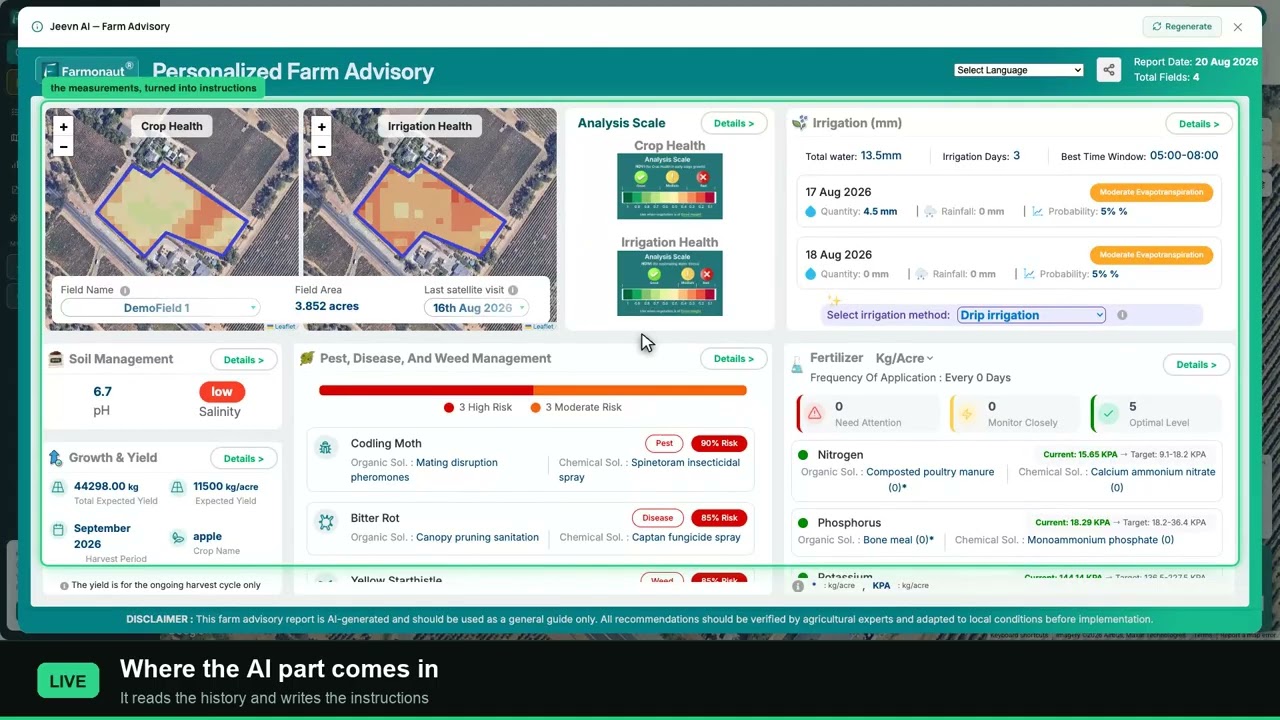
▶ The real advantages and limits of precision agriculture, shown on an actual field. · 2:39
Best time to buy a tractor
No USDA dataset ranks the months of the year for buying a tractor. Three things you can check yourself matter more than a calendar date.
- Dealer stock. Dealers may discount outgoing model-year stock. Ask when their current stock needs to clear. It varies by brand and region.
- Used prices for your model. Compare recent auction results with last year’s for the same model and horsepower. Do not assume a trend from news reports holds for your machine.
- Your tax year. IRS Publication 225, the Farmer’s Tax Guide, says the most you can elect to expense under section 179 for most property placed in service in 2025 is $2,500,000, reduced once total qualifying purchases pass $4,000,000; both amounts are adjusted for inflation in later years. The Farm Bureau review of the 2025 tax act says it also restored full bonus depreciation. Whether timing a purchase helps you depends on your own income and tax position.
This guide gives general information, not financial, tax or legal advice. Rules and rates change and depend on your situation. Before you sign a loan or plan a purchase around tax rules, get professional advice from a lender, a farm tax preparer or a CPA, and check the rules that apply in your state or country.
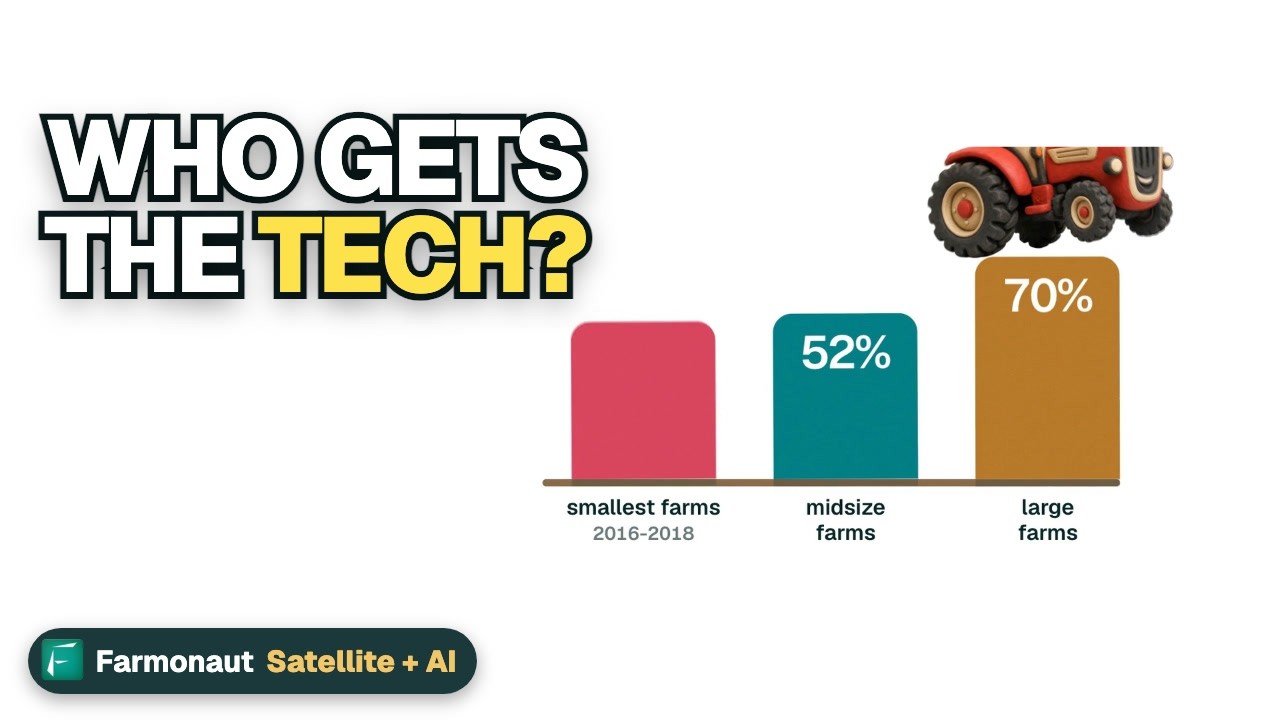
▶ What farm technology, including self-steering tractors, means for farms and rural towns. · 3:50
Implements and land: where the loan money goes
A tractor loan rarely pays for the tractor alone. Most buyers also need a loader, mower, seeder or sprayer. Size implements to the tractor before you finance either. Our guide to tractor implements explains how to match plows, seeders and sprayers to horsepower.
If you are also buying land, ask lenders about a combined application. One cash-flow plan for land and equipment is easier for a lender to assess than two separate requests. For land, FSA direct ownership loans (6.250% from 1 October 2026) can run up to 40 years, while operating loans for equipment are normally repaid within 7 years. Matching the term to the asset’s life keeps payments in line with what the asset earns.
Questions to ask before you add implements
- Will the lender fund implements under the same loan and rate as the tractor?
- Does the lender need separate serial numbers and values for each item?
- Is insurance required on every item that secures the loan?
Records that help a loan application
Lenders want to see that the farm can make the payments. Good records help: past yields, sales, costs and a cash-flow plan for the next few years. Field records showing how crops performed across seasons make a cash-flow plan easier to believe.
Satellite crop maps can be part of those records. The Farmonaut Satellite + AI Farm Monitoring System shows vegetation change across your fields over time, which you can save with your other farm records. It does not replace yield and sales records, and lenders decide what evidence they accept.
Related pages on our site: crop loan and insurance tools, fleet management, carbon footprint tracking, product traceability, large-scale farm management, satellite and weather API docs and the app.
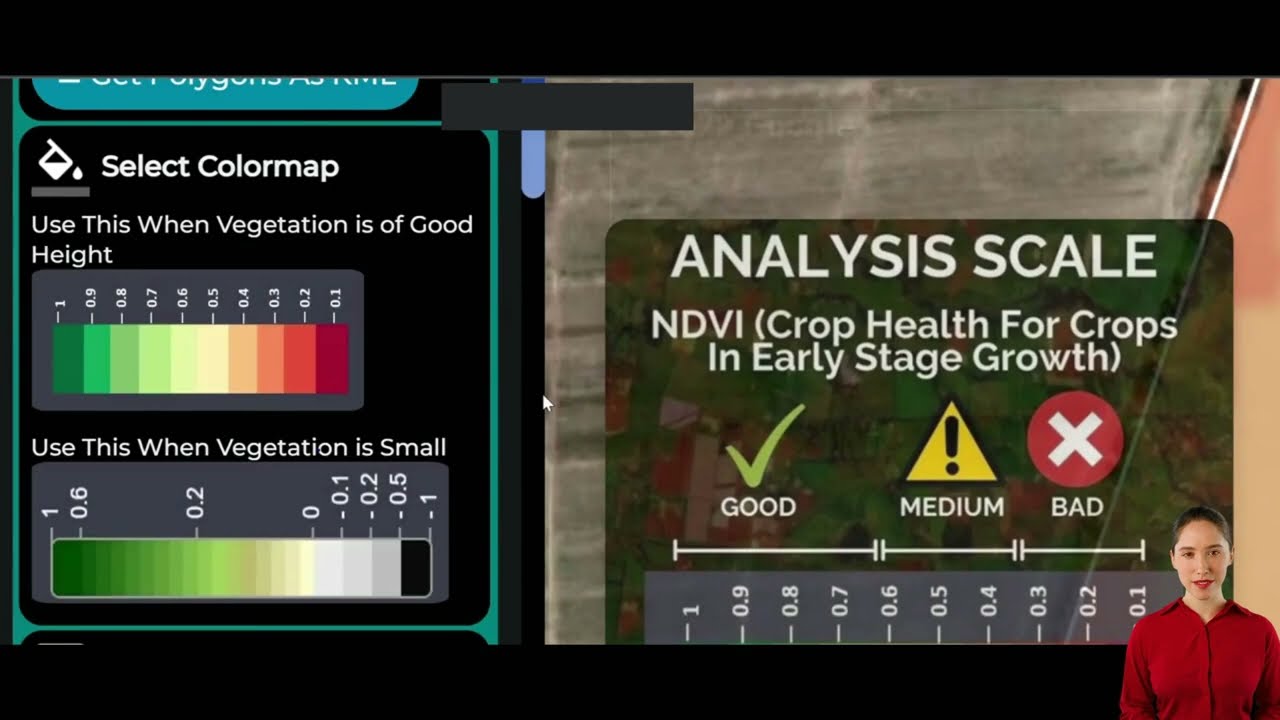
▶ A walk-through of reading satellite field data in the Farmonaut web app. · 10:16
Tractor loan options compared
| Source | Rate | Best for | Watch for |
|---|---|---|---|
| FSA Direct Operating | 5.375% (from 1 Oct 2026) | Eligible family farmers; equipment allowed | Eligibility rules and limits; ask your FSA office |
| FSA Microloan | 5.375% (from 1 Oct 2026) | Small and beginning farms, up to $50,000 | Term no more than seven years |
| FSA Guaranteed | Agreed with lender, capped by FSA | Borrowers whose bank needs a guarantee | Your bank must take part |
| Farm Credit | Quote needed | Farm borrowers wanting an ag lender | Compare APR and fees |
| Commercial bank | Survey average about 7.1–7.2% fixed (Q1 2026, two districts) | Existing customers | Ask fixed or variable, and early-payment fees |
| Dealer finance | Promotions vary | New tractors with a maker’s offer | Rate after the promotion; lost cash rebate |
How we checked the numbers
FSA rates come from the FSA current-rates page, effective 1 October 2026. Bank rates come from the Federal Reserve district surveys as summarised by farmdoc daily (University of Illinois). Lender shares and past average rates come from USDA ERS. Tax limits come from IRS Publication 225. Loan limits come from FSA program pages and fact sheets. We did not use dealer advertising or lender marketing pages for any rate. Dealer and bank quotes for your own loan will differ.
FAQ
What is the current tractor loan interest rate?
The national benchmark is the FSA Direct Farm Operating Loan rate, 5.375% from 1 October 2026. Bank survey averages for fixed operating loans were 7.1% (Chicago district) and 7.2% (St. Louis district) in the first quarter of 2026. Check the FSA rates page for the rate on the day you apply.
Are used tractor loan rates higher than new?
No public dataset sets a separate rate for used tractors, and the FSA rate does not depend on equipment age. Lenders often advance a smaller share of a used tractor’s price and may shorten the term, which raises the down payment or the monthly payment.
Can an FSA loan pay for a tractor?
Yes. FSA operating loans, including microloans, can pay for equipment. Direct operating loans have a $400,000 limit under the 2018 farm bill, and operating microloans go up to $50,000. Ask your local FSA office whether you qualify.
What is the best bank for a tractor loan?
There is no published ranking. Get quotes from a Farm Credit association, a bank you already use and the dealer’s finance arm, and compare APR, term, fees and early-payment terms against the FSA rate.
Is 0% dealer financing better than a cash rebate?
It depends on the rebate size, your bank rate and the term. A large rebate with a low bank rate can beat 0%. Use the calculator above with your own quotes.
Can a tractor loan cover implements and GPS?
Often yes, but each lender sets its own rules. Ask whether implements and guidance kits can go into the same loan at the same rate. Correction-signal subscriptions are yearly costs, so budget for them separately.
Farmonaut crop monitoring
Keep a season-by-season record of your fields
See vegetation change across your fields from satellite images and keep it with your farm records.




Keep reading
Sources
- USDA FSA, Current FSA Loan Interest Rates (October 2026): fsa.usda.gov
- USDA FSA, Guaranteed Farm Loans: fsa.usda.gov
- USDA FSA, Microloans fact sheet (October 2024): dts.fsa.usda.gov
- USDA FSA, Guaranteed loan fact sheet (2025): fsa.usda.gov
- farmdoc daily (University of Illinois), Agricultural Credit Conditions in Illinois, Q1 2026: farmdocdaily.illinois.edu
- USDA ERS, Farm Business Debt and Credit Use (EIB-273): ers.usda.gov
- USDA ERS, Charts of Note: precision agriculture adoption (2024): ers.usda.gov
- USDA ERS, Precision Agriculture in the Digital Era (EIB-248): ers.usda.gov
- IRS, Publication 225, Farmer’s Tax Guide (2025): irs.gov
- American Farm Bureau, Financing the Farm: USDA Farm Loan Programs: fb.org
- American Farm Bureau, One Big Beautiful Bill Act: Final Agricultural Provisions: fb.org
- Federal Reserve Bank of New York, SOFR: newyorkfed.org
Discussion
Questions, corrections or field experience? Share them below. First-time comments are reviewed before they appear, and your email is never published.
No comments yet. Be the first to add a question or your experience.

 Mostas Tech
 AgroStar
 Native Seeds
 Andex
 FCF India
 Unifrutti Gulf
 Deluxe Conseil
 TVS Electronics
 BW Pipelines
 WICO
 Chimera Innovation
 SkyHarvest
 Polaris Digitech
 Teledarbas

 Licence holder · Niger · Gold










