

Table of Contents
- Introduction: The Power of GPS in Modern Agriculture
- Trivia: Precision GPS in Agriculture
- Understanding the Core Components of GPS in Agriculture
- Comparison Table: 5 Key Components of GPS in Precision Agriculture
- 1. Satellite Constellation
- 2. GPS Receivers and Antennas
- 3. Correction Services and Differential Positioning
- 4. Precision Farming Tools & Applications
- 5. Agriculture Drone Components
- The 5 Core Components of Agriculture Enabled by GPS
- GPS Integration in Forestry, Mining & Infrastructure
- How Farmonaut Empowers Data-Driven Precision Agriculture
- FAQs: GPS Components in Agriculture
- Conclusion
5 Components of GPS in Agriculture & Precision Farming: Empowering Modern Crop Management
“Modern GPS receivers in agriculture can achieve accuracy within 2-5 centimeters, revolutionizing precision farming operations.”
The components of GPS in agriculture have transformed farms into high-tech hubs of innovation, optimizing everything from field mapping and crop health to autonomous tractor guidance and drone-based reconnaissance. Today, precision agriculture components are not just tools for yield increase—they are integral for data-driven sustainable farming, advancing operational efficiency, and supporting geospatially informed decisions across fields, forestry, and even mining sectors.
In this comprehensive guide, we’ll explore the main components of GPS in agriculture, including the vital role played by satellites, receivers, correction services, data processing units, and drone systems. We’ll detail how they underpin precision farming, from variable-rate applications and autonomous machinery to monitoring, mapping, and sustainability compliance.
Whether you manage a single field, coordinate fleets, or analyze landscapes across continents, GPS technology—in partnership with the latest drone and satellite innovations—empowers every step. Join us as we break down the “5 components of agriculture enabled by GPS”, their benefits, integration into farm management systems, and actionable insights for 2024 and beyond.
- ✔ Precise Positioning: Enables accurate boundary delineation, reducing overlap and input waste.
- 📊 Real-time Data: Supports informed decisions in field planning and crop management.
- ⚡ Efficiency Boost: Drives autonomous machinery and streamlines operations across vast lands.
- 🌱 Sustainability: Reduces environmental impact via exact input applications and monitoring.
- 🛰 Advanced Technology: Integrates GNSS, RTK, and multispectral imagery for modern farming needs.
“Over 70% of precision farming tools rely on at least three core GPS components for optimal field data collection.”

Understanding the Core Components of GPS in Agriculture
The components of GPS in agriculture are intricate yet elegantly orchestrated, combining satellite-based technologies, robust field hardware, and sophisticated software. By understanding how these core elements interact, stakeholders can harness precision agriculture components effectively for:
- Accurate field boundary mapping
- Data-rich soil and crop management
- Autonomous vehicle and drone navigation
- Variable-rate input delivery
- Sustainability monitoring and traceability
Satellites
GNSS Constellations Broadcast Signals
Receivers & Antennas
Capture Satellite Signals on Fields
Correction Services
Enhance Accuracy to Centimeter Levels
Data Processing
Create Georeferenced Maps, Drive VRT
Drone Integration
Automated Mapping & Precision Application
Comparison Table: 5 Key Precision Agriculture GPS Components
| Component Name | Main Function | Role in Precision Farming | Estimated Impact on Accuracy | Typical Usage Example | Innovation Trend |
|---|---|---|---|---|---|
| Satellite Constellations (GNSS) | Broadcast signals for positioning | Enables universal & continuous coverage | +/- 1–5 m (standalone), improves with corrections | Field mapping, autonomous navigation | Multi-constellation tracking (GPS, GLONASS, Galileo, BeiDou) |
| Receivers & Antennas | Capture and decode satellite signals | Improves field-level measurement accuracy | +/- 10 cm–1 m (advanced models with RTK) | Variable rate seeding, drone positioning | Multi-frequency, anti-interference, field ruggedization |
| Correction Services (RTK/DGPS) | Transmit correction signals to receivers | Enable centimeter-level precision operations | +/- 2–5 cm (RTK enabled) | Autosteer tractors, accurate spraying | Cloud-based corrections, NTRIP, cellular & radio integration |
| Data Processing Units | Analyze, store & georeference data | Mapping, analytics, and VRT prescription | Data precision refined with post-processing | Yield mapping, NDVI analysis | Integrates AI, cloud computing for real-time analysis |
| Drone Components | Automated georeferenced survey & application | Enable aerial mapping, precise input delivery | +/- 2–10 cm (RTK enabled, high precision) | Crop health monitoring, orchard spraying | AI-assisted imaging, swarm operations, multisensor fusion |
Precision agriculture relies on the synergy between multiple GPS components. Improvements in any one component—be it satellites, receivers, or correction services—cascade through the whole system, driving accuracy, efficiency, and value across farms, forestry operations, and even mining or infrastructure projects.
1. Satellite Constellation: The Foundation of GPS Positioning in Agriculture
What is a Satellite Constellation?
At its core, every GPS system in agriculture relies on GNSS satellite constellations. These are networks of satellites—primarily GPS (US), GLONASS (Russia), Galileo (EU), and BeiDou (China)—which orbit Earth, broadcasting continuous positioning signals. The broader and more redundant the constellation (i.e., multiple satellites available at any time), the better the system’s accuracy, reliability, and resistance to signal loss or multipath effects from terrain and crops.
- Multiple Satellite Constellations: Modern receivers utilize signals from several GNSS systems, not just GPS, to increase reliability, especially in challenging environments like hilly fields or dense orchards.
- Higher Geometry: The more satellites in “view” with good spread across the sky, the more precise the triangulation, and the less susceptible the positioning is to signal errors.
- Continuous Coverage: Around-the-clock availability across continents, ensuring uninterrupted operations for tractors, drones, and sensor networks.
The use of multiple satellite constellations is essential in precision agriculture components. Whether guiding self-driving tractors, supporting VRT seed drills, or enabling automated drone flight, redundancy ensures seamless operations and robust data capture everywhere, every time.
Always choose GNSS receivers that support all four major satellite constellations (GPS, GLONASS, Galileo, BeiDou) for maximum reliability during field operations—even on cloudy days or in partially obstructed environments.

2. Receivers & Antennas: Gateway to Accurate Data Capture in Agriculture
Role and Types of GPS Receivers in Farming
Receivers and antennas are the field interface between satellite signals and actionable farm data. These units, ranging from handheld devices to advanced vehicle and drone-mountable receivers, capture, decode, and process raw satellite signals into precise location data.
Robust multi-frequency receivers can interpret signals from multiple constellations and at different frequencies to maintain accuracy even under canopies or amidst interference. High-quality antennas further enhance signal reception by reducing multipath effects—reflections and distortions from buildings, trees, or equipment—ensuring stable data for mapping, navigation, and real-time operations.
- Handheld Receivers: Perfect for quick boundary mapping, on-foot surveys, and geotagging soil sampling sites.
- Vehicle-Mounted Receivers: These are often paired with auto-steer systems on tractors, combines, and sprayers, maintaining centimeter-level accuracy for tillage, seeding, and spraying.
- Drone-Mounted Receivers: Enable autonomous, pre-planned flights for aerial mapping, crop scouting, and targeted pesticide/fertilizer delivery.
Modern agricultural receivers support rugged, field-ready construction, with integrated Bluetooth/Wi-Fi networking for seamless data flow to farm management software.
Skimping on antenna quality can severely reduce positioning accuracy. Invest in phase-stable, high-gain antennas for consistent GPS/GNSS reception, especially during surveying or autonomous guidance in challenging environments like dense tree canopies.

- 🔹 Boundary Delineation: Walk the field perimeter to log accurate boundaries for compliance and management zones.
- 🔹 Real-Time Autosteering: Enable tractors to follow precise swaths, reducing fuel, labor, and soil compaction.
- 🔹 Agriculture Drone Components: Automate flight paths and image georeferencing for crop health and moisture mapping.
- 🔹 VRT Applications: Ensure variable-rate seeds or chemicals are delivered only where needed, saving inputs and minimizing runoff.
- 🔹 Field Sampling: Accurately locate prior sampling points for improved year-over-year soil or crop monitoring.
3. Correction Services & Differential Positioning
Why Are GPS Corrections Essential in Agriculture?
Even top-tier GNSS signals are affected by atmospheric delays, satellite clock drift, and terrain obstruction. These errors, while small, can add meters of inaccuracy—untenable for tasks like row-crop seeding or spot spraying. That’s why correction services—the heart of differential positioning—are pillars of precision agriculture components.
- Base Station: A local, fixed GNSS receiver at a known position logs errors in incoming satellite signals and transmits correction messages to “rover” devices in the field via radio, Wi-Fi, or cellular network.
- Correction Services:
- RTK (Real-Time Kinematic): Delivers real-time, centimeter-level corrections—ideal for autonomous navigation, variable-rate application, and drone surveying.
- DGPS (Differential GPS): Offers decimeter-level correction suitable for broad-acre input applications and compliance tasks.
- NTRIP (Networked Transport of RTCM via Internet Protocol): Allows devices to pull corrections from remote base stations, even if no local base is available.
- Post-Processing: After fieldwork, GPS data and observations are processed to refine maps and yield analytics, though in-season decisions depend on real-time corrections.
This backbone of corrections ensures GPS systems provide not just real-time location, but absolute positioning down to the centimeter for every pass and application.
The global market for correction services and precision GNSS receivers—particularly in agriculture and mining—is expected to surpass $10 billion by 2030 due to rapid adoption of smart farming, drone-enabled geospatial surveys, and digital compliance requirements.
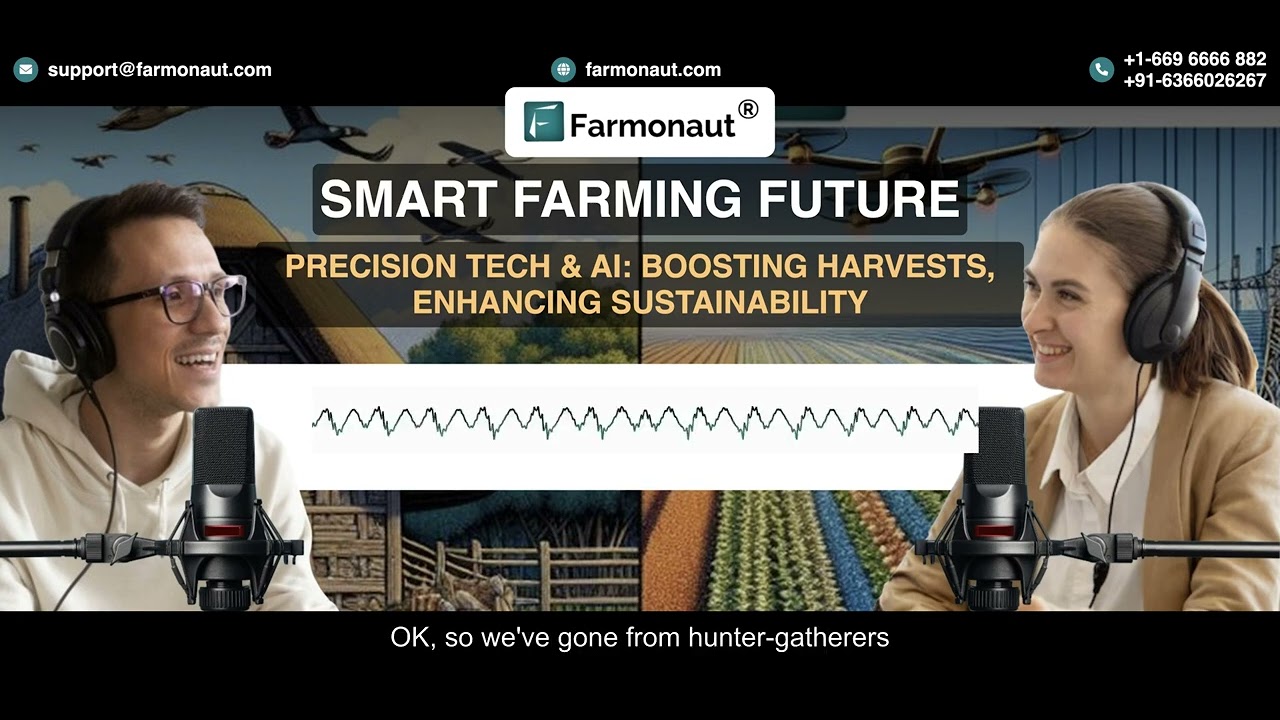
Correction Service Usage Examples:
- Planting multiple crop varieties in specific field zones without overlap.
- Guiding high-clearance sprayers to avoid sensitive areas or previous damage.
- Orchestrating swarms of drones for uniform, event-triggered spraying of large paddocks.
- Integrating geolocated soil sensors for climate-smart irrigation scheduling.
RTK
Real-Time, High Precision
DGPS
Wide Area Differential
NTRIP
Networked Correction from Cloud
PPP
Global Precise Point Correction
4. Precision Farming Tools & Applications
How GPS Drives Precision Agriculture Components
GPS has enabled a revolution in the deployment of precision farming tools. These systems automate, optimize, and inform every aspect of farm operations, from the micro (site-specific inputs and scouting) to the macro (landscape mapping and compliance).
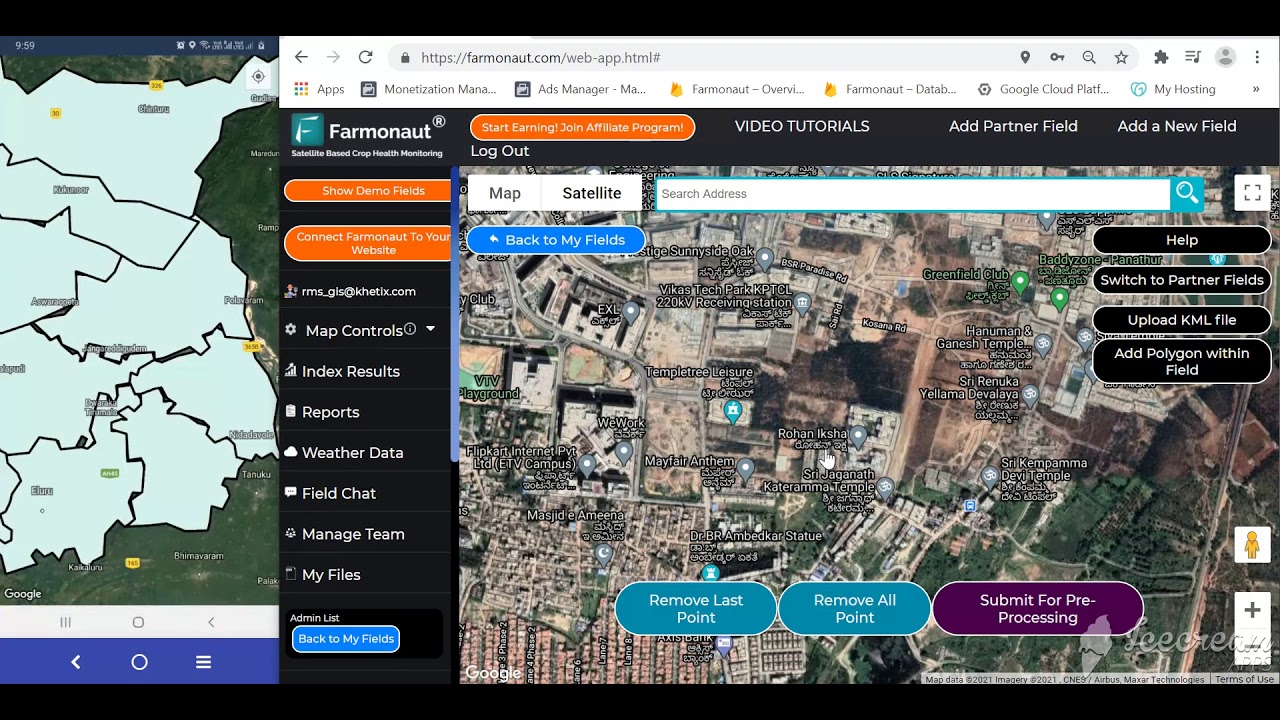
- Field Mapping and Boundary Delineation: GPS-enabled GIS tools allow the creation of ultra-accurate field boundaries, prescription maps, and historical data logs—crucial for rotation planning and targeted interventions.
- Variable-Rate Technology (VRT): Integrates soil sensors, drone imagery, and yield maps with real-time GPS to deliver seeds, fertilizer, and pesticides at optimal rates and locations.
- Auto-Steer and Guidance: Uses GPS to direct vehicles along straight lines and intricate patterns (e.g., contour farming), saving fuel, reducing overlap, and minimizing input use.
- Real-Time Field Operations: Synchronizes autonomous seeders, sprayers, and boom controllers based on location, ensuring uniform coverage, reducing misses or double-applications.
- Compliance & Traceability: Geolocated data supports sustainability certifications, audits, and traceability via systems like blockchain—growing in importance for future food and supply chain transparency. Learn more about Farmonaut’s product traceability solutions.
The combination of precise GPS data, advanced sensors, and cloud analytics delivers actionable insights to increase yields while reducing resource use and environmental impact, promoting sustainability in both large-scale and smallholder farming.

Precision Applications in the Field
- Adapt fertilizer maps to match in-season NDVI drone imagery for stress detection
- Use auto-guidance in night or foggy conditions—GPS doesn’t “see” weather
- Apply only enough chemicals by controlling individual sprayer nozzles via GPS-linked software
- Record location-specific yields for year-over-year optimization and reporting
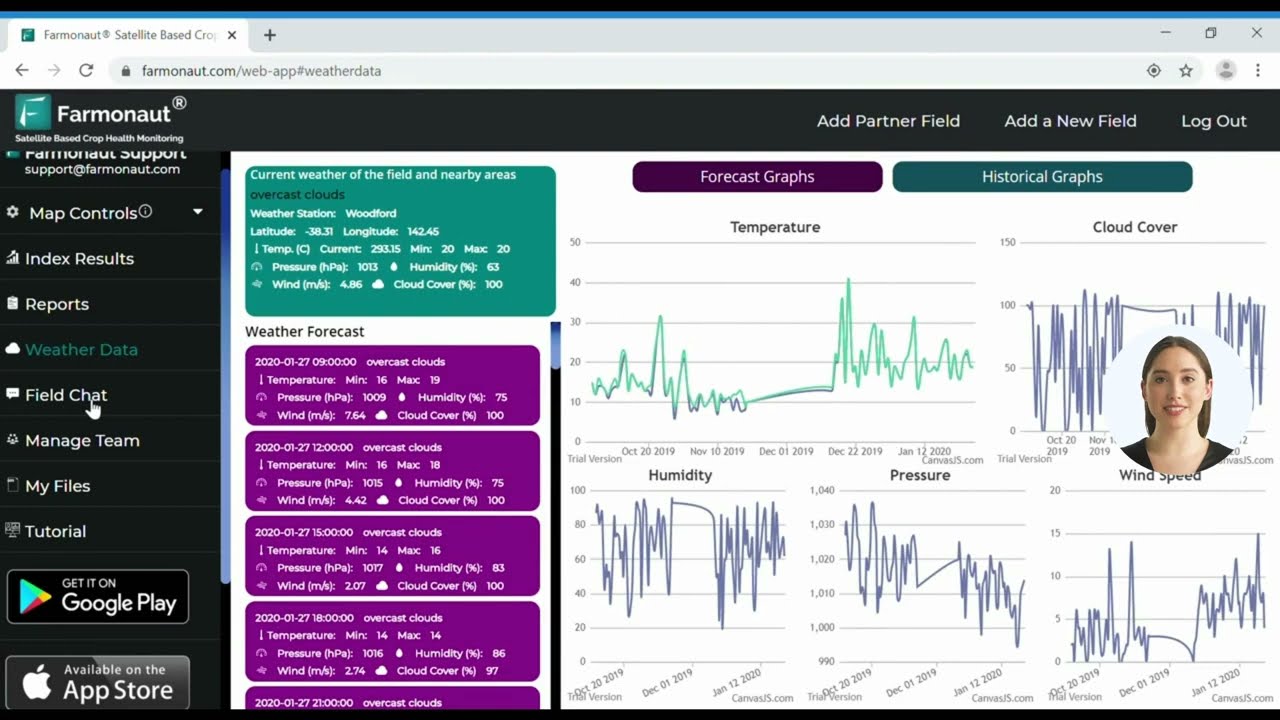
- 📱 Mobile Compatibility: Today’s platforms, such as Farmonaut’s web and mobile apps, allow real-time monitoring and control right from your smartphone or tablet—anywhere, any time.



5. Agriculture Drone Components: Aerial Data, Spraying, and Autonomous Survey
Unpacking the Critical Agriculture Drone Components for GPS-Enabled Farming
Drone technology is now inseparably linked to precision agriculture components. Drones—powered by satellite positioning, sophisticated sensors, and AI-driven control software—bring sub-centimeter accuracy, rapid multispectral mapping, and ultra-efficient spraying to every farm, forest, or mine.
- Flight controllers & GPS receivers: The “brain” of the drone, running real-time GNSS processing; advanced models include RTK-enabled modules for centimeter-level waypoint execution.
- Inertial Measurement Units (IMU) & Navigation Sensors: Utilize accelerometers and gyroscopes to correct drift and stabilize flight, critical for windy or variable terrain.
- Imaging payloads & sensors: Drones carry RGB cameras, multispectral sensors (including NDVI), and sometimes LiDAR, enabling high-res, georeferenced aerial imagery for crop health, stress detection, or 3D mapping.
- Ground control software: Integrates GPS data with mission planning, sensor outputs, and real-time dashboards for streamlined operation and field integration. See Farmonaut’s large-scale farm management solutions for more details on software-led drone operation.
- Georeferenced outputs: Produces GeoTIFFs, shapefiles, and mosaics seamlessly compatible with VRT equipment and farm management platforms.
Always synchronize drone payload sensors with GPS timing (especially for multispectral and thermal sensors) to ensure outputs are perfectly georeferenced for actionable field decisions.

Aerial Agriculture: Drone Use Cases
- Mapping mosaic for farm boundaries and pond site planning
- Generating NDVI/NDRE maps for identifying nitrogen stress and pest outbreaks
- Geolocated imagery for evidence in crop insurance claims (Farmonaut’s crop loan & insurance verification solutions)
- Automated drone-based reforestation and biomass estimation in regenerative agroforestry projects
- Targeted spray missions for invasive pest control, avoiding beneficial insect habitats
- 🗺 Seamless Data Integration: Geo-referenced drone outputs feed directly into Farmonaut’s API and major farm management software for intelligent planning and execution. Developer integration is made easy with comprehensive Farmonaut API documentation.
Combining ground-based sensors, satellite monitoring, and drone georeferenced outputs delivers a “single source of geo-truth” for farms, enabling precise decisions, reducing redundant operations, and supporting long-term sustainability goals.
The 5 Core Components of Agriculture Enabled by GPS
Beyond technology itself, let’s summarize how the 5 key GPS components transform every aspect of precision farming operations:
- Field-Based Decision Support: Ultramodern, GPS-derived field boundaries and soil maps are foundational for management zoning, crop rotation planning, and resource allocation. Farmonaut’s Crop Plantation & Forest Advisory makes these features accessible to all.
- Precision Application: GPS-enabled VRT ensures seeds, fertilizer, and pesticides are only applied where needed, minimizing input waste and environmental impact.
- Autonomous Operations: Self-driving machines and drones use GPS data to maintain perfect alignment, reduce labor, and guarantee pass-to-pass accuracy.
- Monitoring and Mapping: GPS-referenced imagery, sensor data, and yield maps allow year-round crop and soil health tracking, aiding in timely interventions and operational tuning.
- Compliance and Traceability: Enables creation of geolocated audit records, sustainability reporting, and blockchain-based product traceability—a must for global supply chains. Check out Farmonaut’s carbon-footprinting solutions for environmental compliance.
In infrastructure and mining, GPS-enabled components deliver critical asset mapping, automated site surveys, and risk-minimized, grade-controlled pit operations—paving the way for safer, more efficient extraction and development.
GPS Integration in Forestry, Mining & Infrastructure
The components of GPS in agriculture are equally disruptive in forestry, mining, and infrastructure—sectors where georeferenced data, accurate boundary delineation, and automated surveying underpin safety and sustainability.
- Forestry: GPS-enabled aerial and ground surveys accurately estimate timber volume, boundary changes, and reforestation success, supporting better management and carbon-credit validation.
- Mining: RTK GNSS receivers deliver +/-2 cm accuracy for grade control, ore extraction, and asset tracking in open-pit, quarry, and underground environments.
- Infrastructure: Centimeter-accurate GPS supports route planning, construction layouts, and compliance for roads, irrigation canals, and distributed solar farms.
Industries rely on satellite-driven solutions to radically improve operational efficiency and long-term sustainability. Tools such as Farmonaut’s fleet management systems streamline vehicle tracking and resource optimization, reducing overheads and enhancing safety.
Cross-sector adoption of GPS-based tools accelerates innovation, making high-precision, real-time data available to agriculture, forestry, mining, and infrastructure operators alike, breaking barriers between fields, forests, and digital future solutions.
How Farmonaut Empowers Data-Driven Precision Agriculture
At Farmonaut, we believe everyone—from individual growers to multinational operators—should access affordable, satellite-based insights for precision agriculture, mining, and infrastructure. Our platform fuses satellite imagery, AI analytics, blockchain, and resource management tools to deliver:
- Satellite-Based Monitoring: Multispectral imagery and NDVI analytics for crop and environmental health monitoring, all via browser or mobile app.
- Jeevn AI Advisory System: Real-time crop, weather, and resource insights—perfect for responsive, data-driven decisions in any field or mine.
- Blockchain Traceability: End-to-end geolocated supply chain visibility for food safety, mining, and compliance audits. Discover more on Farmonaut’s blockchain traceability page.
- Fleet & Resource Management: Optimize vehicle and machinery use via GPS-integrated dashboards, reducing downtime and maximizing ROI. Visit our fleet management product page for more details.
- Environmental Stewardship: Easily track your carbon footprint, meet sustainability mandates, and document impact using satellite-based carbon footprinting tools.
Our subscription-based model with mobile and API integration unlocks advanced data, regardless of your operation’s scale. Experience our platform, browse pricing, and select what fits your needs:
- Accessible Web, Android, and iOS Apps for live monitoring
- Advanced API for seamless farm management software integration (API details here)
- Developer docs and support (Developer Resources)
- Scalable solutions for growers, agri-businesses, and governments
- Frequent satellite data updates for in-season adaptability
- Tailored solutions for sustainability monitoring and compliance
- 💡 Compliance Advantage: Farmonaut’s georeferenced records streamline audit and certification processes for agri-businesses aiming for export or sustainability credentials.
FAQs: Components of GPS in Agriculture & Precision Farming
-
What makes up the “5 components of agriculture” enabled by GPS?
Satellites (GNSS constellations), receivers & antennas, correction services, data processing units, and drone-based systems form the backbone of modern precision agriculture, providing real-time, accurate, georeferenced information for every field operation. -
How does GPS improve precision and accuracy in farming?
By combining multi-constellation GNSS, robust receivers, real-time corrections, and advanced analytics, GPS-enabled systems enable precise boundary mapping, variable-rate applications, and elimination of overlap or gaps in field operations, boosting efficiency and reducing input costs. -
What are the roles of drones in GPS-enabled agriculture?
Agriculture drone components harness GPS for autonomous flight, georeferenced mapping, and precision spraying. They speed up scouting, deliver targeted interventions, and seamlessly integrate outputs into farm management software for decision support. -
Can GPS help small and medium-sized farms, not just large agribusiness?
Absolutely. Affordable mobile apps, drones, and subscription platforms like Farmonaut put GPS-powered analytics, compliance monitoring, and input optimization within reach for growers of all scales. -
Are there risks or limitations to GPS in agriculture?
Signal loss in dense cover, multipath errors, and dependency on correction services are challenges. Using multi-frequency, multi-constellation systems and regularly updating equipment firmware reduces these issues. -
How does GPS technology aid mining or infrastructure projects?
It supports accurate land and asset mapping, autonomous grade control, and real-time vehicle tracking for safer, more cost-effective resource extraction and project delivery.
Neglecting to calibrate or routinely update GPS device firmware can undermine data integrity, especially across connected multi-device platforms. Regular maintenance is simple but vital for operational success!
Conclusion: Towards Smarter, Greener Fields with GPS
The components of GPS in agriculture form the bedrock of precision farming, empowering a new era of sustainable, profitable, and resilient agricultural systems. Leveraging satellites, GNSS receivers, real-time correction services, robust data analytics, and advanced drone integration, growers no longer need to choose between productivity and resource stewardship—they can achieve both, knowing every square meter of their field is managed optimally, with full traceability.
- 🌍 Global Impact: GPS-enabled solutions are crucial across agriculture, forestry, mining, and infrastructure, driving efficiency and supporting sustainability worldwide.
- ☁️ Cloud Connectivity: Modern apps and APIs allow seamless integration of GPS, drone and satellite data, keeping all stakeholders informed and agile.
- 📈 Data-Driven Operations: Real-time monitoring, mapping, and autonomous work is now a reality for every farm, thanks to synergistic GPS components.
- 🛡 Built-in Compliance: Georeferenced, blockchain-verified data simplifies audits, insurance, and stakeholder reporting.
- 💡 Innovation Ready: As AI, IoT, and cloud systems evolve, the value of integrated, accurate GPS in agriculture will only grow—Farmonaut is at the forefront of this transformation!
Ready to unlock the power of precision GPS components across your fields, forests, or mines? Connect with us to discover how Farmonaut’s technology suite can empower you to make smarter, informed, and more sustainable decisions—today and for the future of agri-tech innovation.

 Deluxe Conseil
 Krishify
 TVS Electronics
 BW Pipelines
 WICO
WICO Gen Chayat
 Chimera Innovation
 SkyHarvest
 Polaris Digitech
 Teledarbas
 Wild Oak Farm
 SFX
SFX BACF Africa
 Doodlakine
 Exurbia Geospatial
