

UAV Land Surveying & Mapping: 7 Breakthrough Trends for 2026
“By 2026, UAVs are projected to map over 2 million square kilometers of farmland annually worldwide.”
Meta Description: UAV land surveying is revolutionizing agriculture. Discover the 7 breakthrough UAV mapping trends of 2026 driving precision, efficiency, and crop insights in modern farming.
- Introduction
- Understanding UAV Land Surveying in Agriculture
- The Evolution of UAV Surveying and Mapping
- Why Choose UAVs for Surveying and Mapping?
- UAV Surveying Companies and Modern Services
- Seven Breakthrough Trends in UAV Land Surveying for 2026
- Trend Comparison Table
- Future Outlook: 2026 and Beyond
- Farmonaut Links and Subscription Information
- FAQs on UAV Land Surveying and Mapping
- Conclusion
Introduction
Drones, also known as Unmanned Aerial Vehicles (UAVs), are revolutionizing land surveying and mapping in ways unimaginable only a decade ago. With UAV land surveying and mapping experiencing rapid advancements, their impact on agriculture is particularly significant. As modern farming techniques demand high levels of precision, accuracy, and efficiency, the integration of UAVs equipped with advanced sensors and data analytics tools is fast becoming indispensable for farmers, agronomists, and other agricultural stakeholders.
Key technological breakthroughs in drone surveying and mapping are enabling farmers to collect, analyze, and utilize spatial data more effectively than ever before. From multispectral imaging to real-time analytics and AI-powered insights, UAVs are setting new standards in crop management, soil health monitoring, and resource optimization. As we approach 2026, understanding the top emerging trends in UAV surveying and mapping is crucial for anyone aiming to optimize productivity and reduce costs in modern agriculture.

Understanding UAV Land Surveying in Agriculture
In recent years, the agricultural sector has been at the forefront of adopting UAV land surveying technology. Traditionally, land surveying for agricultural purposes depended on labor-intensive manual surveys or low-resolution satellite imagery. These methods often lacked subtle details on the ground and were expensive and time-consuming.
UAVs, or drones, bridge these gaps by providing high-resolution, real-time aerial imagery and detailed spatial data. This enables precise analysis and intervention, setting the stage for the modern era of precision agriculture. The synergy between advanced UAV surveying and mapping and smart farming techniques is evident in the ability to:
- Observe, measure, and respond to subtle intra-field variability
- Detect early signs of crop stress, pests, and diseases
- Monitor soil health, moisture levels, and other critical parameters
- Boost yield through data-driven decisions
- Maximize resource use and reduce input costs for fertilization, irrigation, and pest control
This ongoing shift towards UAV-enabled surveying in agriculture is not just a trend, but a revolution underpinning the most vital sector on the planet.

The Evolution of UAV Surveying and Mapping: From Manual to Digital
Until recently, surveying in agriculture relied heavily on manual ground-based techniques and satellite remote sensing. Satellite-based imagery, although useful, often lacked the resolution needed to visualize subtle features or timely changes in crop conditions. Manual surveys were costly and labor-intensive, especially for large farms with complex field boundaries and topographies.
UAVs—including both multi-rotor and fixed-wing drones—now bridge the gaps. The integration of advanced sensors (multispectral, hyperspectral, and thermal) on these UAVs provides high-resolution data capture and enables comprehensive area mapping in a fraction of the time required by traditional methods.
Major benefits of this evolution in aerial data collection in agriculture include:
- Rapid and frequent surveys: Drones can complete mapping tasks within hours, supporting continuous monitoring of crops and soil health.
- Cost savings: Reduced need for manpower and lower operational costs per hectare surveyed.
- Superior spatial and temporal resolution: Ability to monitor even small changes in crop vigor or moisture levels on a daily or weekly basis.
- Customizable data outputs: From NDVI maps (Normalized Difference Vegetation Index) to digital elevation models (DEMs), data can be tailored to the exact needs of farmers and agronomists.
- Enhanced farm management: Data-driven insights lead to smarter irrigation, fertilization, and pest control, reducing environmental impact.

Why Choose UAVs for Surveying and Mapping?
Selecting the best drone for surveying is critical for maximizing return on investment in agricultural operations. UAVs for surveying and mapping now offer several game-changing features:
- Centimeter-Level GPS Accuracy: Integrated Real-Time Kinematic (RTK) GPS modules allow for highly accurate geolocation data, essential for precision mapping and legal boundary establishment.
- Advanced Sensors: Multispectral, hyperspectral, and thermal sensors enable detection of crop stress, pest infestations, and even minor variations in soil moisture or nutrient status.
- High Payload Capacity: Drones can be kitted out with multiple sensor types or large batteries for longer flight times or carrying specialized imaging systems.
- Durability & Versatility: The latest UAV models are designed for diverse weather and field conditions, ensuring reliable data capture across the farming calendar.
- Scalability: Fixed-wing UAVs excel at covering large land tracts efficiently, while rotary-wing drones are ideal for detailed scouting of smaller or complex plots.
By choosing the right UAV surveying solution, farmers and agronomists can support not just crop monitoring, but also farming decisions related to planting, harvesting, and resource dispatch.
UAV Surveying Companies and Modern Services: The Business of Precision
The growth in demand for drone surveying and mapping has given rise to an ecosystem of UAV surveying companies offering turn-key solutions for agriculture—including aerial data capture, map generation, analysis, and insight delivery. Their offerings often include:
- End-to-end farm surveying services—from planning to actionable map outputs.
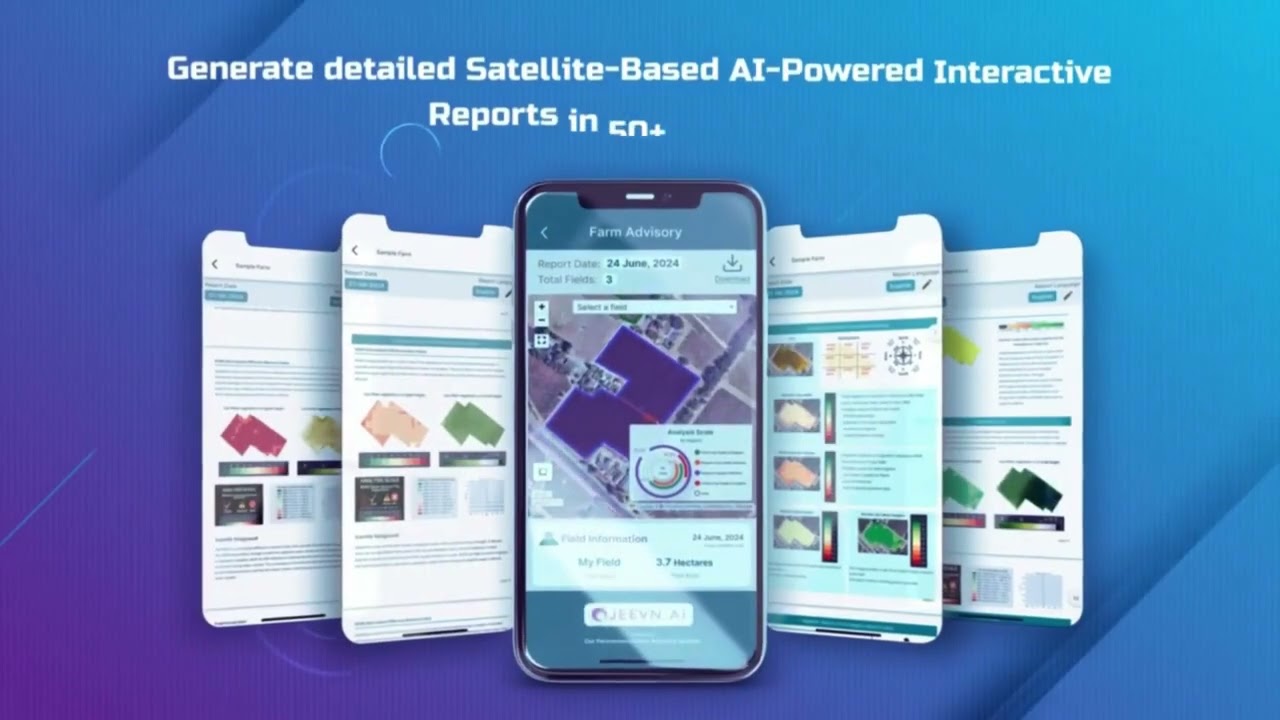
- AI and Machine Learning-based analytics—converting raw drone data into actionable insights for farm management.
- Custom reporting on crop health indices, soil variability, and yield estimation.
- Scalable options—from periodic surveys by specialists to continuous in-house monitoring using farm-owned UAVs.
Heavy investment from individual farms, agribusinesses, and even government agencies ensures UAV surveying technology continues to become more accessible and effective. Whether engaging a specialist or building in-house drone operations, the focus remains consistent: translating aerial intelligence into on-the-ground action.
UAV Land Surveying in 2026: 7 Breakthrough Trends Shaping Agriculture
“Advanced UAVs can collect over 5 TB of high-resolution crop data per 100 hectares in a single survey.”
2026 is set to be a watershed year for the integration of UAVs for surveying and mapping in agriculture. Here are seven trends poised to redefine the landscape:
1. AI-Driven Crop Intelligence & Real-Time Advisory Systems
- AI integration enables UAVs to instantly analyze raw aerial data and provide on-spot farm management advice.
- With near real-time crop stress alerts, pest detection, and yield prediction, agronomists and farmers can make timely interventions that directly boost productivity and minimize loss.
- Farmonaut, for example, leverages AI to deliver actionable farm-level recommendations through its Large Scale Farm Management platform.

2. Multispectral and Hyperspectral Sensing for Deep Crop Analysis
- Modern UAVs equipped with multispectral/hyperspectral sensors allow for detailed monitoring of plant health, nutrient content, and pest infestations.
- Farmers can create high-resolution NDVI maps to spot stressed crops and deploy targeted treatments, optimizing resource use and reducing environmental impact.
- Benefit from Carbon Footprinting for sustainable practices—tracking emissions from field operations through aerial and satellite data.

3. Automation & Autonomous Fleet Operations
- Autonomous UAV fleets are becoming standard for large farms, handling regular surveys without manual intervention—enabling continuous monitoring.
- Fleet management systems coordinate drone activities, optimize field coverage, and ensure quick responses to emerging threats.
- Integrate Farmonaut’s Fleet Management for real-time monitoring of your UAV fleet and agricultural machinery.
4. Blockchain-Based Traceability & Secure Data Sharing
- Blockchain is transforming traceability by ensuring every stage of data—from aerial capture to crop certification—is verifiable and tamper-proof.
- This technology boosts consumer trust and streamlines regulatory compliance in agri-food supply chains.
- Explore Farmonaut’s Traceability Solutions for robust end-to-end crop data management.
5. Enhanced GPS Technologies & Geospatial Analytics
- 2026 will see widespread adoption of RTK (Real-Time Kinematic) GPS in drones for centimeter-level positioning and ultra-precise field mapping.
- Advanced geospatial analytics extract actionable insights from complex spatial datasets, improving everything from farm design to harvest planning.
6. Integration with Satellite Data, IoT & Environmental Monitoring
- Seamless integration of UAV and satellite data provides a comprehensive view from field to global scale.
- IoT sensors and UAVs together deliver continuous, cross-referenced insights on soil moisture, weather, and crop health.
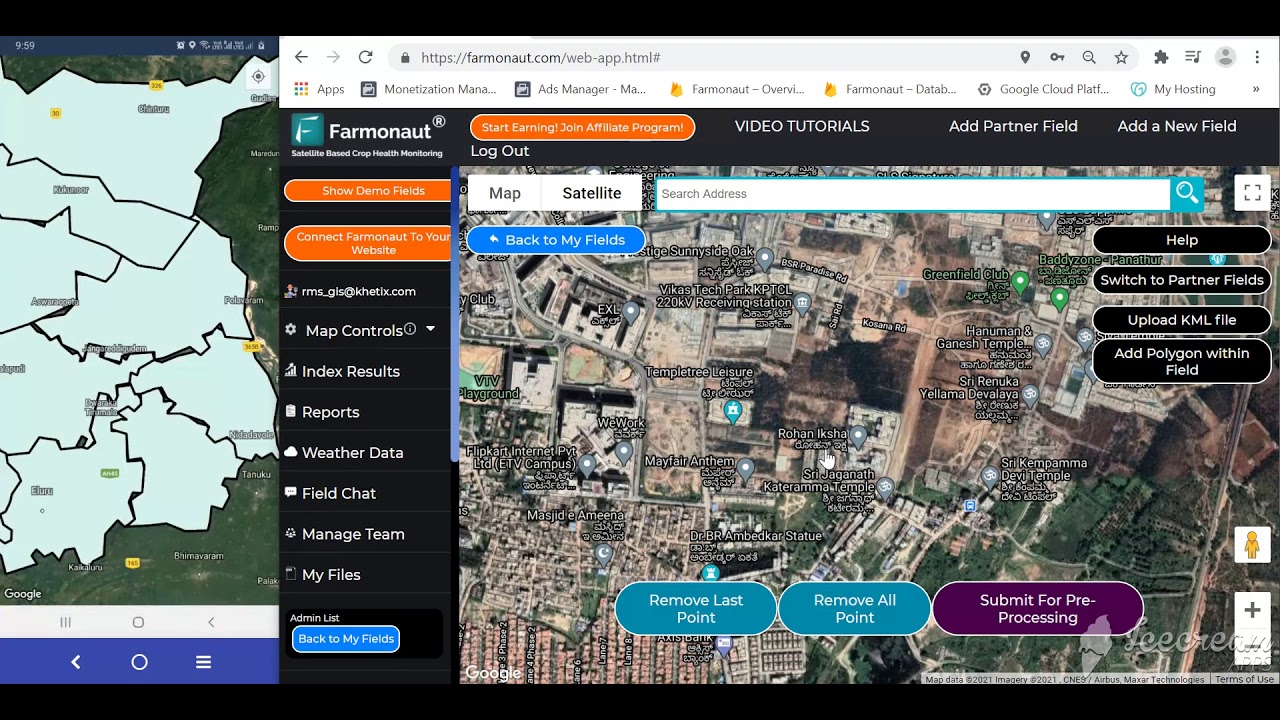
- Farmonaut’s satellite-based monitoring and AI-driven advisory systems offer real-time, actionable insights for farmers and crop consultants.
7. Edge Computing, Big Data, and Scalable Digital Platforms
- Onboard edge computing in UAVs is reducing the need for cloud uploads by processing large datasets directly during flight, enabling instant feedback and decision-making.
- Cloud-based digital platforms store and manage terabytes of survey data while providing intuitive analytics dashboards for all stakeholders. Discover Farmonaut’s satellite-linked crop loan & insurance support for faster, data-backed rural finance workflows.
UAV Surveying and Mapping: Trend Comparison Table for 2026
| Trend Name | Estimated Adoption (%) by 2026 | Expected Precision Improvement (%) | Potential Efficiency Gain (%) | Brief Agricultural Benefit |
|---|---|---|---|---|
| AI-Driven Crop Intelligence & Real-Time Advisory | 75% | +40% | +60% | Immediate farm interventions, better yield predictions, timely pest/disease control |
| Multispectral & Hyperspectral Sensing | 70% | +35% | +55% | Early problem detection, precise fertilizer and water application |
| Automation & Autonomous Fleets | 60% | +30% | +70% | Unattended, regular surveying, labor cost saving, 24/7 monitoring |
| Blockchain-Based Traceability | 35% | +25% | +30% | End-to-end secure data, improved supply chain transparency |
| Enhanced GPS & Geospatial Analytics | 80% | +50% | +50% | Boundary accuracy, field design, compliance, mechanized mapping |
| Satellite Data, IoT & Environmental Monitoring | 55% | +30% | +40% | Holistic monitoring, compliance, environmental stewardship |
| Edge Computing & Big Data Platforms | 60% | +40% | +50% | Instant data processing, real-time decision-making, data-driven financial services |
Future Outlook: UAV Land Surveying & Mapping in 2026 and Beyond
By 2026, UAV surveying and mapping technology will be tightly interwoven into the daily routines of farms—ranging from smallholder plots to massive commercial estates. The boundary between satellite-based observation and aerial UAV mapping will continue to blur, with integrated digital ecosystems providing seamless, multi-layered insights for all actors in the agricultural value chain.
Major developments shaping the future include:
- Widespread use of beyond-visual-line-of-sight (BVLOS) operations, allowing drones to survey entire districts or regions autonomously.
- The continuous miniaturization of sensors and advancements in power systems, thereby extending drone flight times and survey areas.
- Legislative updates ensuring safety and privacy, facilitating mass adoption of UAVs in farming and land management.
- Expansion of data platforms that aggregate, analyze, and disseminate real-time actionable insights directly to farmers’ mobile devices or AG management systems.
- AI-powered predictive analytics: Automated decision-making for irrigation, fertilization, harvesting, and climate resilience.
The agriculture sector’s digital transformation is exponential. Efficient, precise, and scalable UAV surveying and mapping will be at the heart of climate-smart agriculture, food security, and sustainability strategies worldwide.
Farmonaut Ecosystem: Affordable, Scalable, and Advanced Agriculture Solutions
As a satellite technology leader, we at Farmonaut empower the agriculture industry with real-time, high-resolution crop monitoring, blockchain traceability, and AI-powered advisory systems—all accessible from your computer or mobile device. Our subscription-based model ensures that farmers, agronomists, businesses, and agencies anywhere in the world can benefit from the latest in satellite and UAV-driven insights.



-
Farmonaut API — Integrate satellite and UAV-driven insights, automate farm monitoring and resource management for large-scale agribusinesses or corporate clients.
-
Developer Docs — Complete technical documentation for developers to tap into Farmonaut’s advanced data services.
-
Large Scale Farm Management Platform — Perfect for agribusinesses to execute and control UAV land surveying across multiple properties.
-
Carbon Footprinting Platform — Harness UAV and satellite data to calculate and manage your farm’s environmental impact.
-
Fleet Management — Manage your UAVs and agricultural vehicle operations from a single control center.
-
Crop Loan & Insurance Verification — Secure crop loans and insurance with blockchain-backed, satellite-verified reporting.
-
Product Traceability — Ensure data integrity from drone surveying and mapping to market with blockchain record-keeping.
-
Plantation & Forest Advisory — Access real-time environmental and crop health monitoring for plantation managers.
FAQs on UAV Land Surveying and Mapping
What is UAV land surveying and why is it important for agriculture?
UAV land surveying involves using drones to collect precise aerial data about farmland, crop health, soil moisture, boundaries, and infrastructure. It’s crucial for modern agriculture because it offers high-resolution, real-time insights that enable smarter, more sustainable, and more profitable farming operations.
How does UAV surveying differ from satellite-based monitoring?
While satellite monitoring covers larger areas and provides regular but sometimes lower resolution imagery, UAV surveying delivers ultra-high resolution data, near real-time frequency, and customizable sensor configurations for specific field monitoring, making it ideal for detailed analysis and rapid interventions in crop management.
What are the main benefits of drone surveying and mapping in 2026?
Improved accuracy, reduced labor and operational costs, ability to detect early-stage crop stress and pest issues, enhanced yield estimation, and compliance with environmental regulations are just some of the many benefits revolutionizing farm management worldwide.
Are UAV surveying companies affordable for small farms?
Yes, as technology advances, costs are dropping. Many UAV surveying companies now offer scalable services and flexible subscription models, making high-tech surveying accessible for farms of all sizes.
Can UAVs integrate with existing farm management software?
Absolutely! Most modern platforms, including those powered by Farmonaut’s APIs, are designed for seamless integration with existing agricultural management tools for streamlined, data-driven decision making.
What kind of training is needed to operate drones for mapping?
Basic drone operation training is generally sufficient. For advanced surveying and mapping, specialized courses in UAV operation, data processing, and GIS analysis may be recommended, especially for large-scale agribusiness needs.
Is the data from UAV land surveying secure?
Yes, blockchain-based traceability solutions ensure data is securely logged, tamper-proof, and, if needed, auditable, significantly enhancing security and regulatory compliance in agricultural operations.
Conclusion
The integration of UAV land surveying and mapping technologies is redefining the future of agriculture. As we move into 2026, these breakthrough trends will become essential pillars for anyone looking to optimize land and crop management, improve yields, reduce costs, and ensure environmental sustainability at all scales.
With continued advancements in AI, blockchain, GPS accuracy, sensor miniaturization, and autonomous operations, the possibilities unlock for farmers and agronomists are immense. By choosing the best drones for surveying, leveraging the expertise of UAV surveying companies, and utilizing comprehensive platforms like Farmonaut, the future of digital farming becomes bright, sustainable, and profitable.
The new age of agricultural innovation is here—powered by the precision and efficiency of UAV surveying and mapping. Are you ready to join the revolution?

 MCSOD
MCSOD Marei Nursery
 Sayaji Group
 eKGIS
eKGIS Mostas Tech
 Native Seeds
 Andex
Andex FCF India
 Unifrutti Gulf
 Deluxe Conseil
 TVS Electronics
 WICO
WICO Chimera Innovation
 SkyHarvest
 Polaris Digitech
