

Combines · Specs and cost guide
7250 Case IH Combine vs 8250 and 9250: Specs and Prices
The Case IH 7250 is a Class 7 combine rated at 402 hp with a 315-bushel tank. The 8250 (480 hp) and 9250 (550 hp) carry 410 bushels. A 2020 8250 sold for US$241,250 at a Nebraska auction in September 2024 (Farms.com).
Key takeaways
- 7250: Class 7, 402 hp rated (468 hp peak), 315-bu standard tank, 4.0 bu/sec unload.
- 8250: Class 8, 480 hp rated (555 hp peak); 9250: Class 9, 550 hp rated (625 hp peak); both 410 bu and 4.5 bu/sec.
- Nebraska auction, September 2024: 2022 9250 US$300,250; 2020 8250 US$241,250; 2019 8250 tracks US$207,000 (Farms.com).
- Illinois estimates put corn combining cost at $43.40/acre at 3,600 acres and $54.10/acre at 2,600 acres in 2024 (farmdoc daily, 2025).
- Custom combining averaged $38.47/acre for corn in Wisconsin (2025) and $47.84/acre for irrigated corn in Nebraska (2024).
In this article
The 7250 Case IH combine is the Class 7 model in the Axial-Flow 250 series, rated at 402 hp with a 315-bushel standard grain tank. The 8250 is rated at 480 hp and the 9250 at 550 hp, and both carry a 410-bushel tank. Used prices depend on year and hours: at one Nebraska auction in September 2024, a 2020 8250 sold for US$241,250 and a 2022 9250 for US$300,250 (Farms.com).
This guide sets out the specs side by side, what each model is best for, what used machines have sold for, and what it costs to own one per acre. A calculator at the end compares owning a combine with hiring a custom operator.
What the 7250, 8250 and 9250 are
Case IH brought out the Axial-Flow 250 series for the 2019 harvest with three models: the 7250, 8250 and 9250. They replaced the 7240, 8240 and 9240, and were rolled out for the 2019 season in the US, Canada, the UK, Australia and New Zealand, according to a launch report by Farm Trader New Zealand.
All three use a single rotor. The rotor threshes grain by rubbing it against other grain, which Case IH says is gentle on the sample. The model number tells you the size class: the first digit is the combine class (7, 8 or 9). A higher class means more engine power and more grain per hour.
The main change in the 250 series was automation. The AFS Harvest Command system reads 16 sensors and adjusts seven machine settings, such as fan speed and concave clearance, as crop conditions change. At launch it worked in wheat, canola, corn and soybeans. Operators choose a goal: lowest losses, a fixed throughput, the most throughput, or best grain quality.
Case IH US now sells the Axial-Flow 260 series (7260, 8260 and 9260) as the current Class 7 to 9 line. The 260 models keep the same rated power and tank sizes as the 250 models, so the 250 series is now mostly a used-market purchase.

▶ What farm technology, from self-driving machines to data, means for rural towns. · 3:50
7250 Case IH combine vs 8250 vs 9250: specs
The table below uses AllMachines spec sheets for the 250 models. The 7250 tank size follows Case IH’s figure for the same-sized 7260 (315 bu standard, 410 bu option); the AllMachines 7250 page gives 300 bu. Rated power is what the engine gives in steady work. Peak power is the extra the engine can give for short periods, for example when the rotor meets a heavy patch of crop.
| Spec | 7250 | 8250 | 9250 |
|---|---|---|---|
| Class | 7 | 8 | 9 |
| Rated power | 402 hp | 480 hp | 550 hp |
| Peak power | 468 hp | 555 hp | 625 hp |
| Grain tank | 315 bu (410 bu option) | 410 bu | 410 bu |
| Unload rate | 4.0 bu/sec | 4.5 bu/sec | 4.5 bu/sec |
| Fuel tank | 297 gal | 297 gal | 317 gal |
| Engine | FPT, Tier 4B/Final, SCR | FPT, Tier 4B/Final, SCR | FPT, Tier 4B/Final, SCR |
The old version of this page gave tank sizes of 12,300 to 16,800 and a 9250 rating of about 625 hp. Those numbers mixed units and treated peak power as rated power. The 9250 is rated at 550 hp; 625 hp is its peak.
The spec sheet for the 7250 lists a cleaning area of 10,075 square inches and a self-levelling cleaning shoe. The engine needs oil changes every 600 hours. All three models handle corn, soybeans, wheat, barley, canola and rice with the right header and concave set-up.
Which model fits which farm
- 7250 – best for farms that harvest a moderate area each season, or a second combine that runs behind a larger one. It has the lowest power and the smallest standard tank of the three.
- 8250 – best for mixed corn, soybean and small-grain farms that need more capacity than a Class 7 but run mostly 30- to 40-foot draper heads or 8- to 12-row corn heads.
- 9250 – best for large farms and custom harvesters who run wide heads, heavy corn or long days, and need the most power per hour of harvest window.
A bigger combine is not always cheaper per acre. It costs more to buy, and it pays off only when it covers enough acres each year. The cost section below shows how acres per combine change the cost per acre.
Chart
Rated and peak engine power
hp, Axial-Flow 250 series spec sheets
Technology on the 250 series
The 250 series added several systems that now appear on most large combines. Here is what each one does, in plain terms.
- AFS Harvest Command: automatic settings based on sensor readings. In its top version, a camera checks the grain sample for broken kernels and trash. The camera uses five light colours, including ultraviolet and infrared, to spot exposed starch in broken grain.
- Feedrate control: changes ground speed to match crop load, so the rotor stays full without overloading.
- AFS Pro 700 display: the in-cab screen where the operator picks the crop, the goal, the top speed and the top engine load.
- GPS guidance and yield mapping: with a receiver (the auction listings show the AFS 372 receiver), the combine can steer itself and record yield and moisture as it goes.
- Telematics: sends machine location and performance data to the office, when the subscription and hardware are fitted.
Case IH makes clear that automation supports the operator. It does not replace the operator. An experienced driver can still tune settings, and a new driver gets closer to good settings faster.
Using yield maps after harvest
The yield map is the most useful output of a combine’s precision kit. It shows which parts of a field gave the most and the least grain. Many growers compare yield maps with satellite crop maps from the season to see where weak areas began. A tool such as Farmonaut shows satellite vegetation maps of each field through the season, which can help explain the patterns on the yield map. Satellite maps show changes in plant cover; a field visit is still needed to find the cause.
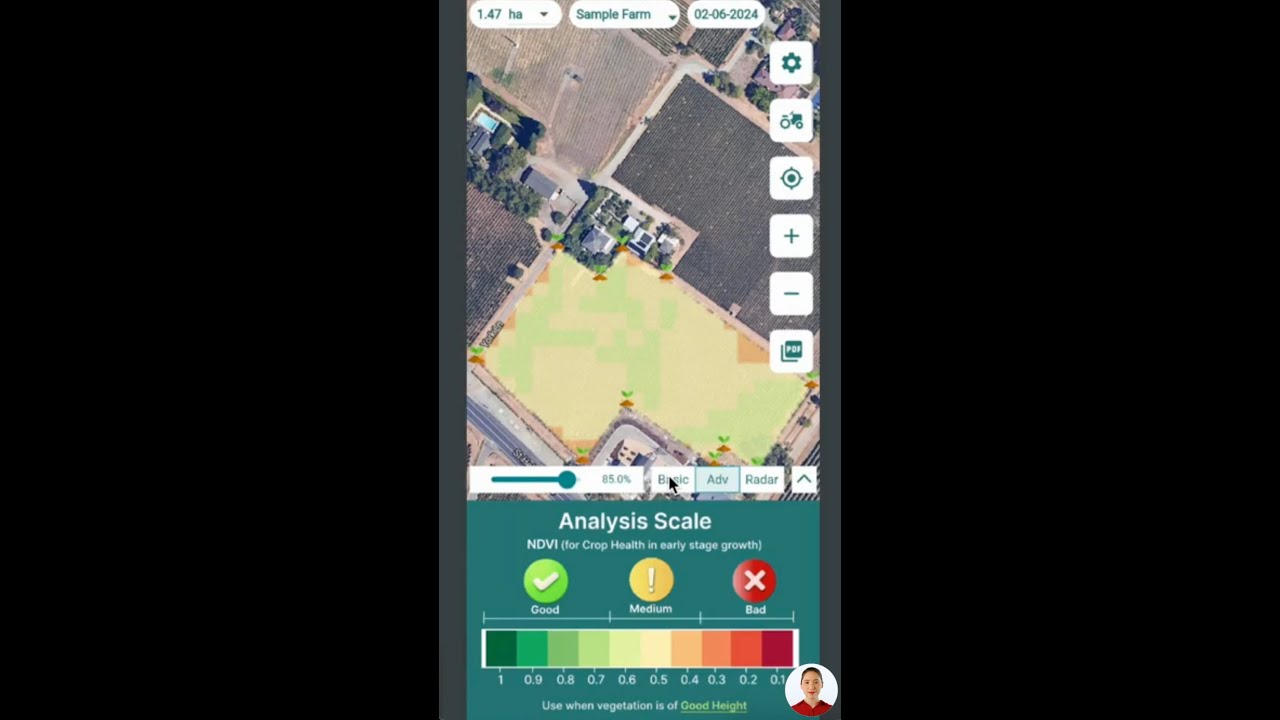
▶ How to read satellite crop maps on the Farmonaut mobile app, useful next to a combine yield map. · 4:01
Used prices for the 8250, 9250 and 7250
Case IH US no longer lists the 250 series among its current combines, so most buyers look at the used market. Prices move with model year, engine hours, separator hours, tracks or wheels, and options like automation.
Chart
US retail sales of new combines
units per year
At a Nebraska online auction reported by Farms.com in September 2024, these Case IH combines sold:
- 2022 9250, 2WD, 449 engine hours, 336 separator hours: US$300,250.
- 2020 8250, 2WD, 1,119 engine hours, 757 separator hours: US$241,250.
- 2019 8250, 2WD on tracks, 1,359 engine hours, 925 separator hours: US$207,000.
- 2016 7240 (the model before the 7250), 2WD on tracks, 2,152 engine hours: US$150,750.
These are auction results from one sale, not price guides. Dealer asking prices on listing sites are usually higher than auction results, because they include dealer prep and sometimes a warranty. Check several recent sales of the same year and hours before you bid.
The wider market matters too. US retail sales of new combines fell from 7,349 units in 2023 to 3,579 in 2025, according to AEM data reported by farmdoc daily in February 2026. The same report, citing Sandhills Global data for December 2025, said used combine inventory fell 9.5% on the year, while asking values fell only 0.37%. Fewer new sales can mean fewer late-model trade-ins reaching the used market.
What to check on a used Axial-Flow
- Engine hours and separator hours. Separator hours show threshing wear better than engine hours.
- The rotor, concaves and rotor cage vanes for wear and bent parts.
- Feeder chain, unloading auger and grain tank extensions.
- Service records, especially for the SCR exhaust system.
- Which automation level is fitted, and whether guidance and telematics are gained.
- Tracks or tyres, and the cost to replace them.
Chart
Case IH combine auction prices, one Nebraska sale
US$, online auction reported 6 September 2024; separator hours in labels
Cost to own a Class 7 to 9 combine
Combines are often the largest machinery purchase on a grain farm. University of Illinois economists wrote in October 2025 that harvest costs often make up more than half of machinery-related costs, and that cost per acre falls as each combine harvests more acres.
The list price of the combine in their cost model rose from $587,000 in 2021 to $741,000 in 2023. At 3,600 acres a year, the combine cost for corn rose from $31.10 per acre in 2021 to $43.40 per acre in 2024. At 2,600 acres, it was $54.10 per acre in 2024. That gap shows why acres per machine matter.
Manitoba Agriculture’s 2026/2027 machinery guide gives purchase price assumptions for new rotary combines by class. They are planning values in Canadian dollars, not dealer quotes: C$700,000 for a Class 7 (361 to 420 hp), C$800,000 for a Class 8 (421 to 500 hp) and C$900,000 for a Class 9 (501 to 560 hp). The guide assumes 250 separator hours a year.
The same Manitoba guide estimates fuel use at 55 litres per hour for a Class 7, 71 for a Class 8 and 82 for a Class 9, at a 75% load. It also puts work rates at 12, 15 and 17 acres per hour.
Custom hire as the alternative
If you harvest fewer acres, hiring a custom operator can cost less than owning. Survey rates include the operator, the machine and fuel:
- Wisconsin, 2025: corn combining averaged $38.47 per acre and soybeans $38.45 per acre (University of Wisconsin Extension).
- Nebraska, 2024: irrigated corn averaged $47.84 per acre, dryland corn $45 and soybeans $46 per acre (University of Nebraska–Lincoln).
- Texas, 2026 survey: flat-rate combining and hauling of corn averaged $0.61 per bushel (Texas A&M AgriLife Extension).
- Manitoba, 2026/2027: the custom rate for rotary combines runs from C$31 to C$40 per acre across Class 6 to Class 10+ (C$38 for a Class 7, C$35 for Class 8 and 9).
Custom hire has a timing risk. In a short harvest window, a custom crew may reach your fields late, and late harvest can raise field losses. Weigh that against the lower cost.
Chart
Combine cost per acre for corn, by acres harvested
US$ per acre, Illinois machinery cost model, new combine
Own or hire: work out your cost per acre
Enter your own combine price, how long you will keep it, its expected resale value, your interest rate, your acres and your running costs. The calculator gives ownership plus running cost per acre and compares it with a custom rate. The defaults are examples only, set close to break-even.
Chart
Average custom combining rates
US$ per acre, including operator, machine and fuel
The formula is simple. Yearly depreciation is the price minus the resale value, divided by the years you keep the machine. Yearly interest is your rate times the average of the price and the resale value. Add the two, divide by acres, and add running costs per acre. It leaves out insurance, housing and the header, so add those to the running cost line if you want them in.
Try the numbers for your own farm below.
Calculator
Is owning a combine cheaper than custom hire?
Enter your own combine price, acres and local custom rate.
- Custom hire cost per acre: $38
- Owning minus hiring, per acre: -$2
- Yearly fixed cost (depreciation + interest): $36,525
- Acres where owning equals hiring: 1,588 acres
Example values only, set near break-even; not a benchmark or a forecast. Depreciation = (price – resale) / years; interest = rate x (price + resale) / 2. Insurance, housing, the header and your time are not included unless you add them to running cost. The default custom rate is close to the Wisconsin 2025 corn average of $38.47/acre (UW Extension). Get professional advice before buying.
How we checked the numbers
Specs come from the model spec sheets and the Case IH product pages for the current 260 series. Used prices are auction results with the date and place of the sale. Cost figures come from university extension and provincial government guides, each with its year. Prices in this guide are in US dollars unless marked C$. This is general information, not financial advice; talk to your lender or farm business adviser before you buy.
Related pages on our site: crop loan and insurance checks, farm fleet management, farm carbon footprinting, product traceability, supply chain traceability, large farm management, satellite and weather API docs, API sign-up, web app.

▶ A walk-through of the Farmonaut web app for satellite crop monitoring. · 8:43
FAQ
How much horsepower does a Case IH 7250 have?
The 7250 is rated at 402 hp, with up to 468 hp peak power. It is a Class 7 combine with a 315-bushel standard grain tank and an optional 410-bushel tank.
What is the difference between the 8250 and the 9250?
Both have a 410-bushel tank and a 4.5 bushel-per-second unload rate. The 9250 has more power: 550 hp rated against 480 hp on the 8250. It also has a slightly larger fuel tank, 317 gallons against 297.
What crops can the 8250 Case IH combine harvest?
With the right header and set-up, the 8250 harvests corn, soybeans, wheat, barley, canola and rice. AFS Harvest Command automation at launch covered wheat, canola, corn and soybeans.
How much is a used Case IH 8250 worth?
It depends on year and hours. At a Nebraska auction in September 2024, a 2020 8250 with 757 separator hours sold for US$241,250 and a 2019 track model with 925 separator hours sold for US$207,000 (Farms.com). Compare several recent sales before you buy.
Is the 250 series still made?
Case IH US now lists the Axial-Flow 260 series (7260, 8260, 9260) as its current Class 7 to 9 line. The 260 models have the same rated power and tank sizes as the 250 models.
When is custom hire cheaper than owning?
When your acres are too few to spread the fixed cost of a combine. Illinois estimates show cost per acre falls sharply as acres per combine rise. Use the calculator above with your own numbers, and compare with local custom rates.
Farmonaut crop monitoring
See your own fields from space
Draw your fields once and Farmonaut shows satellite vegetation maps for them through the season, on web, Android or iOS.




Keep reading

Sources
- Case IH US, Axial-Flow 260 series combines (2026): caseih.com
- Farm Trader NZ, A look at the Case IH Axial-Flow 250 series: farmtrader.co.nz
- AllMachines, Case IH Axial-Flow 7250 specifications: allmachines.com
- AllMachines, Case IH Axial-Flow 8250 specifications: allmachines.com
- AllMachines, Case IH Axial-Flow 9250 specifications: allmachines.com
- Farms.com, Case IH combines take spotlight at auction (6 September 2024): m.farms.com
- farmdoc daily, University of Illinois, Large increase in machinery costs (14 October 2025): farmdocdaily.illinois.edu
- farmdoc daily, University of Illinois, The U.S. farm machinery equipment market (February 2026): farmdocdaily.illinois.edu
- Manitoba Agriculture, Cost of Production: Farm Machinery 2026/2027: manitoba.ca
- University of Wisconsin Extension, Custom Rates for 2025 Wisconsin Farm Operations (2026): farms.extension.wisc.edu
- University of Nebraska-Lincoln, Setting Custom Rates for Fall Harvest: cap.unl.edu
- Texas A&M AgriLife Extension, 2026 Texas Agricultural Custom Rates: agecoext.tamu.edu
Discussion
Questions, corrections or field experience? Share them below. First-time comments are reviewed before they appear, and your email is never published.
No comments yet. Be the first to add a question or your experience.

 Zerella Group
 Agroes
 Etech Consulting Madagascar
 Vestlandsforsking
 Agritein
 Delicio
 WB Dev
 Sama Premium
 Prochecker
 Tres Valles
 LACOS Geoinformation
 Magrifly
 LatConnect 60
 WebsEdge
 Blickwinkel
 Agricultural Credit Policy Council
 Marei Nursery
 eKGIS
 Mostas Tech
 Andex

 Exploration consultancy · South Africa · Gold
 Licence holder · Niger · Gold
 Licence holder · Nigeria · Gold + lithium










