

Cobalt stocks · Comparison
Cobalt Mining Stocks: 9 Listed Companies Compared
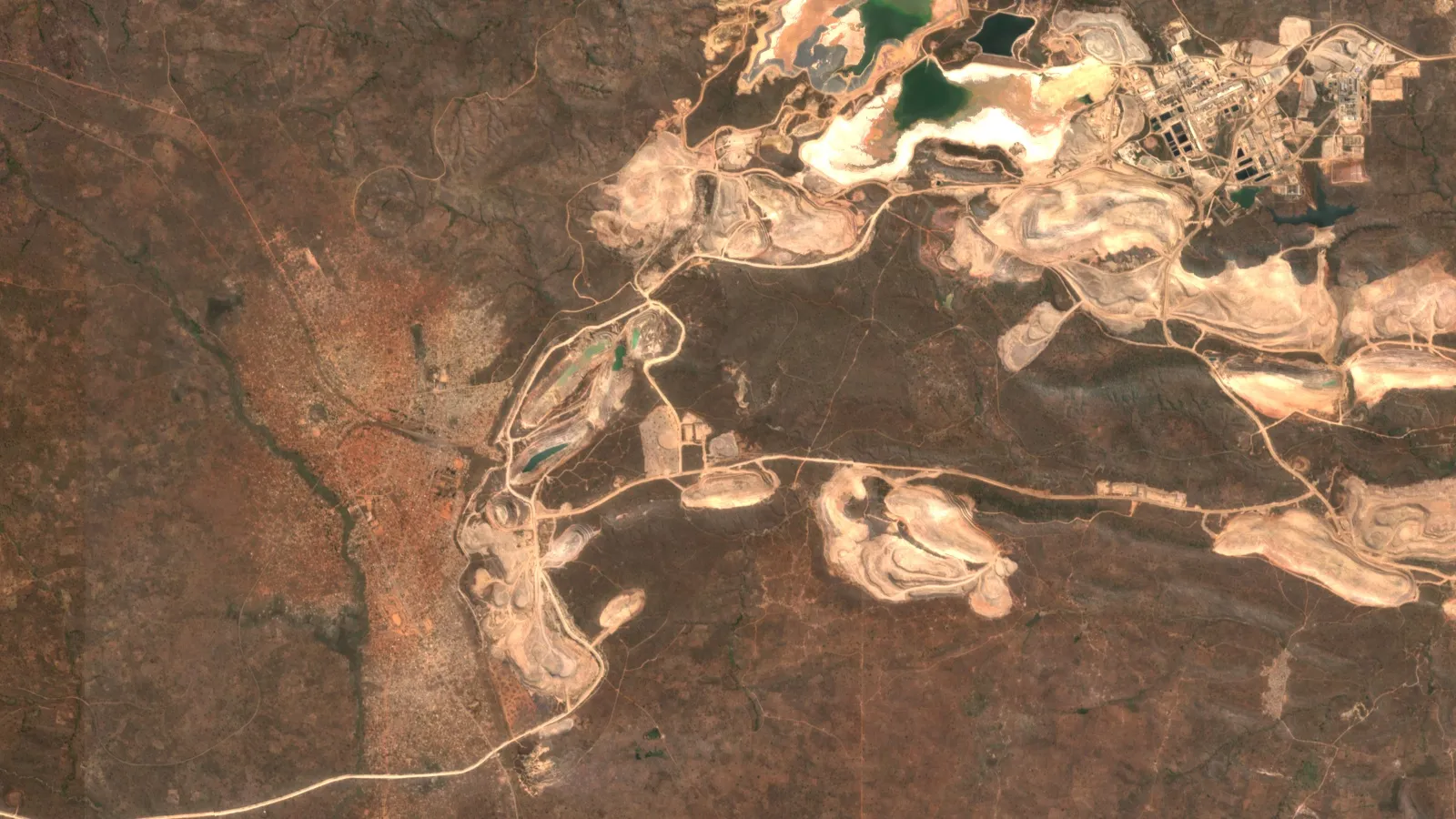
Most cobalt mining stocks are copper or nickel miners with a cobalt by-product. CMOC is the largest listed producer, at 117,549 tonnes in 2025, but its 2026 DRC export quota is only 31,200 tonnes.
Key takeaways
- CMOC mined 117,549 tonnes of cobalt in 2025, about 39.5% of world supply (Cobalt Institute, 2026).
- The DRC mined about 73% of world cobalt in 2025 and caps exports at 96,600 tonnes a year in 2026 and 2027 (USGS, 2026).
- Glencore’s first-half 2026 cobalt output fell 46% to 10,200 tonnes as it put copper first (Glencore, 2026).
- Sherritt suspended its participation in Moa, Cuba, in May 2026, so its 2025 volume does not describe 2026.
- Jervois is no longer listed; check that a share exists before treating a company as a stock.
In this article
- Cobalt mining stocks compared
- How we chose these companies
- Producers: where the cobalt tonnes are
- Streaming and refining: cobalt without a mine
- Cobalt stocks in Canada, the US and Australia
- Names that are not cobalt stocks
- Why Congo's quotas drive cobalt stocks
- Cobalt price and what it means for miners
- What drives cobalt demand
- How to judge a cobalt mining stock
- Frequently asked questions
Cobalt mining stocks are mostly copper or nickel miners that sell cobalt as a by-product. The biggest listed producer is CMOC Group, with 117,549 tonnes in 2025, about 39.5% of world mined supply (Cobalt Institute, 2026). Almost no large listed company depends on cobalt alone, so the first question for any investor is how much of the revenue really comes from this metal.
This page compares nine listed names on reported 2025 volume, exchange, ticker and the risk that matters most for each one. It also explains why Congo’s export quotas now matter more than mine output, and it gives a calculator for testing a company’s real cobalt exposure. It states facts and does not recommend any share.
Cobalt mining stocks compared
The table lists producers first, by reported 2025 cobalt volume, and then companies still building a project. Volumes are not all on the same basis: a mined figure, a refined product figure and a 100% joint venture figure measure different things, so the Basis column matters.
Chart
Cobalt output change, 2024 to 2025
Thousand tonnes, selected companies; basis differs by company, selected companies; basis differs by company
| Company | Exchange and ticker | 2025 cobalt volume | Basis | Main cobalt exposure |
|---|---|---|---|---|
| CMOC Group | Hong Kong 3993, Shanghai 603993 | 117,549 t | Mined, DRC | Tenke Fungurume and Kisanfu |
| Zhejiang Huayou Cobalt | Shanghai 603799 | 51,197 t | Cobalt products made | Refining and battery materials |
| Glencore | London GLEN | 36,100 t | Own-sourced | Mutanda and Kamoto Copper Company, DRC |
| Vale | New York VALE | 3,242 t | By-product, Vale Base Metals | Nickel operations |
| Sherritt International | Toronto S | 2,728 t | 100% of Moa joint venture | Moa, Cuba (participation suspended) |
| Wheaton Precious Metals | New York, Toronto, London WPM | About 1% of revenue | Streaming company | Voisey’s Bay stream, Canada |
| Electra Battery Materials | Nasdaq and TSX-V ELBM | None yet | Refinery under construction | Ontario cobalt sulfate refinery |
| Cobalt Blue Holdings | ASX COB | None yet | Developer | Kwinana refinery and Broken Hill, Australia |
| Fortune Minerals | Toronto FT, OTCQB FTMDF | None yet | Developer | NICO project, Northwest Territories |
Sources: Mysteel on CMOC, Mysteel on Huayou, Glencore’s 2025 production report, Vale’s Form 6-K and Sherritt’s 2025 results.
How we chose these companies
A company made this list if its shares trade on a public exchange and it either reported cobalt volume for 2025 or has cobalt named as a main part of its project. We checked each ticker and status against company reports and filings from 2025 and 2026. Other listed nickel and copper miners also produce some by-product cobalt, so read this as a comparison of well-known names and not a complete census. The order reflects reported volume only. It says nothing about share value or future returns.
Producers: where the cobalt tonnes are
Three points stand out in the output chart. CMOC is far larger than any other company. Huayou’s figure counts products it makes, not ore it mines. Vale and Sherritt are small in cobalt even though Vale is a very large company overall.
Chart
Reported 2025 cobalt volume, selected listed companies
Tonnes of cobalt; basis differs by company
CMOC Group (Hong Kong 3993, Shanghai 603993)
CMOC runs Kisanfu and Tenke Fungurume, the two largest cobalt mines in the Democratic Republic of Congo (DRC), according to the Cobalt Institute. Its 2025 output was 117,549 tonnes against 114,165 tonnes in 2024, and it kept 2026 guidance at 100,000 to 120,000 tonnes (The Metalnomist, 2026). Copper is its other main product from these mines.
Relevant to: readers who want the largest cobalt volume in one listed company. Main risk: its 2026 DRC export quota is 31,200 tonnes (Mysteel, 2026), or about 27% of its 2025 output. The gap between what it mines and what it can ship is the number to watch.
Zhejiang Huayou Cobalt (Shanghai 603799)
Huayou describes itself as a maker of lithium battery materials and cobalt materials (Huayou). It made 51,197 tonnes of cobalt products in 2025 and sold 46,548 tonnes, and year-end inventory rose about 151% to 14,813 tonnes, Mysteel reported from the annual report.
Relevant to: readers looking at refining and battery chemicals rather than a mine. Main risk: results depend on battery demand and the cost of feed, so it is not a simple cobalt miner despite the name.
Glencore (London GLEN)
Glencore produced 36,100 tonnes of own-sourced cobalt in 2025, 5% below 2024. Its first-half 2026 figure fell 46% to 10,200 tonnes because the company is prioritising copper under the quota regime, and some cobalt is being held in solution instead of being processed into saleable hydroxide (Glencore, 2026).
Relevant to: readers who accept cobalt as a small part of a large diversified miner and trader. Main risk: lower reported cobalt output may not mean the metal is lost, but it also means the cobalt is not being sold.
Vale (New York VALE)
Vale Base Metals produced 3,242 tonnes of by-product cobalt in 2025, up from 2,079 tonnes in 2024, according to its Form 6-K. Vale is mainly known for iron ore, and its nickel peers are covered in our guide to the biggest nickel producers.
Relevant to: US-based readers who want a New York listing and supply from outside the DRC. Main risk: cobalt barely moves the total, so the share mostly follows iron ore, copper and nickel.
Sherritt International (Toronto S)
The Moa joint venture in Cuba produced 2,728 tonnes of finished cobalt in 2025 on a 100% basis, and half of that venture is Sherritt’s. The picture changed in 2026. Sherritt reduced Moa operations in February over fuel supply constraints, then suspended its direct participation on 7 May after a US executive order expanded Cuba sanctions. Mining and processing stopped near the end of the second quarter (Sherritt Q2 report, 2026). It later dropped a plan to dissolve the venture, while participation stays suspended (Mining.com, 2026).
Relevant to: readers studying sanctions and restart risk. Main risk: its 2025 volume does not describe 2026, and older lists that still call it a steady producer are out of date.
Streaming and refining: cobalt without a mine
A stream is a deal in which a company pays up front for the right to buy part of a mine’s future output at a set low price. Wheaton Precious Metals holds a cobalt stream on Voisey’s Bay in Canada. That mine produced 670,000 pounds of cobalt attributable to Wheaton in the fourth quarter of 2025, as the underground mine ramped up, yet cobalt was only about 1% of Wheaton’s 2025 revenue of US$2.3 billion, with gold and silver making up nearly all the rest (Wheaton, 2026). It belongs in this comparison mainly as a warning: a cobalt asset does not make a cobalt stock.
Refining matters because China made 79% of the world’s refined cobalt in 2025, the Cobalt Institute reports. Electra Battery Materials is building a refinery in Ontario designed to make 5,120 tonnes a year of contained cobalt as battery-grade sulfate. Its 26 October 2026 update reported a project tracking within its US$73 million budget, a Glencore feed agreement through 2031, and a binding term sheet with LG Energy Solution for about 60% of planned output through 2029 (Electra, 2026). It has no commercial output yet, so its results depend on finishing the plant.
Cobalt stocks in Canada, the US and Australia
Canada. Toronto and the TSX Venture Exchange list Sherritt, Wheaton, Fortune Minerals and Electra. Fortune is developing its fully owned NICO cobalt-gold-bismuth-copper project in the Northwest Territories, and it remains a developer with no cobalt sales (Fortune Minerals). For wider context, see our list of Canadian mineral exploration companies.
United States. The only US mine output USGS describes is cobalt-bearing nickel concentrate from Michigan’s Eagle Mine, about 300 tonnes in 2025, and imports supplied most of the country’s needs (USGS, 2026). So a US investor usually reaches cobalt through foreign companies with US listings, such as Vale and Wheaton on the New York exchange or Electra on Nasdaq.
Australia. Cobalt Blue trades on the ASX as COB and on the OTC market as CBBHF. Its March 2026 quarterly reported letters of intent covering about 70% of the planned first output from the Kwinana refinery, and a pre-feasibility study on Broken Hill aimed at the fourth quarter of 2026 (Cobalt Blue, 2026). A letter of intent is not a binding sale, and the final investment decision was still ahead at that date. Our guide to Australian exploration companies covers the wider field.
▶ Remote sensing for mining explained without jargon · 2:01
Names that are not cobalt stocks
Jervois Global often appears on older lists. It halted its Idaho cobalt mine in March 2023 because of low prices, and a 2025 restructuring wiped out shareholders and took the company off the ASX (Mining Technology, 2025; The Northern Miner).
Eurasian Resources Group runs the Metalkol tailings plant in the DRC (ERG), and the Cobalt Institute names it among the main DRC producers. It is left out of the table because its predecessor, ENRC, was taken private and left the London market in 2013. Always confirm a listing before treating any company as a stock.
Why Congo’s quotas drive cobalt stocks
The DRC mined about 230,000 of the world’s 310,000 tonnes of cobalt in 2025, an estimated 73% by the USGS’s own figure, and it holds about half of known reserves, USGS estimates. Indonesia came second with 44,000 tonnes. More on these country figures is in our guide to world cobalt production and our DRC minerals map.
Chart
Cobalt mine output, selected countries, 2025
Thousand tonnes, USGS estimates; world total about 310
The DRC halted exports in February 2025 and replaced the halt with quotas on 16 October 2025: 18,125 tonnes for the rest of 2025 and 96,600 tonnes a year in 2026 and 2027 (Mining Technology, 2025). That total includes a 9,600-tonne strategic part, leaving an 87,000-tonne base, and Argus estimated the full amount at about 49% of 2024 shipments (Argus, 2025). The regulator ARECOMS told Fastmarkets in August 2026 that it could cut quotas if the market imbalance worsens, though no change was planned (Fastmarkets, 2026).
The Cobalt Institute also notes that quotas were set from three years of past output. Newer mines such as Kisanfu therefore got smaller shares compared with their output than older mines such as Mutanda. Two companies with similar mines can have very different export rights, which is why tonnes mined can mislead.
Cobalt price and what it means for miners
Cobalt traded at US$33,525 a tonne on 4 November 2026, about US$15.21 a pound, down about 31% from a year earlier on a contract tracking the benchmark market (Trading Economics, 2026). Prices differ by product. Benchmark put cobalt hydroxide, the intermediate that DRC mines ship, at US$17.25 a pound at the end of the third quarter of 2026 after a 31% fall as DRC exports picked up (Benchmark, 2026). When comparing companies, ask which price their contracts use.
Chart
Annual average cobalt price
US$ per pound; 2025 is an estimate
USGS annual averages show how far the price can swing. The US spot cathode price went from US$30.78 a pound in 2022 to US$16.77 in 2024, then to an estimated US$21 in 2025. A by-product miner can often keep running through such a swing because copper or nickel pays most of the bills. A cobalt-only developer has far less cushion.
What drives cobalt demand
World demand reached 276,000 tonnes in 2025, up 13%. Electric vehicles were the largest single use at 39%, or 113,000 tonnes, and portable electronics took 93,000 tonnes, according to the Cobalt Institute. In the US the mix is very different: USGS estimates 51% went to superalloys, mainly for aircraft gas turbine engines, 25% to chemicals, and 9% to cemented carbides for cutting and wear-resistant tools. Those carbides do reach mining and machinery, but they are a small share of the market.
▶ The seven environmental impacts of mining, useful background for sourcing questions · 2:31
How to judge a cobalt mining stock
- Find the cobalt share of revenue. Use the latest annual report. A by-product of 1% does not give cobalt exposure.
- Compare output with export rights. For DRC assets, check the quota against production and stored stock.
- Check the basis of each figure. Mined, refined, attributable and 100% joint venture numbers are not interchangeable.
- Read the price basis. Metal, hydroxide and sulfate prices move differently, and miners are paid a percentage called a payable.
- Look at the project stage. Reserves come from a formal study. An exploration target or a letter of intent is much earlier and much less certain.
- Check country and legal risk. Sherritt’s 2026 suspension shows how quickly sanctions and fuel supply can stop a mine.
- Check sourcing. Ask for audit or assurance records on responsible supply, especially for DRC material. Cleaner methods are discussed in our guides to eco-friendly mining techniques and sustainable mining equipment.
Investors assessing early-stage ground can also use independent satellite screening as one input before due diligence. Farmonaut provides exploration-target mapping from a project boundary; it sits ahead of a resource estimate and does not replace one. See also our overview of how mining investment companies work.
Calculator
How much of this company’s revenue is really cobalt?
Enter figures from the company’s latest report. Sales are capped at the lower of output and quota.
- Cobalt sold or shipped (tonnes): 5,000
- Cobalt revenue (US$): $90,000,000
- Unsold output held back (tonnes): 5,000
Example values only, not a benchmark and not a forecast. Price is an input: example, use today’s price. Payable is the share of the metal price a seller receives; the 60% default is an example. Results are in US$.
▶ What P10, P50 and P90 mean in mining economics and risk · 14:59
Frequently asked questions
What are the best cobalt mining stocks?
No single answer fits every investor, and this page gives no recommendation. By reported 2025 mined volume, the largest listed producer is CMOC, followed at a distance by Glencore. Smaller names such as Electra, Cobalt Blue and Fortune Minerals have more direct cobalt plans but no cobalt sales yet.
Which company produces the most cobalt?
CMOC Group, with 117,549 tonnes in 2025. The Cobalt Institute puts that at 39.5% of world mined supply.
Are there pure-play cobalt stocks?
Very few, and those are mostly developers or refinery builders. Large producers earn most of their revenue from copper, nickel or other products.
What are the best cobalt stocks in Canada?
The Canadian-listed names here are Sherritt (S), Wheaton (WPM), Fortune Minerals (FT) and Electra (ELBM). They carry very different risks: suspended Cuban assets, a small stream, a development project and a refinery under construction.
Are there cobalt stocks in the US?
US exchanges list Vale and Wheaton on the NYSE and Electra on Nasdaq. None of these is a US cobalt miner, and US mine output was only about 300 tonnes in 2025 (USGS).
What about cobalt penny stocks?
Low-priced cobalt shares are usually developers without revenue. They can need repeated fundraising, and the fall of Jervois shows that holders can lose everything in a restructuring. Check cash, permits and the study stage first.
How can I invest in cobalt?
The common routes are shares in producers, streaming companies, refiners or developers. The LME also lists a cobalt futures contract, which is a specialist product. Each route carries different risks, so consider independent advice.
Is cobalt a good investment?
That depends on your goals and risk tolerance. The facts to weigh are a price down about 31% over the year to 4 November 2026, demand up 13% in 2025, and DRC quotas that run through 2027 and can be changed.
Why does Glencore’s cobalt output keep falling?
Glencore says it is prioritising copper because of the export quotas, and some cobalt is held in solution instead of being processed. First-half 2026 output was 10,200 tonnes against 18,900 tonnes a year earlier.
Can I still buy Jervois shares?
No. Existing shareholders were wiped out in the 2025 restructuring and the company left the ASX.
More from Farmonaut: agro admin app, crop loan and insurance, carbon footprinting, satellite weather API docs, fleet management, gemstones at Diamond Mountain, product traceability.
This page is for information only. It is not investment advice. Company names are facts, not recommendations.
Farmonaut mining
Screen a cobalt project area from space
Investors can get satellite exploration targets for a project boundary as one early input ahead of formal due diligence.

Mining Pro sample view, synthetic data
Keep reading
Sources
- USGS, Mineral Commodity Summaries 2026: cobalt: pubs.usgs.gov
- Cobalt Institute, Cobalt Market Report 2025 (May 2026): cobaltinstitute.org
- Glencore, full-year 2025 production report: glencore.com
- Glencore, half-year 2026 production report: glencore.com
- Mysteel, CMOC 2025 cobalt production: mysteel.net
- Mysteel, CMOC 2026 export quota: mysteel.net
- Mysteel, Huayou Cobalt 2025 annual report: mysteel.net
- The Metalnomist, CMOC cobalt guidance (2026): metalnomist.com
- Huayou Cobalt, company site: huayou.com
- Vale, Form 6-K, 2025 production (SEC): sec.gov
- Sherritt, 2025 results and 2026 guidance: sherritt.com
- Sherritt, Q2 2026 interim report: sherritt.com
- CP24, Sherritt reduces operations in Cuba (2026): cp24.com
- Mining.com, Sherritt drops plan to dissolve Cuban assets (2026): mining.com
- Wheaton Precious Metals, 2025 results: finviz.com
- Electra Battery Materials, refinery update, Form 6-K (26 October 2026): sec.gov
- Fortune Minerals, company site: fortuneminerals.com
- Cobalt Blue, March 2026 quarterly report: cobaltblueholdings.com
- Mining Technology, Jervois rescue (2025): mining-technology.com
- The Northern Miner, Jervois goes private: northernminer.com
- Eurasian Resources Group, Metalkol: eurasianresources.lu
- Mining Technology, Congo quotas (2025): mining-technology.com
- Argus, DRC cobalt quotas (2025): argusmedia.com
- Fastmarkets, ARECOMS on quotas (2026): fastmarkets.com
- Trading Economics, cobalt price (4 November 2026): tradingeconomics.com
- Benchmark, Q3 2026 cobalt price review: source.benchmarkminerals.com
- Mining.com, ENRC goes private (2013): mining.com
Discussion
Questions, corrections or field experience? Share them below. First-time comments are reviewed before they appear, and your email is never published.
No comments yet. Be the first to add a question or your experience.

 Mining SARL
 SenGold Invest SAS
 Sania Corporation
 Sean Mining Limited
 NTS Group (Pty) Ltd
 Mine4Africa
 Lithspo Minerals Limited
 Tintina Mining Group
 Dalgety Minerals Pty Ltd
 Vortex Minerals Pty Ltd
 Faith At Work (Pty) Ltd
 Geotech Mining Solutions plc
 Vulcan International Limited
 Kidepo Associates
 GKY Mining
 Alkimy SARL
 Double A Trading
 GemSprout Metals Limited
 Qader Group
 Ileys General Trading
 SG Gold Mining LLC
 VRV Global Pte Ltd
 Omsri International FZE
 G.I.T.T.

 Client · Tanzania · Gold
 Client & affiliate partner · Ghana · Gold










