

“Over 80% of new crop monitoring systems in 2026 will integrate drone-generated soil and drought analytics.”
Drought, Pest, Crop & Drone Monitoring: 2026 Innovations
Meta Description: Discover 2026’s top innovations in drone crop monitoring for drought, pest, and soil management. Uncover how real-time UAV data is shaping the future of agriculture and boosting sustainable productivity.
Advancements in Drone-Based Crop Monitoring: Shaping the Future of Agriculture in 2025 & 2026
In recent years, the agricultural sector has witnessed a technological revolution, fundamentally transforming traditional farming practices. Drone crop monitoring—with its fusion of advanced imaging, AI analytics, and real-time data—has emerged among the most impactful innovations, enabling precise, data-driven decisions for soil monitoring, drought monitoring, pest monitoring, and crop health.
This blog explores the latest advancements in drone-based crop monitoring and agricultural technology, focusing on how real-time soil, drought, pest, and crop data are now critical to boosting productivity and sustainability for the 2026 growing season and beyond.



Why Drone Crop Monitoring Matters: 2026 Context
Drone crop monitoring is rapidly transforming agriculture across the globe. In 2026, precision agriculture platforms integrate drone data with AI, IoT sensors, and satellite analytics, offering us (farmers, agronomists, and agri-business leaders) a comprehensive, actionable view of farm health.
- Real-time monitoring improves drought response, irrigation efficiency, and resource management.
- Advanced pest detection enables targeted, eco-friendly crop protection—reducing chemical overuse and production costs.
- Rich soil monitoring data help optimize nutrient application and sustainable soil management.
- Actionable analytics provide early alerts for plant stress, pest outbreaks, and yield threats—improving productivity in a climate-stressed world.
With climate change intensifying drought frequencies and pest invasions, traditional farming methods—scouting by foot or relying solely on satellite data—can’t match the precision, speed, or scale of drone crop monitoring and soil monitoring. These technologies are now essential to shaping the future of agriculture in 2026 and beyond.
Focus Keyword: Advances in Drone Crop Monitoring—Shaping Agriculture for 2026
Technological advancements in unmanned aerial vehicles (UAVs), thermal and multispectral sensors, and AI-driven analytics platforms have revolutionized how we approach crop monitoring, drought management, pest control, and soil assessment.
- Drought Monitoring
- Pest Monitoring
- Crop Health Monitoring
- Soil Monitoring
Drought Monitoring: Revolutionizing Irrigation & Water Management
The increasing frequency and severity of droughts—exacerbated by climate change—are among agriculture’s most pressing challenges in 2026.
- Drones equipped with multispectral and thermal sensors can rapidly assess soil moisture levels and plant stress.
- High-resolution aerial imagery enables us to identify drought-prone zones quickly, supporting targeted irrigation and water conservation efforts across vast tracts of farmland.
- Rather than blanket watering, we can now apply water precisely where fields need it most—preserving yield while reducing resource wastage.
When drone crop monitoring data is combined with weather forecasts and predictive analytics, we anticipate and mitigate the impact of drought before irreparable crop damage occurs.

Above: How advanced sensing platforms use AI and remote sensing for next-level drought monitoring.
Environmental Impact Tracking: For organizations prioritizing environmental stewardship and carbon footprint management in agriculture, explore Farmonaut’s Carbon Footprinting platform—which leverages satellite insights to support sustainability goals.
How Drones Outperform Traditional Drought Monitoring Methods
- Manual scouting is slow and prone to missed signs—by the time soil dryness or crop stress is visible, yield loss may be irreversible.
- Satellite-only monitoring can be delayed by cloud cover or offer insufficient granularity for field-level management.
- Drones enable near-instant, on-demand drought data, improving response time, accuracy, and water management efficiency.
The benefit: Farmers make better-informed irrigation decisions, conserving water in regions such as Western USA, India, or sub-Saharan Africa, and increasing resilience against climate volatility.
Pest Monitoring: Early Detection & Intelligent Intervention
Pest and disease outbreaks remain a leading cause of crop losses globally. In 2026, drone crop monitoring platforms utilize ultraviolet, hyperspectral imaging, and AI-driven analytics to detect and classify pest-affected areas faster and more accurately than ever before.
- AI algorithms flag subtle plant health changes linked to pest infestations or diseases before they are visibly apparent.
- This enables targeted pesticide interventions—applying agrochemicals only where truly needed—minimizing overuse and environmental impact.
- Drones can survey vast tracts of land quickly, reducing labor costs and boosting overall farm productivity.
Such precision is vital as regulatory and market pressure grows to reduce chemical usage and costs while maximizing yield and food safety.
Did you know? By 2026, drone monitoring is expected to identify pest outbreaks 40% faster than traditional field scouting methods.
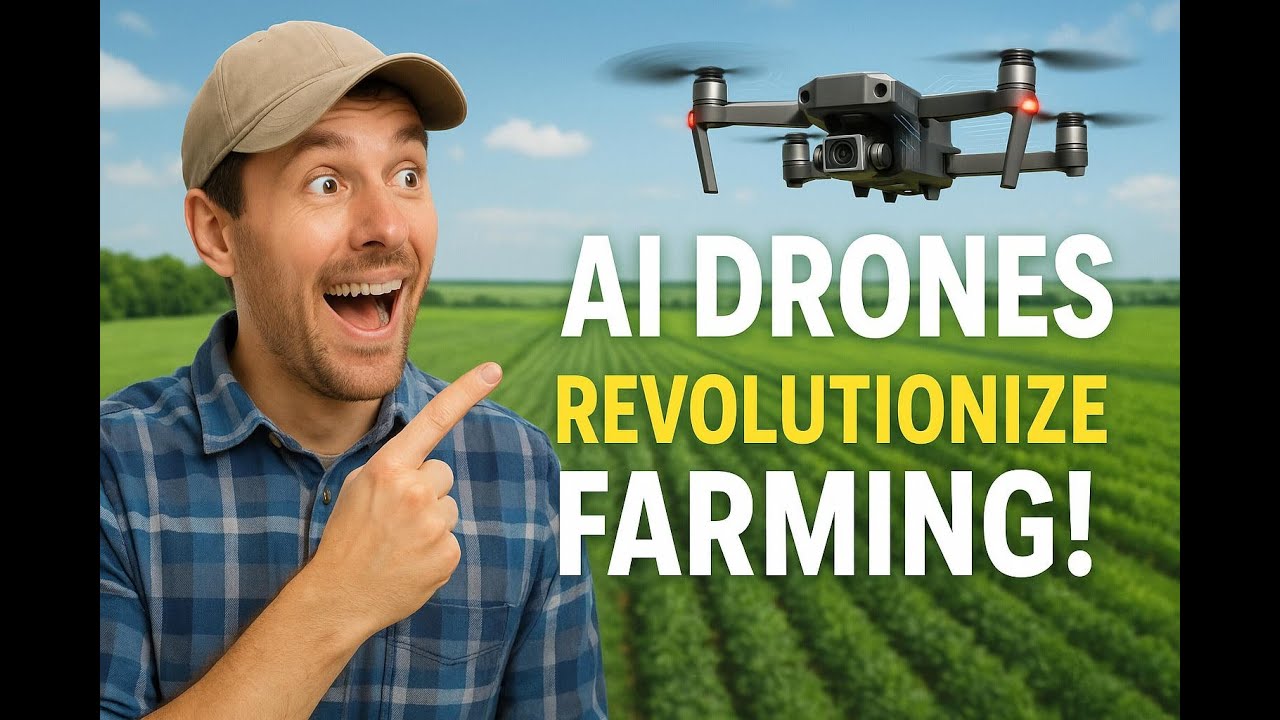
Above: Explore how AI drones revolutionize pest detection and save millions for farmers in 2025 and 2026.
Traceability for Safer Crops: Pairing drone pest monitoring data with blockchain traceability platforms, such as Farmonaut’s Product Traceability platform, enhances supply chain credibility—crucial for global trade, organics, and food safety assurance.
Drone Pest Monitoring: The Game Changer
- Instead of treating entire fields, AI-enabled drones and platforms enable hyper-local spraying, reducing pesticide use by up to 70% and safeguarding beneficial insects.
- This boosts sustainability, reduces input costs, and helps farms meet evolving regulatory requirements.
“By 2026, drone monitoring is expected to identify pest outbreaks 40% faster than traditional field scouting methods.”
Above: Watch precision ag technology and AI-driven monitoring in action for crop, pest, and nutrient optimization.
Crop Monitoring: Overall Health and Productivity Tracking
Comprehensive crop monitoring—enabled by drones—gives farmers and agricultural businesses the facts they need for precision agriculture. Utilizing high-resolution aerial imagery, multispectral, and even hyperspectral sensors, drones can:
- Capture real-time data on vegetative health (using NDVI or similar vegetation index analysis).
- Detect abnormalities, stress, or nutrient deficiencies at leaf or row level for immediate action.
- Assess crop growth patterns, forecast yield more accurately, and track the impact of interventions over time.
With advanced analytics and AI-powered dashboards, users can view historical trends, compare seasons, and make evidence-based decisions for every phase of the crop cycle.

Above: Discover next-generation solutions for crop health diagnosis and maximizing yields.
Benefits of Drone-Based Crop Health Monitoring
- Early-warning systems prevent large-scale losses by flagging threats when they’re small.
- Yield forecasting and production planning become data-driven, reducing economic uncertainty.
- Analysis is faster, more consistent, and less labor-intensive than manual scouting or basic satellite-only monitoring.
Large-Scale Farm Management: For enterprises managing thousands of hectares, Farmonaut’s Large Scale Farm Management solution harnesses satellite-driven dashboards, task tracking, and data aggregation to optimize resources and productivity at scale.
Soil Monitoring: Nutrient Data for Sustainable Farming
Soil health assessment is foundational to long-term productivity, fertility, and sustainability. Next-gen drone platforms capture multispectral and thermal images to build comprehensive field nutrient maps. This offers the following benefits:
- Identifies nutrient deficiencies and pH imbalances field-wide, down to the sub-plot level.
- Maps compaction zones impacting growth (allowing remediation or targeted planting).
- Guides variable-rate fertilization, reducing over-application, input costs, and environmental runoff.
Advanced soil monitoring, paired with satellite data, empowers farmers to sustain productivity while improving soil health and longevity.

Above: How satellite and drone technologies from platforms like Farmonaut are setting new benchmarks in crop and soil health monitoring.
Need remote tracking of soil for insurance, carbon, or compliance? Farmonaut’s Crop Loan & Insurance verification leverages satellite analytics to support banking, insurance, and compliance in agriculture.
Integrating Drones with Satellite and Sensor Platforms in 2026
The true potential of drone crop monitoring emerges as it converges with other digital and satellite monitoring systems. In 2026, data integration is the norm:
- Combining drone imagery, IoT soil sensors, and precision weather stations delivers a holistic, in-field microclimate analysis.
- Satellite monitoring offers low-frequency, wide-area views; drones supplement with ultra-high-resolution, on-demand field data.
- AI and Big Data analytics platforms ingest, process, and visualize this data for real-time decision support.
Farmers, agri-businesses, and governments can now predict drought, pest outbreaks, and yield variations with unmatched accuracy—transforming both daily farm management and strategic planning.

Above: See how to monitor crops using integrated satellite and AI-powered platforms.
Comparative Innovation Impact Table: Drone Crop Monitoring 2026
| Monitoring Area | Traditional Methods | Drone-Based Methods | Estimated Yield Improvement (%) |
|---|---|---|---|
| Drought Detection |
Response: 5–10 days Accuracy: Moderate (field spot checks) Coverage: 20–50 ha/day |
Response: Instant/24h Accuracy: High (thermal/multispectral) Coverage: 200–500 ha/day |
+10–15% |
| Pest Identification |
Response: 7–15 days Accuracy: Low–Moderate Coverage: 10–20 ha/day |
Response: 2–8 hours Accuracy: Very High (AI/visual detection) Coverage: 200 ha/day |
+12–20% |
| Crop Health |
Response: 5–20 days Accuracy: Moderate Coverage: Dependent on labor |
Response: Real-time Accuracy: High (multispectral/NDVI) Coverage: 500 ha/day |
+7–15% |
| Overall Monitoring |
Response: 1 week+ Accuracy: Variable Coverage: Limited by manpower |
Response: Same day Accuracy: High (drone+AI+satellite) Coverage: Scalable (1000+ ha/day with fleets) |
+10–18% |
Quantitative benefits are estimates for 2026, reflecting best-in-class drone adoption in mid- to large-scale operations.
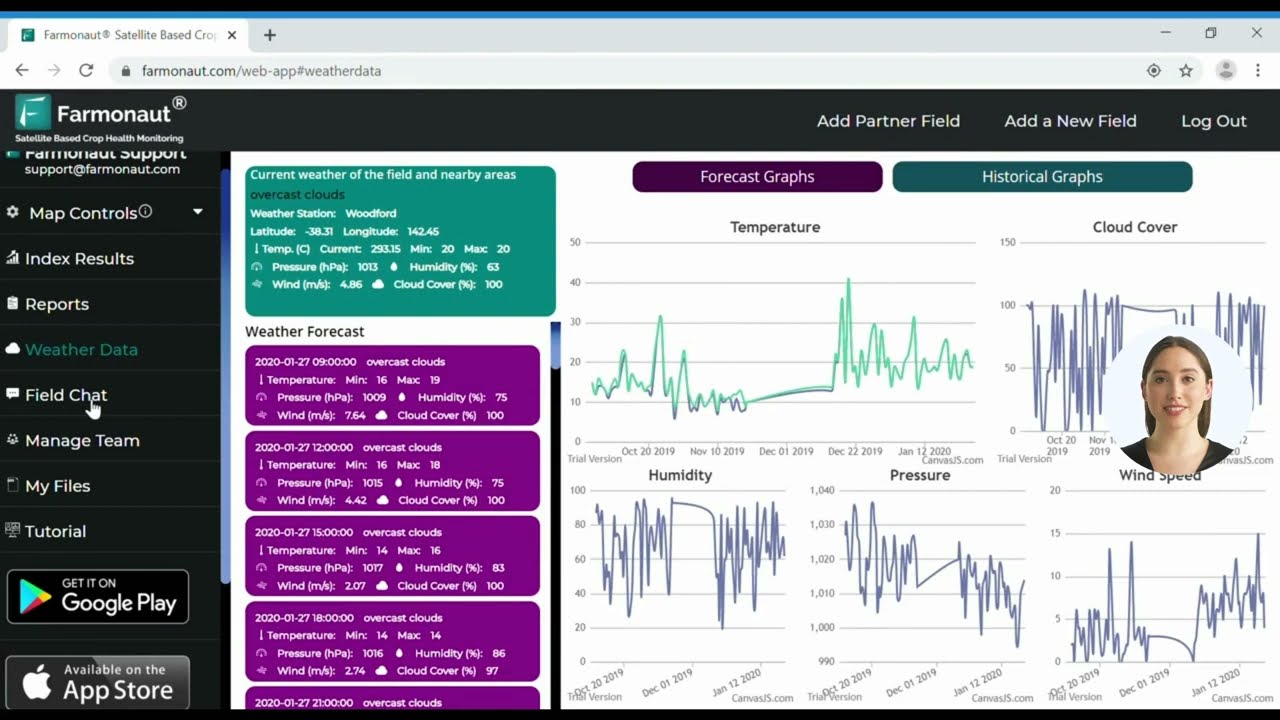
Above: See how Farmonaut’s web app offers streamlined satellite-based crop monitoring, with API integration for advanced users.
API for Developers: Integrate real-time satellite and drone insights with Farmonaut’s Satellite & Weather Monitoring API and access technical resources in the API Developer Documentation.
Empowering Farmers: From Smallholder to Large-Scale with Drone Crop Monitoring
In early adoption phases, drone crop monitoring and soil monitoring were mostly reserved for large-scale commercial farms in regions like the USA, Australia, or Brazil due to hardware costs and required expertise. In 2026, however:
- Technology costs have dropped, and more affordable, user-friendly platforms are available worldwide.
- Cooperative models, government incentives, and “drones-as-a-service” business models are bridging the technology divide for smallholder farmers in Africa, India, Southeast Asia, and South America.
- On-demand field monitoring, accessible via mobile and web-based dashboards, is democratizing data-driven decision making for farms of all sizes.
This shift unlocks unprecedented opportunities for farmers everywhere to:
- Increase yields and sustainability via data-backed interventions.
- Reduce input and operational costs while improving market competitiveness.
- Adapt rapidly to unique climate and resource challenges at the local level.
The result? A more resilient, productive, and climate-smart agricultural sector—from individual family farms to industrial-scale enterprises.

Above: Discover how mobile tech and AI monitoring empower water savings and vertical farming—key for urban and resource-challenged regions in 2026.
Want to add advisory and sustainability analytics to your crop planning? Farmonaut’s Crop Plantation Advisory supports farms with satellite-based, AI-powered recommendations for soil, crop selection, water management, and more.
Farmonaut: Advanced Monitoring for Modern Agriculture
As a leader in satellite-driven agricultural monitoring and intelligence, Farmonaut empowers users in 2026 with affordable, scalable solutions for crop monitoring, drought monitoring, pest monitoring, soil monitoring, environmental impact, and more.
- Satellite-Based Monitoring: High-frequency multispectral imagery supports informed decisions across crop, soil, and resource management domains.
- AI-Based Analysis: Our Jeevn AI advisory delivers real-time, actionable insights—combining field, weather, and historical performance.
- Blockchain Traceability: Enables full farm-to-market transparency, combatting fraud and building trust in global agricultural supply chains.
- Resource Management: Tools for tracking vehicles, machinery, and fleet—reducing operational costs, ensuring timely interventions, and maximizing output.
Our modular platform is accessible via Android, iOS, and browser-based apps (see links above), with APIs available for seamless integration into broader business or government systems.
Value Proposition: We strive to make advanced crop, soil, and resource monitoring affordable and accessible for all—enabling better decisions, higher productivity, and measurable progress toward sustainability in agriculture and beyond.
Challenges, Opportunities, and the Future of Drone Agriculture
Even as drone, AI, and satellite crop monitoring redefine agriculture in 2026, several challenges must be addressed:
Challenges in the 2026 Technological Landscape
- Regulatory Hurdles: Evolving rules around drone usage (privacy, airspace, safety) in various countries. Stakeholders must stay compliant as guidelines shift.
- Data Management & Interpretation: Big data is only useful if actionable—requiring intuitive dashboards, farmer training programs, and perhaps AI-guided recommendations.
- Access & Affordability: Despite dropping hardware prices, scaling drone and analytics access for the world’s most remote or economically challenged farmers remains a top priority.
- Integration Complexity: Synchronizing drones, satellites, weather stations, and IoT devices for unified analytics can pose technical hurdles.
Key Opportunities Identified
- Ongoing AI Advancements: New machine learning models are making pest, drought, and crop health detection faster, more specific, and less labor-intensive.
- Collaborative Ecosystems: “Drones-as-a-Service” and shared technology models help democratize access, particularly in high-value specialty crops and emerging markets.
- Policy & Incentive Alignment: Governments and regulators increasingly champion digital ag technology to combat food insecurity, reduce water usage, and build resilience.
- Youth & Workforce Engagement: The next generation of agriculturalists is more tech-savvy and ready to scale new monitoring methods.
In short: as these hurdles are overcome, drone crop monitoring will become even more accurate, affordable, and accessible—empowering everyone from family farmers to agricultural megafirms to thrive in a volatile climate.
FAQs: Drone Crop Monitoring and Farmonaut
What is drone crop monitoring and why is it essential in 2026?
Drone crop monitoring uses unmanned aerial vehicles (UAVs) equipped with advanced sensors to collect real-time data on crops, soil, drought, and pests. In 2026, its integration with AI, IoT, and satellite analytics makes it a cornerstone of sustainable, productive agriculture—enabling early detection, targeted interventions, and optimized resource use.
How do drones help reduce input costs and improve crop yields?
By providing precise data on where water, fertilizer, or pesticide is needed (and where it’s not), drones eliminate guesswork and waste. This targeted approach reduces expenditures, minimizes environmental impact, and consistently boosts yields.
Can smallholder farmers use drone crop monitoring?
Yes. Thanks to lower hardware costs, user-friendly platforms, and service providers, drone and satellite crop and soil monitoring are accessible to smallholder and resource-limited farms. Solutions like Farmonaut’s mobile and web apps make insights available even in remote regions.
What is the role of AI and machine learning in modern drone crop monitoring?
AI enables rapid interpretation of the vast data drones generate, automatically detecting signs of drought, pest damage, nutrient deficiencies, or disease. Machine learning algorithms improve with use—meaning accuracy, speed, and specificity all increase over time.
Why integrate drone, satellite, and ground sensor data?
Blending these sources provides the best of all worlds: satellites offer macro, wide-area context; drones deliver field-level detail; and ground sensors provide ongoing measurements. Together, they enable the most complete, reliable crop health analytics possible.
Does Farmonaut offer drone crop monitoring?
Farmonaut specializes in satellite-driven crop, drought, pest, and soil monitoring—delivered through intuitive apps, APIs, and AI-based advisory. Our mission is to make advanced agricultural intelligence widely accessible and actionable for all.
Fleet Management for Modern Farms: For streamlined tracking and cost reduction across agricultural or resource operations, Farmonaut’s Fleet Management suite optimizes logistics, equipment use, and safety protocols, essential for future-ready monitoring in 2026.
Conclusion: Towards a Smart, Sustainable Agricultural Future
In 2026, drone crop monitoring and drone-based soil, drought, and pest analytics are no longer the future—they are the standard. By empowering us to anticipate, identify, and intervene with unprecedented accuracy, these technologies foster higher yields, lower costs, and truly sustainable farming practices.
As solutions like Farmonaut further democratize access to satellite and analytics tools for everyone in agriculture—from smallholders to governments—we are all better equipped to address climate volatility, resource scarcity, and the ever-pressing need for global food security.
The bottom line: Drones, satellite analytics, and AI-driven crop monitoring tools are transforming agriculture worldwide—shaping a resilient, productive, and sustainable future for generations to come.
Discussion
Questions, corrections or field experience? Share them below. First-time comments are reviewed before they appear, and your email is never published.
No comments yet. Be the first to add a question or your experience.

 BW Pipelines
 WICO
WICO Gen Chayat
 Chimera Innovation
 Hiteshi Infotech
 SkyHarvest
 Polaris Digitech
 Teledarbas
 Wild Oak Farm
 SFX
SFX BACF Africa
 Doodlakine
 Exurbia Geospatial
 FieldZero
 Indico Company
