

Uranium · Price and forms explained
Liquid Uranium: Is It Real, and What Does It Cost?
Uranium melts at about 1,132 °C, so liquid uranium metal exists only in furnaces and has no market price. Its liquid forms (leach solution, UF6, molten fuel salt) are valued from U3O8, about US$91.50 per pound spot on 16 November 2026 (MeltValue).
Key takeaways
- Uranium metal melts at about 1,132 °C; no exchange or price reporter quotes liquid uranium.
- In-situ leach mining, which pumps uranium out as a solution, gave 56% of world output in 2022 (World Nuclear Association).
- U3O8 spot was about US$91.50 per pound on 16 November 2026; US utilities paid US$58.46 on average for 2025 deliveries (EIA).
- Raw uranium is about 45% of the front-end cost of a kilogram of reactor fuel; enrichment is 37% (World Nuclear Association, November 2026).
- Neodymium melts at about 1,022 °C; its oxide averaged about US$73 per kg in 2025 (USGS, 2026).
In this article
- Is liquid uranium a thing?
- Uranium in liquid form: how mines pump it out of the ground
- Liquid uranium price: what the market actually quotes
- Uranium hexafluoride: the liquid stage of the fuel cycle
- Molten salt reactors and liquid uranium fuel
- What does the uranium in a kilogram of fuel cost?
- Liquid neodymium: melting point and price
- Liquid uranium and liquid neodymium compared
- Where uranium comes from
- What to check before you rely on a uranium price
- Frequently asked questions
Liquid uranium is real, but nobody sells it. Uranium metal melts at about 1,132 °C and boils at about 4,131 °C (Wikipedia, Uranium), so molten metal exists only inside furnaces and laboratories. There is no market quote for liquid uranium. What the industry does handle as a liquid is uranium dissolved in something else: leach solution pumped from in-situ recovery wellfields, uranium hexafluoride (UF6) heated into a liquid in sealed cylinders, and uranium fluoride salts that serve as fuel in molten salt reactors. All of these are priced off one benchmark, the price of uranium concentrate (U3O8) per pound.
This page explains each “liquid” form, what the uranium in it costs, why liquid neodymium is a similar story, and how to turn a pound price into a fuel cost with the calculator further down.
Is liquid uranium a thing?
Yes, in a physical sense. Any metal becomes liquid above its melting point, and uranium is no exception. Uranium is a dense, silvery, weakly radioactive metal with a density of about 19.1 g/cm3, close to gold (Wikipedia, 2026). To keep it liquid you need a furnace running well above 1,100 °C under an inert atmosphere, because hot uranium reacts quickly with air and water.
Chart
Melting points of selected metals
Degrees Celsius; metals at normal pressure, UF6 at its triple point (152 kPa)
Molten uranium metal has been used in metallurgy, for example when casting uranium ingots or alloys, and in research on metal fuels. It is not used as a reactor fuel in liquid form in any commercial plant, and no exchange, broker or price reporter publishes a price for it. When people search for “liquid uranium”, they usually mean one of the four things below.
The four liquid forms of uranium you will actually meet
- Leach solution (pregnant liquor): water with uranium dissolved in it, pumped out of the ground at in-situ recovery mines. This is the most common liquid uranium on Earth by volume.
- Uranium hexafluoride (UF6): a compound that is solid at room temperature but turns liquid when heated above 64 °C under modest pressure. Converters and enrichers handle it this way.
- Uranyl nitrate solution: uranium dissolved in nitric acid during refining and reprocessing, before it is converted to oxide.
- Fuel salt: uranium tetrafluoride (UF4) dissolved in molten fluoride salts, the fuel of molten salt reactors.
Uranium in liquid form: how mines pump it out of the ground
Most of the world’s uranium now leaves the mine as a liquid. In-situ leach (ISL) mining, called in-situ recovery (ISR) in North America, leaves the ore in the ground. Wells inject groundwater fortified with a complexing agent, usually with an oxidant, and other wells pump the uranium-bearing “pregnant solution” back to a surface plant (World Nuclear Association).
The World Nuclear Association reports that ISL produced 27,773 tonnes of uranium (tU) in 2022, 56% of world output, up from 16% in 2000. Most of it came from Kazakhstan, with 3,520 tU from Uzbekistan and smaller amounts from the USA, Australia, China and Russia.
Two leach chemistries are used:
- Acid (sulfate) leach: solution at about pH 2.5-3.0. It recovers about 70-90% of the uranium and costs roughly half as much to run.
- Alkaline (carbonate) leach: needed when the host sand holds more than about 2% calcium as limestone or gypsum. It recovers about 60-70%. Most US ISR mines use it.
At the plant, ion-exchange resin pulls uranium out of the solution. It is stripped, precipitated, dried and packed as yellowcake (U3O8 concentrate) in drums. That drum of powder, not the liquid, is what gets priced and traded.
▶ How Farmonaut Mining Pro shows a 3D mineral prospect analysis · 2:17
Liquid uranium price: what the market actually quotes
There is no separate price for uranium in liquid form. Every form is valued from the U3O8 price, quoted in US dollars per pound, plus the cost of each processing step. Two numbers matter:
Chart
Average price US reactors paid for uranium
US$ per pound U3O8 equivalent, weighted average of all deliveries
- Spot price: the price for a one-off delivery, usually within a year. Price reporters such as UxC and TradeTech publish it; Cameco averages their month-end figures.
- Term (long-term) price: the price in multi-year contracts, which is how utilities buy most of their uranium.
As of 16 November 2026, the U3O8 spot price was about US$91.50 per pound, equal to about US$238 per kilogram of uranium (MeltValue, 16 November 2026). Trading Economics reported US uranium futures above US$91 per pound in November 2026, the highest level since February (Trading Economics, November 2026). Cameco’s month-end spot figure for July 2026 was US$86.36 per pound (American Nuclear Society, August 2026). Spot prices move daily, so check a current source before you rely on any figure.
Utilities pay less than spot on average because most uranium arrives under older term contracts. US reactor owners paid a weighted average of US$58.46 per pound for 2025 deliveries. Spot purchases (13% of volume) averaged US$76.01 per pound, and long-term contracts (87%) averaged US$55.91 (US EIA, Uranium Marketing Annual Report 2025).
Price history: what US reactors paid per pound
The EIA average price paid by US reactor owners rose every year from 2021 to 2025: US$33.91, US$39.08, US$43.80, US$52.71 and US$58.46 per pound of U3O8 equivalent (EIA, Table 1). Total purchases in 2025 were 46.9 million pounds, 16% less than in 2024. The spot market peaked earlier: TradeTech’s spot indicator hit US$91.00 at the end of 2023, a 16-year high, then ended 2024 at US$73.50 (TradeTech).
Units: per pound U3O8, per kilogram U, and UF6
Readers get confused by units more than by prices. A few rules help:
- One kilogram of uranium (kgU) is contained in about 2.6 pounds of U3O8. That is why US$100 per pound U3O8 equals roughly US$260 per kgU (World Nuclear Association).
- Conversion turns U3O8 into UF6 and is priced per kgU as UF6.
- Enrichment is priced per separative work unit (SWU), a measure of the effort needed to raise the share of uranium-235.
Uranium hexafluoride: the liquid stage of the fuel cycle
UF6 is the only uranium compound handled routinely as a liquid. At normal air pressure it turns straight from solid to gas (sublimes) at 56.5 °C. Its triple point is 64 °C at about 152 kPa, close to everyday conditions, so a modest amount of heat and pressure turns it into a liquid (Wikipedia, Uranium hexafluoride). Plants heat steel cylinders of UF6 to fill or empty them, then feed it as a gas into centrifuges for enrichment.
UF6 is toxic and corrosive as well as radioactive. It reacts with moisture in air to form hydrogen fluoride, so cylinders are built and handled under strict nuclear and transport rules. Its value is the uranium price plus the conversion fee. Enriched UF6 adds the cost of the SWU needed to make it.
Molten salt reactors and liquid uranium fuel
Molten salt reactors (MSRs) are the main reason “liquid uranium fuel” appears in the news. In the most ambitious designs the fuel is dissolved in the coolant. Uranium and thorium both form fluoride salts that dissolve in a lithium-beryllium fluoride mix called FLiBe. These salts stay liquid without pressure from about 500 °C up to about 1,400 °C, while a standard pressurized water reactor runs at about 315 °C under 150 atmospheres (World Nuclear Association, Molten Salt Reactors).
The idea is not new. The 8 MWt Molten Salt Reactor Experiment ran at Oak Ridge National Laboratory in the USA over four years to 1969. In its first campaign (1965-68) it dissolved uranium tetrafluoride enriched to 33% uranium-235 in molten lithium, beryllium and zirconium fluorides at 600-650 °C. The fuel made up about 1% of the fluid. A second campaign used uranium-233, and the reactor logged 10,000 operating hours (World Nuclear Association).
Several companies and national labs are developing new MSR designs, but none is selling power commercially at the time of writing. For investors, the practical point is that an MSR still buys uranium as U3O8, pays for conversion and enrichment, and then pays extra to make and clean up the fuel salt. A liquid-fuelled reactor does not create a separate uranium price.
What does the uranium in a kilogram of fuel cost?
The World Nuclear Association breaks down the front-end cost of 1 kg of uranium as UO2 fuel for a conventional reactor, using indicative prices as of November 2026 (World Nuclear Association, Economics of Nuclear Power):
Chart
Front-end cost of 1 kg of reactor fuel
US$ per kg of uranium as UO2 fuel, indicative prices
| Step | Amount x price | Cost (US$) | Share |
|---|---|---|---|
| Uranium | 8.9 kg U3O8 x US$200/kg | 1,780 | 45% |
| Conversion | 7.5 kg U x US$55 | 410 | 10% |
| Enrichment | 7.3 SWU x US$200 | 1,460 | 37% |
| Fuel fabrication | per kg | 300 | 8% |
| Total | 3,950 | 100% |
At a burn-up of 45,000 MWd/t, that kilogram of fuel gives about 360,000 kWh of electricity, so the fuel cost is about 1.1 US cents per kWh. Raw uranium is less than half of the fuel bill. The association notes that doubling the uranium price raises total generating cost by far less than it doubles the uranium line, which is why reactors tolerate price swings better than gas plants.
Calculator
What does a kilogram of reactor fuel cost at your prices?
Enter today’s uranium, conversion and enrichment prices.
- Uranium (US$): $1,766
- Conversion (US$): $412
- Enrichment (US$): $1,460
- Uranium share of cost: 44.8%
Example values only, not a benchmark. Prices are inputs: example, use today’s price. Quantities (8.9 kg U3O8, 7.5 kgU for conversion, 7.3 SWU per kg of fuel) are from the World Nuclear Association, Economics of Nuclear Power (November 2026). 1 kg = 2.2046 lb.
Liquid neodymium: melting point and price
Neodymium is a rare-earth metal used mainly in neodymium-iron-boron (NdFeB) magnets for electric-vehicle motors, wind turbines and electronics. Like uranium, it is liquid only in a furnace: it melts at about 1,022 °C and boils at about 3,074 °C (Wikipedia, Neodymium). Liquid neodymium appears briefly when metal is reduced in molten salt electrolysis cells and when magnet alloys are melted and strip-cast. It is not traded as a liquid.
Chart
Neodymium oxide price, peak year vs 2025
US$ per kg, annual average
The market prices neodymium as oxide. The USGS reports average neodymium oxide (99.5% minimum) prices of US$98 per kg in 2021, US$134 in 2022, US$78 in 2023, US$56 in 2024 and an estimated US$73 in 2025. Neodymium-praseodymium (NdPr) oxide, the blend magnet makers buy, averaged an estimated US$69 per kg in 2025 (USGS Mineral Commodity Summaries 2026, Rare Earths). Metal and magnet alloy cost more than oxide because of the reduction step.
Supply is concentrated. USGS estimates world rare-earth mine production at 270,000 tonnes of rare-earth oxide equivalent in China in 2025, against 51,000 tonnes in the United States and 29,000 tonnes in Australia. For US sources and producers, see our guide to US rare earth mining companies and the US rare earth minerals map.
Liquid uranium and liquid neodymium compared
| Item | Uranium | Neodymium |
|---|---|---|
| Melting point of metal | about 1,132 °C | about 1,022 °C |
| Liquid forms in industry | Leach solution, UF6, uranyl nitrate, MSR fuel salt | Molten metal in electrolysis and alloy casting |
| Traded form | U3O8 concentrate | Oxide (Nd2O3, NdPr oxide), metal, magnet alloy |
| Price unit | US$ per pound U3O8 | US$ per kg oxide |
| Recent price | about US$91.50/lb spot, 16 Nov 2026 (MeltValue) | about US$73/kg oxide, 2025 average (USGS) |
| Main use | Nuclear fuel | Permanent magnets |
Where uranium comes from
Uranium is mined from sandstone-hosted deposits (most ISR mines), unconformity deposits such as those in Canada’s Athabasca Basin, and others. Kazakhstan, Canada, Namibia and Australia are major producers, according to the World Nuclear Association’s production tables. Our map of uranium deposits in the world shows the main districts, and the guide to African uranium reserves covers Namibia, Niger and others. For a price per kilogram worked out in detail, read what 1 kg of uranium costs in dollars.
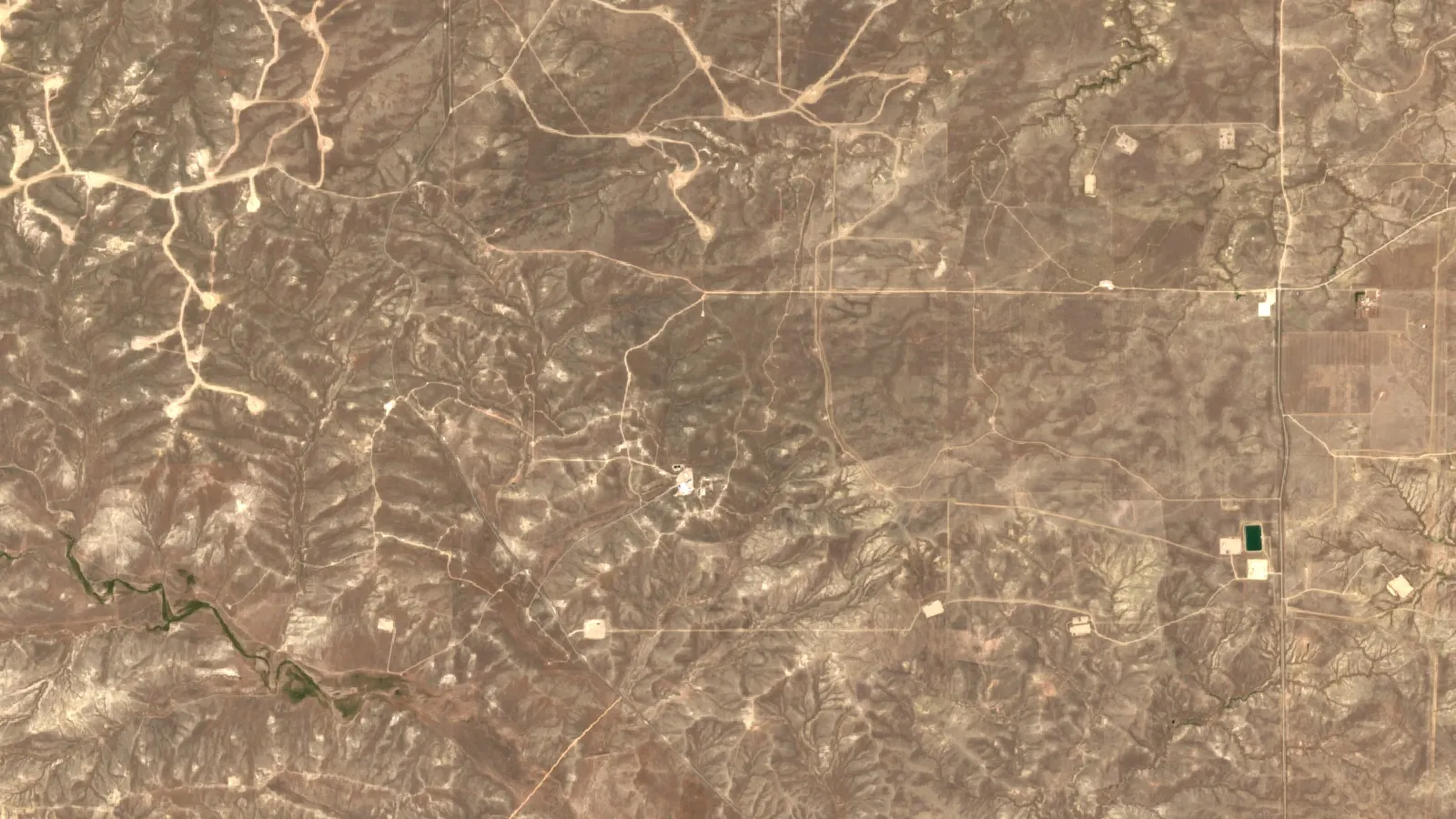
Exploration teams screen ground before drilling by mapping alteration, structure and surface radiometric hints. Satellite imagery is one early tool for that screen, alongside airborne radiometrics and drilling, which remains the only way to prove grade. See our overview of uranium exploration methods. Mine operators also track blasting and haulage closely; our list of drill and blast monitoring software covers the tools used.

▶ Uranium in Africa explained, starting with Zimbabwe’s Kanyemba deposit · 4:27
What to check before you rely on a uranium price
- Spot or term? Spot is a small slice of trade. Utilities pay mostly term prices, which were about US$20 per pound below spot in 2025 (EIA).
- Which unit? Per pound U3O8, per kgU, or per kgU as UF6. Convert before comparing.
- Which date? Spot can move several dollars a week. Use a dated figure from Cameco, UxC, TradeTech or Trading Economics.
- Which processing step? Conversion and enrichment add more than the raw uranium in many fuel bills.
- Who is selling “liquid uranium”? Treat any offer of “liquid uranium” to the public as a scam warning sign. Nuclear materials move only between licensed parties.
Frequently asked questions
Is liquid uranium a thing?
Yes. Uranium metal is liquid above about 1,132 °C, but it is only made in furnaces. Industry handles uranium as a liquid mostly in solution or as UF6, not as molten metal.
What is the price of liquid uranium?
There is no quoted price for liquid uranium. All forms are valued from the U3O8 price, which was about US$91.50 per pound spot on 16 November 2026 (MeltValue), plus processing costs.
Is uranium liquid at room temperature?
No. Uranium is a solid metal at room temperature with a density of about 19.1 g/cm3. It melts at about 1,132 °C.
What is uranium in liquid form used for?
Uranium in solution is pumped from in-situ recovery mines, liquid UF6 is handled during conversion and enrichment, and uranium fluoride salts are the fuel in molten salt reactor designs.
How much is a pound of uranium worth?
About US$91.50 per pound U3O8 spot on 16 November 2026 (MeltValue). US utilities paid an average of US$58.46 per pound for 2025 deliveries, mostly under term contracts (EIA).
How much is 1 kg of uranium?
At US$91.50 per pound U3O8, the uranium in 1 kg of uranium metal is worth about US$238. Fuel-grade enriched uranium costs far more, about US$3,950 per kg of fuel at the indicative prices the World Nuclear Association used in November 2026.
Can you buy uranium legally?
Small amounts of natural uranium ore samples are sold to collectors in some countries. Uranium concentrate, UF6 and enriched uranium are nuclear materials that only licensed companies may hold and trade. Investors usually get exposure through listed miners or physical uranium funds.
What is the melting point of neodymium?
About 1,022 °C. Neodymium boils at about 3,074 °C.
How much does neodymium cost per kg?
Neodymium oxide averaged an estimated US$73 per kg in 2025, down from US$134 in 2022 (USGS, 2026). Metal and magnet alloys cost more.
Do molten salt reactors use liquid uranium?
They use uranium fluoride dissolved in molten fluoride salts, not pure liquid uranium metal. The Oak Ridge Molten Salt Reactor Experiment ran on this kind of fuel salt in the 1960s.
More from Farmonaut: agro admin app, carbon footprinting, crop loan and insurance, farmonaut satellite weather api developer docs, fleet management, product traceability, liquid uranium price uranium liquid price liquid neodymium.
This page is for information only. It is not investment advice. Uranium compounds are regulated nuclear materials; only licensed parties may hold or trade them.
Farmonaut mining
Screen exploration ground from space
Get a quote for satellite screening of alteration and structure across a uranium or rare-earth licence before you commit to drilling.

Mining Pro sample view, synthetic data
Keep reading


Sources
- Wikipedia, Uranium (element data): en.wikipedia.org
- Wikipedia, Neodymium (element data): en.wikipedia.org
- Wikipedia, Uranium hexafluoride: en.wikipedia.org
- World Nuclear Association, In situ leach mining of uranium: world-nuclear.org
- World Nuclear Association, Molten salt reactors: world-nuclear.org
- World Nuclear Association, Economics of nuclear power (2026): world-nuclear.org
- World Nuclear Association, World uranium mining production: world-nuclear.org
- US EIA, Uranium Marketing Annual Report 2025: eia.gov
- US EIA, Uranium Marketing Annual Report, Table 1: eia.gov
- TradeTech, Daily uranium spot price indicator: uranium.info
- MeltValue, Uranium price (16 November 2026): meltvalue.com
- Trading Economics, Uranium futures news (November 2026): tradingeconomics.com
- American Nuclear Society, Uranium prices steady as EIA releases annual market report (August 2026): ans.org
- USGS, Mineral Commodity Summaries 2026: Rare Earths: pubs.usgs.gov
- Cameco, Uranium price: cameco.com
Discussion
Questions, corrections or field experience? Share them below. First-time comments are reviewed before they appear, and your email is never published.
No comments yet. Be the first to add a question or your experience.

 GKY Mining
 Alkimy SARL
 Double A Trading
 GemSprout Metals Limited
 Qader Group
 Ileys General Trading
 SG Gold Mining LLC
 VRV Global Pte Ltd
 Omsri International FZE
 G.I.T.T.
 Jaunita Erss Ltd
 Almosi SARL
 SRK Consulting
 Berks Gold Limited
 Mwerezi Minerals Company Limited
 Mining SARL
 SenGold Invest SAS
 Sean Mining Limited
 NTS Group (Pty) Ltd

 Client · Oregon, USA · Gold










